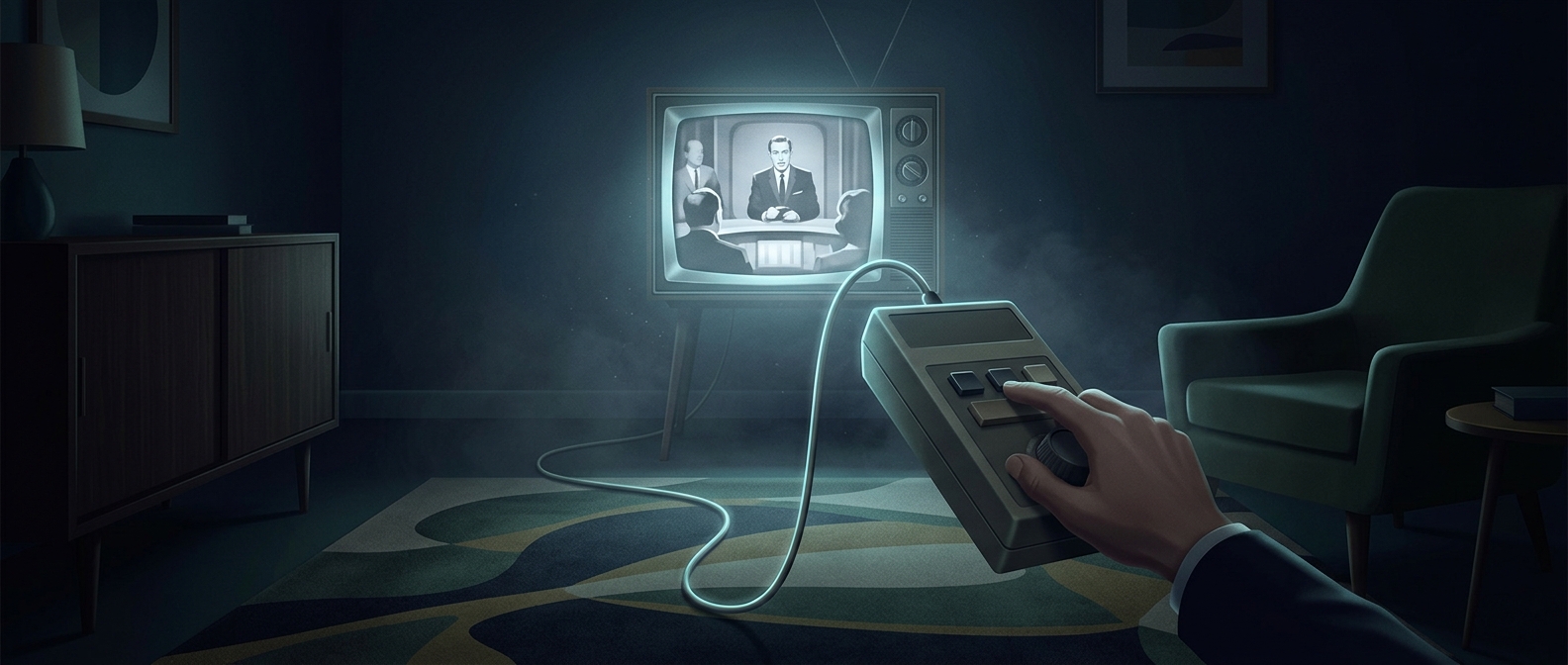
How a TV remote became a return channel
In 1977, QUBE subscribers in Columbus, Ohio, received more than television programs: they could send answers back. The system’s chunky plastic buttons let viewers respond to on-screen polls while a program was still airing. That made the television set part of a two-way exchange, rather than a screen that only delivered a broadcast.
The key was the cable connection. Ordinary broadcast TV sent the same signal outward to many homes, with no built-in way for a viewer’s button press to travel back to the station. QUBE’s cable setup included a return path: a signal could go from a household terminal back to the cable operator. A response could therefore be collected while the poll was live, instead of being sent later by mail or counted through a phone-in campaign.
The audience became measurable
A host could ask a question, viewers could press a button, and the system could tally responses quickly enough to make the result part of the viewing experience. The appeal was not just novelty. For programmers, a live response offered a way to see what an audience chose or thought; for viewers, it made participation feel immediate, even though they were still watching a centrally produced program.
That exchange also had limits. A poll captured only the choices the program offered, and its respondents were the households connected to QUBE—not necessarily a representative sample of everyone watching television. Still, the system demonstrated a lasting idea: cable could carry information in both directions, turning the living room into a point of interaction. The large buttons were an early, physical version of a familiar modern expectation—that viewers should be able to respond while they watch.