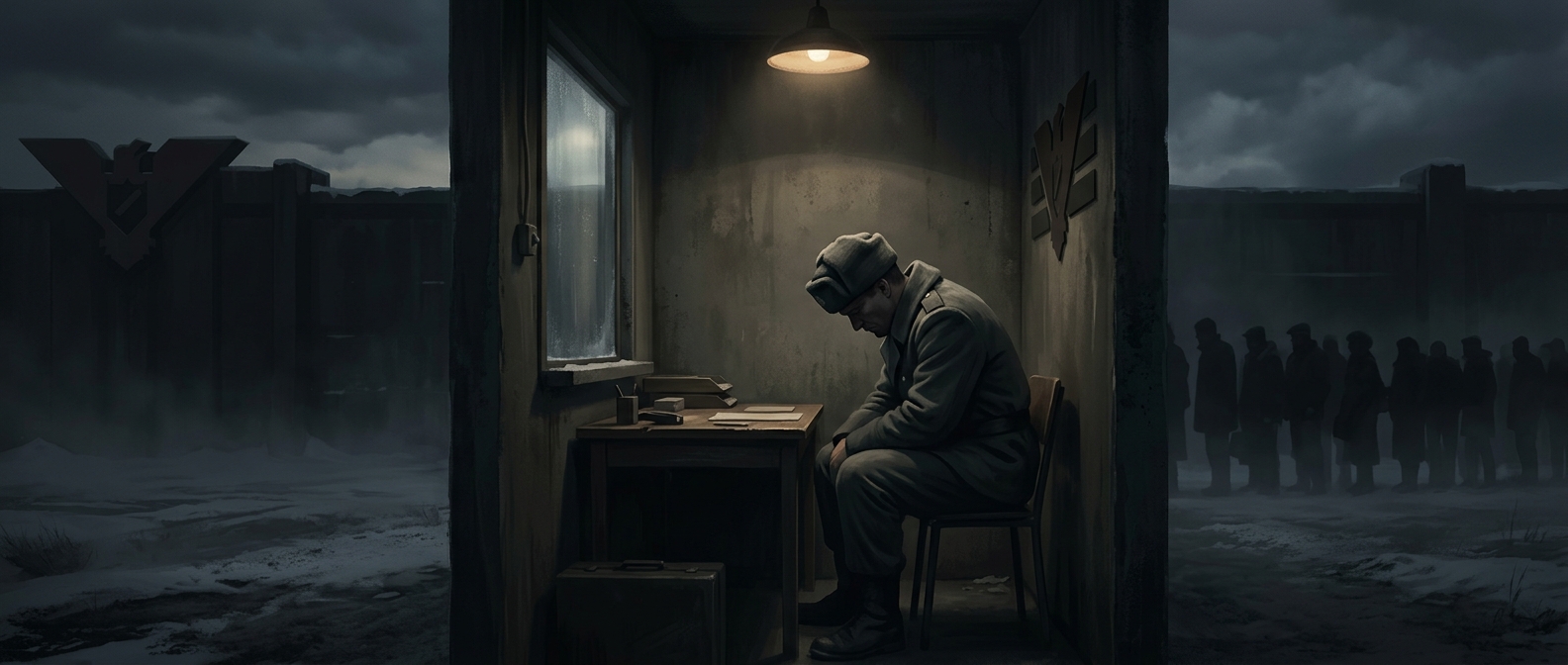
A Border Desk Turns Compassion Into a Cost
In Papers, Please, the player works as an immigration inspector, checking travelers’ documents against rules that grow more demanding over time. The task looks like a puzzle: spot an expired permit, a mismatched name, or a missing paper. But each check also decides whether a person can cross the border—and how much the inspector can earn that day.
That pairing is the game’s central design choice. A correct decision keeps the desk running and protects the inspector’s wages. A mistake can bring a penalty; spending extra time on one traveler also leaves less time to process others. So stopping to investigate a desperate case is not a free act of kindness. It competes with the work that pays for the household’s basic needs.
The Rules Make the Player Feel Complicit
The game does not give the inspector a clean way to separate “the job” from “the people.” Travelers arrive with personal problems, but the player encounters them through forms, stamps, and regulations. The paperwork is necessary to do the job, yet it can make suffering look like just another discrepancy to resolve.
As new requirements appear, routine work becomes harder to perform flawlessly. The player must keep track of details while deciding when to follow procedure and when to bend it. That pressure turns a small mechanical choice—approve, reject, or investigate—into a question about whose risk counts most.
Why the Tradeoff Lingers
The emotional force comes from limited power, not from a grand choice that fixes everything. The inspector can help an individual traveler, but cannot escape the consequences of the decision at home or at work. Compassion has a price, and obedience can have one too.
That makes the border desk more than a setting: it is a system that asks the player to administer rules while making them personally responsible for the harm those rules can cause. Every stamp is both a bureaucratic decision and a household calculation.