A flower gives growers a narrow window
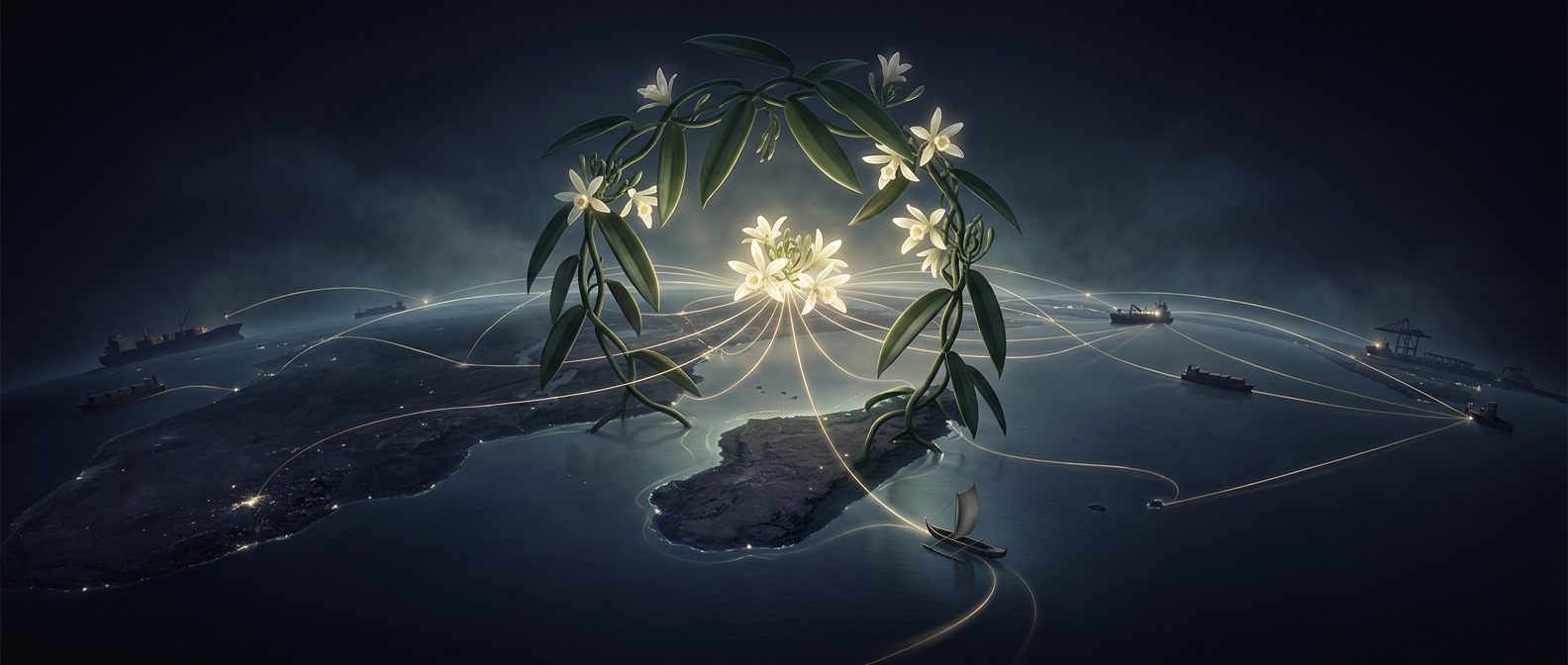
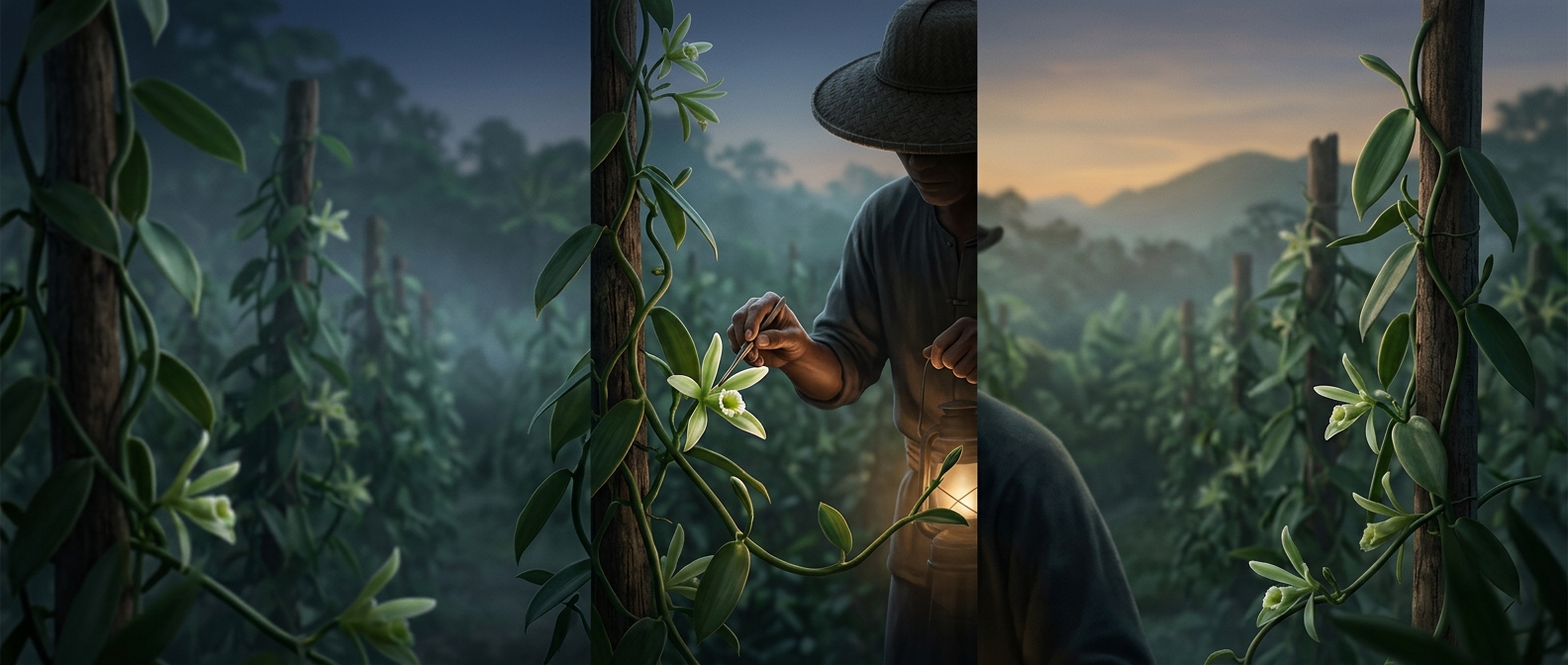
Vanilla flowers do not stay open waiting for a convenient moment. Each blossom is receptive for only a short time, often just part of a day. If it is not pollinated in that window, it withers without producing the long green pod that will eventually become a vanilla bean.
In much of the world where vanilla is grown, the insects that pollinate the orchid in its native range are absent. So growers have to notice which flowers have opened and work through them before the opportunity passes. A missed flower means no pod to harvest months later.
The pollination is a small, precise operation
The flower’s own structure makes the task more than simply brushing pollen onto it. A thin membrane separates the pollen-bearing part from the part that receives pollen. The grower uses a slender tool—sometimes a small stick—to lift that barrier and press the two parts together.
That action takes only a moment, but it must be repeated flower by flower across the vines. Blooms may open in groups, turning a brief natural window into a concentrated rush of skilled work. The stick is inexpensive; the attention and timing it enables are not.
Labor continues after the pod forms
Pollination is only the beginning. Vanilla pods are picked while still green, then cured through a drawn-out process that develops their familiar aroma and flavor. Those steps keep workers involved long after the flowers have faded.
The result is a crop whose supply depends on many small acts that cannot easily be mechanized or postponed. When labor is scarce or costly, fewer flowers may be pollinated or pods may cost more to produce. That helps explain why real vanilla can command a high price: its flavor begins with a harvest that must be coaxed, one fleeting blossom at a time.