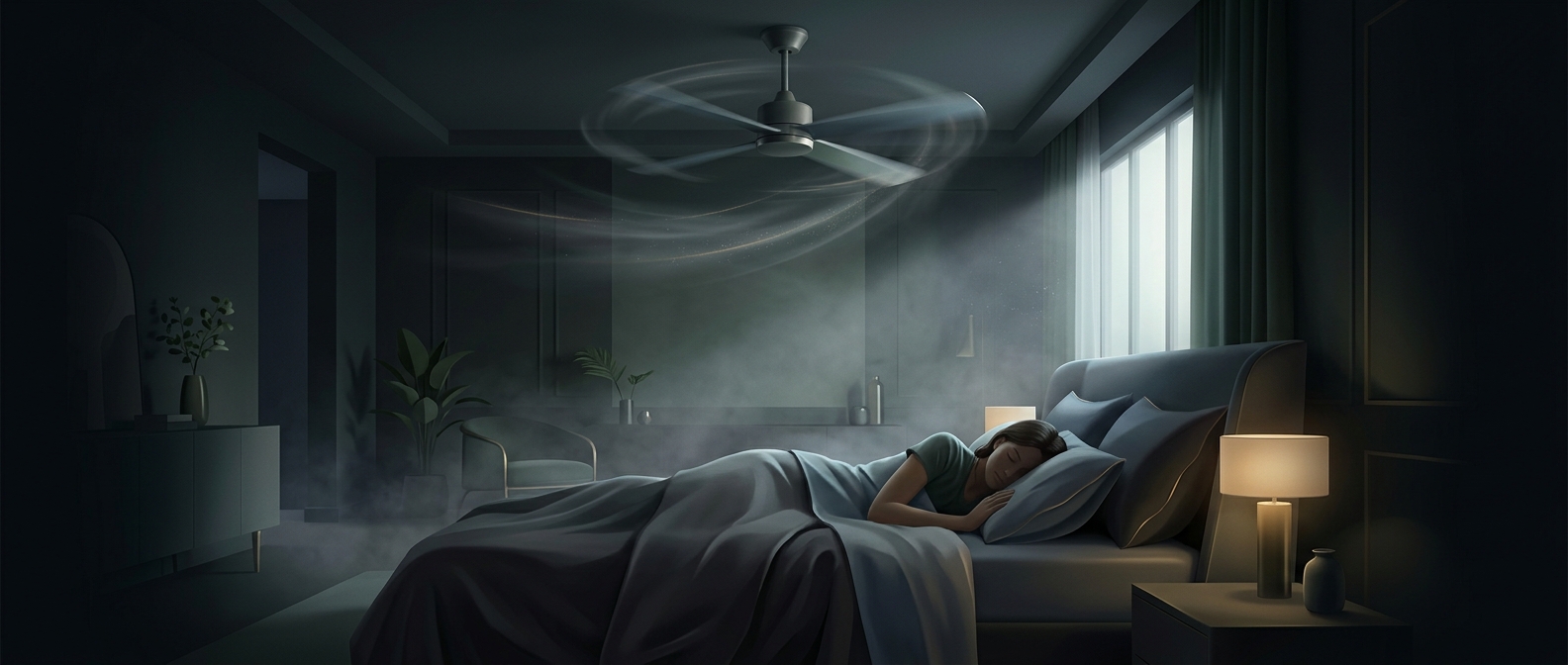
Why a bedroom fan does not use up the air
A fan’s blades push room air around; they do not consume oxygen or replace it with another gas. As you breathe, you do use oxygen and release carbon dioxide, but a fan does not speed that exchange in a way that can deprive a typical bedroom of breathable air. The room’s ventilation—not whether a fan is spinning—is what determines how fresh air gets in and stale air gets out.
What moving air can change
The breeze can make you feel cooler by carrying heat away from your skin and helping sweat evaporate. It can also stir up dust, pollen, or pet dander that has settled on surfaces. For someone sensitive to those particles, the fan may aggravate allergy symptoms; airflow directed at the face can also worsen dry or irritated eyes.
Those effects are discomfort, not suffocation. If a fan leaves you coughing or waking with irritated eyes, try aiming it away from the bed, cleaning its blades, or reducing dust in the room. The practical overnight concern is how the air feels and what it carries—not the fan taking oxygen out of it.