The Sound of a Blast Is Also a Story Choice
A nearby explosion can injure the ear through pressure, not just through the loudness of its sound. The pressure wave may damage the eardrum or the delicate structures deeper inside the ear. Afterward, a person might hear ringing, experience muffled hearing, or feel dizzy; some effects can last long after the blast itself has faded.
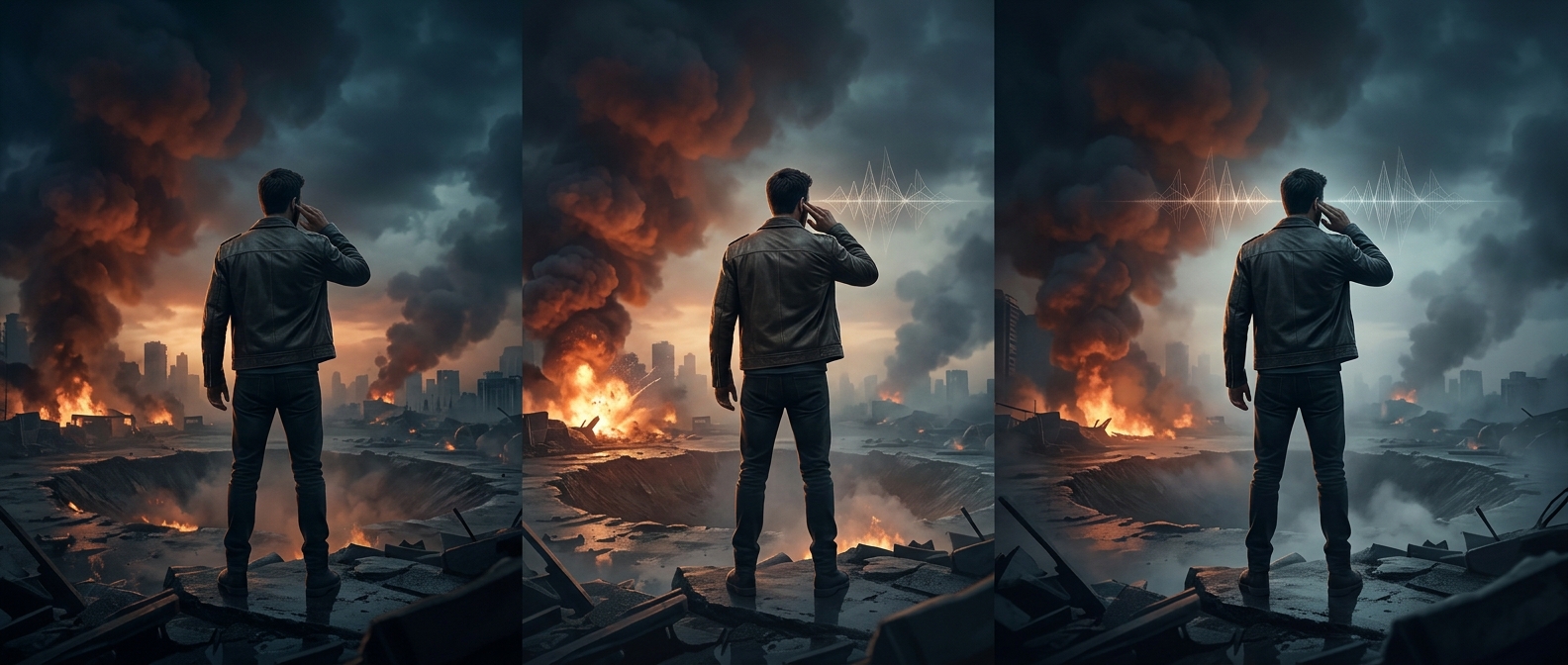
Movies can briefly imitate that experience by replacing the usual soundtrack with a high-pitched tone, muffled noise, or near-silence. But keeping a character’s hearing impaired would change what follows: dialogue becomes harder to understand, orientation less certain, and the character’s next decisions harder to communicate clearly.
Why the Hero Bounces Back
Action scenes are built to move from danger to response. The hero hears the next threat, exchanges information with allies, and delivers a line that confirms control of the moment. A sustained hearing injury would interrupt that clean sequence—and might make the character seem vulnerable in a way the scene is not designed to explore.
So many films treat blast effects as a brief sensory flourish rather than a continuing injury. The audience gets the shock of the explosion, then the soundtrack and character return to normal so the chase or fight can continue. That recovery is less a claim about what blasts do to ears than a choice about what the story needs its hero to do next.