The body became an identification card
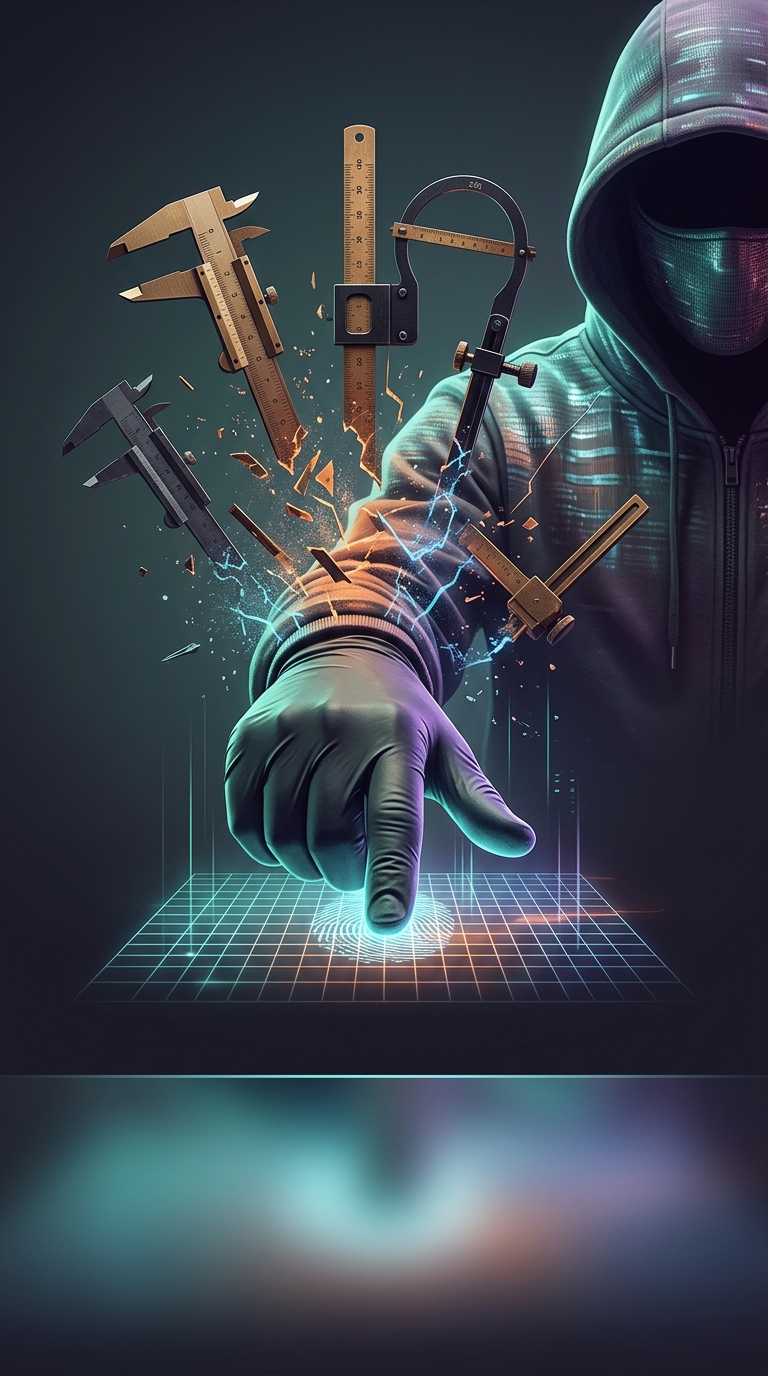
Before fingerprinting was widely accepted, many police forces used anthropometry: identifying people through a standardized set of body measurements. The best-known version was developed by French police clerk Alphonse Bertillon and became known as the Bertillon system.
A clerk measured features such as the length of the head, the span of the arms, and the size of the feet. The measurements were recorded alongside details such as eye color, scars, and a set of standardized photographs. The idea was practical: a person’s adult bone structure seemed less changeable than names, clothing, or other easy-to-alter clues.
A painstaking system with a weak link
The method demanded careful, repeated work. A measuring device had to be positioned consistently, and small differences in posture or technique could shift a result. Police also had to compare a new set of measurements with stored records. If two people had similar dimensions—or measurements were taken inconsistently—the system could confuse them.
That made the method both labor-intensive and fallible. Its detailed record cards could help distinguish people, but the measurements were not unique identifiers: different people could share similar proportions, and a single body did not always yield exactly the same readings from one session to another.
Why fingerprints displaced it
Fingerprints offered a different kind of evidence: patterns of ridges that could be recorded and compared without measuring a person’s whole body. As fingerprint classification and comparison gained police confidence, it provided a more practical way to search identity records. Bertillon’s method did not vanish overnight, but its central weakness was hard to overcome: a laborious collection of measurements could still point to the wrong person.