Why Ramen Arrives So Hot
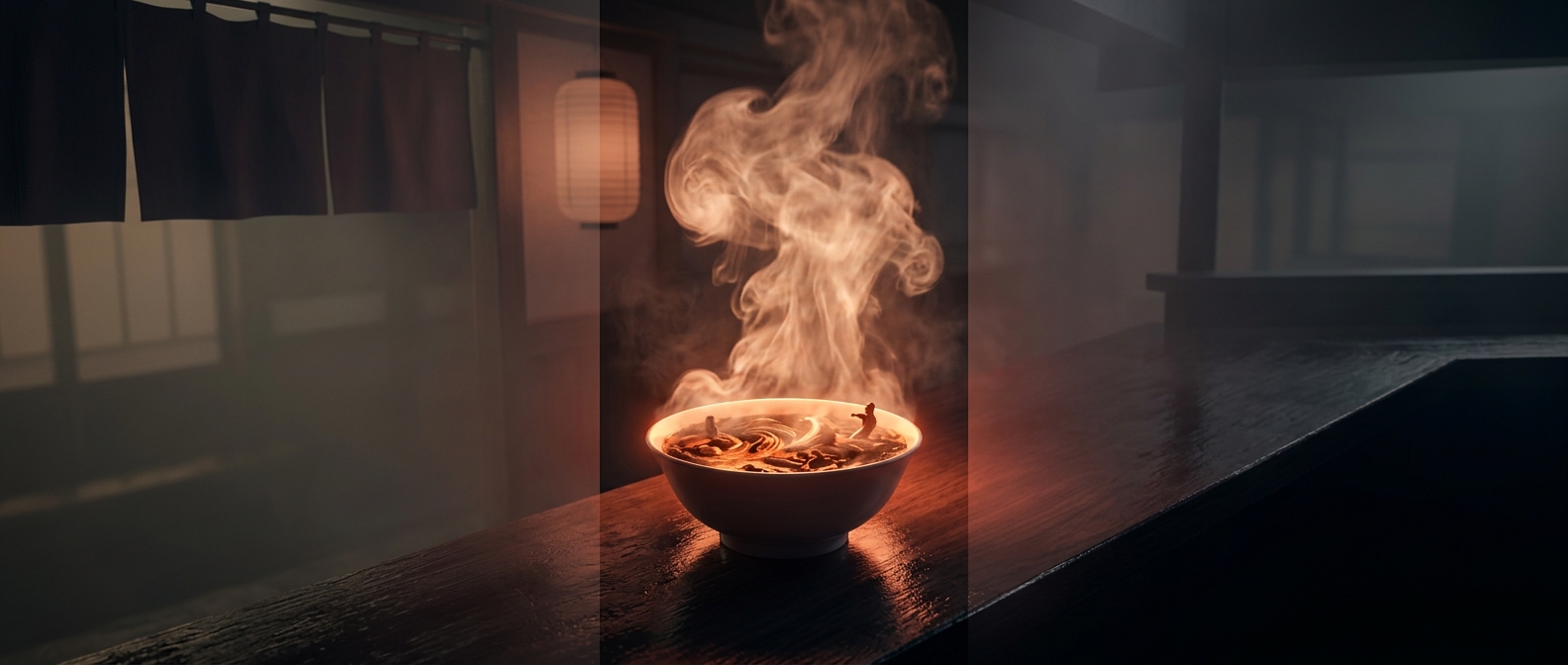
A ramen bowl is assembled to be eaten promptly: noodles, toppings, and broth meet just before serving. The broth’s heat helps keep rendered fat fluid and dispersed through the liquid rather than letting it quickly collect in a greasy layer. That matters because the fat carries aroma and contributes to the broth’s rich, rounded feel.
The broth need not be literally boiling at the table. “Boiling hot” often describes how intensely hot it feels; actual boiling liquid would be especially hazardous to sip. A very hot bowl also loses heat quickly once it is poured and exposed to the air.
How Slurping Changes Each Mouthful
Slurping draws air into the broth as it travels toward the mouth. That mixing can cool a small mouthful and spread its aroma, making the noodles easier to eat while the rest of the bowl stays hot. It is a practical response to a dish served at a temperature that would be uncomfortable—or could scald—if swallowed in a large gulp.
The contrast is part of the experience: steaming broth keeps the bowl warm, while each lifted bite cools on its way to you. So the useful rule at a ramen counter is simple: taste carefully, take small sips, and let the noodles cool rather than treating a steaming bowl as ready to gulp.