Why a wash settles into the details
A miniature’s raised edges and recessed lines are often only fractions of a millimeter apart. Painting each groove by hand can be slow, especially on armor panels, scales, or textured cloth. A wash offers a shortcut: it is paint thinned so it can travel more readily across the surface, carrying pigment into narrow creases as the brush moves over them.
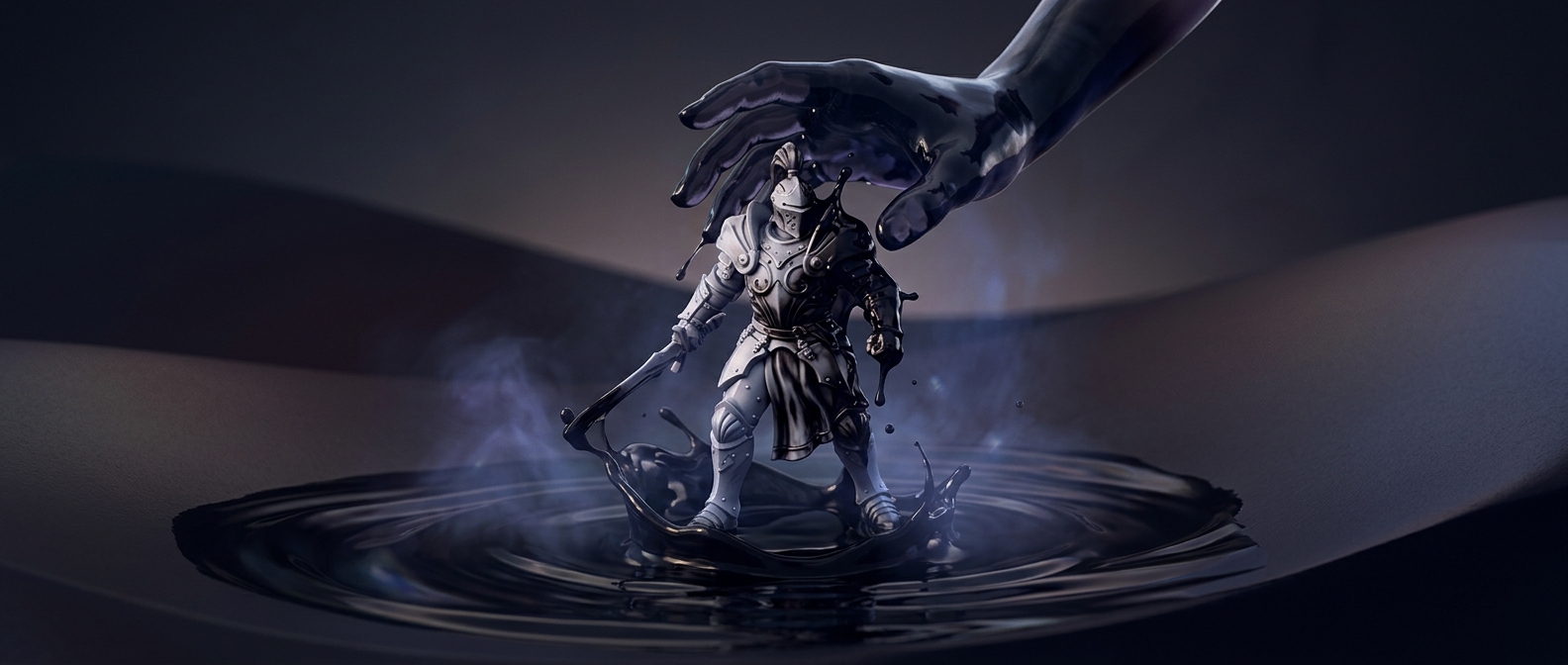
The effect comes from how the liquid behaves. A wash is less viscous than ordinary paint, so it flows around small shapes instead of staying where the bristles first place it. Surface tension and the shape of the miniature help draw liquid into corners and low spots. As it dries, pigment remains there, leaving the recess darker than the surrounding raised areas. That contrast makes sculpted detail easier to see.
A shortcut with a tradeoff
A wash does not create light and shadow from nothing; it exaggerates the miniature’s existing contours. Its result depends on the sculpt and on where the liquid dries. A broad, shallow panel may collect a tide mark, while a deep line can hold pigment neatly. Too much wash can also darken an entire surface or leave blotches, so painters often apply it selectively or remove excess from raised areas before it dries.
This makes washes especially useful after a base coat: one application can shade many small recesses that would otherwise need careful lining. But the same flow that makes the technique fast makes it less precise than painting each shadow deliberately. On a small figure, that balance matters—the wash supplies quick depth, while a later highlight can restore brightness to the raised edges it touched.