A reminder with roots in ancient philosophy
Memento mori is Latin for “remember that you must die.” The phrase names a practice, not a prediction: people use reminders of mortality to interrupt the assumption that life will continue indefinitely. The idea appears in several traditions, including ancient Stoic philosophy and Christian devotional practice, though its meaning varies across time and setting.
Why keep death in view?
The point is not to dwell on death for its own sake. Mortality can act as a measure for everyday choices: Is a grievance worth carrying? Is a goal genuinely important, or merely urgent? By making time feel limited, the reminder can shift attention from status and distraction toward relationships, commitments, and work a person considers meaningful.
That effect is not automatic. A skull, a written phrase, or a quiet moment of reflection can prompt perspective, but it can also provoke fear or sadness. The practice is most useful when remembering an ending leads back to a concrete choice about how to live now.
A prompt, not a promise
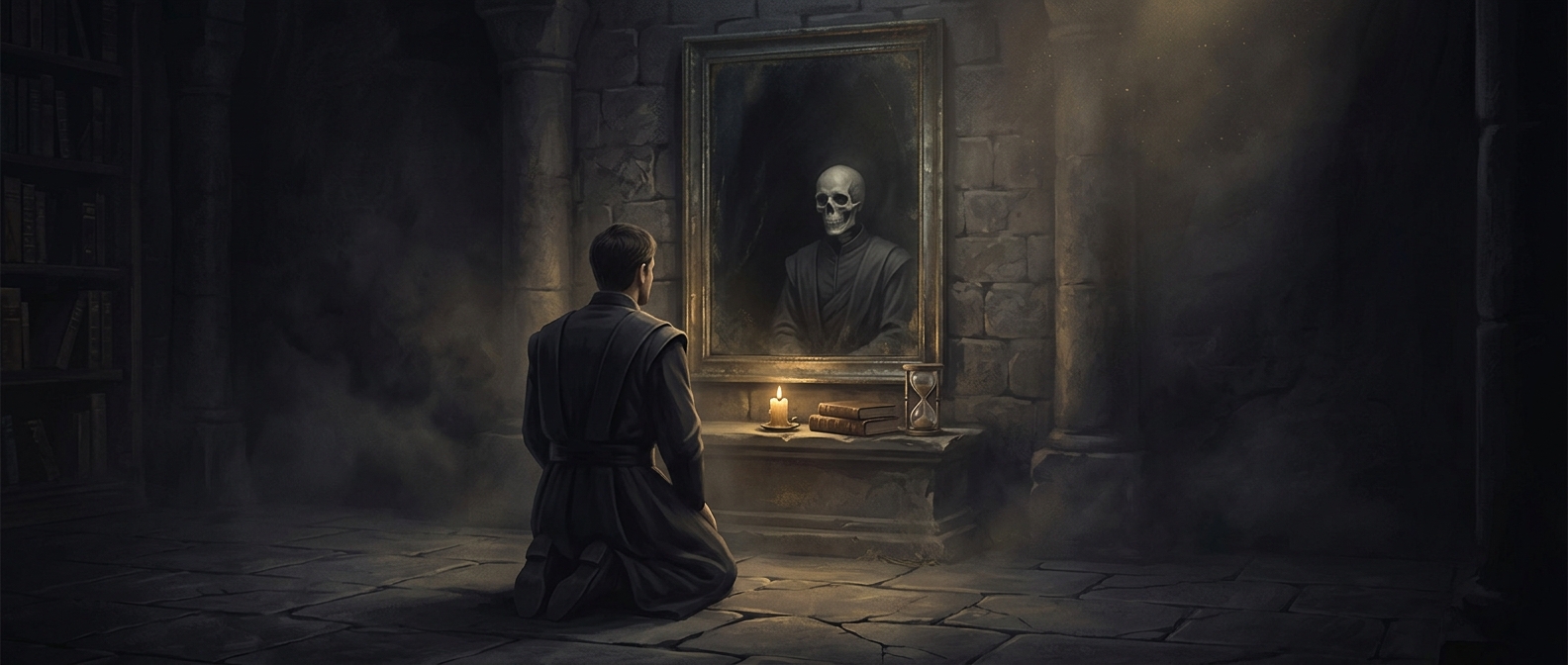
In art and ritual, memento mori often takes visible form—a skull, an hourglass, or another sign of passing time. Such objects are not claims about what happens after death. They make an abstract limit easier to notice, giving the viewer a reason to ask what deserves attention while time remains.