A universe within something greater
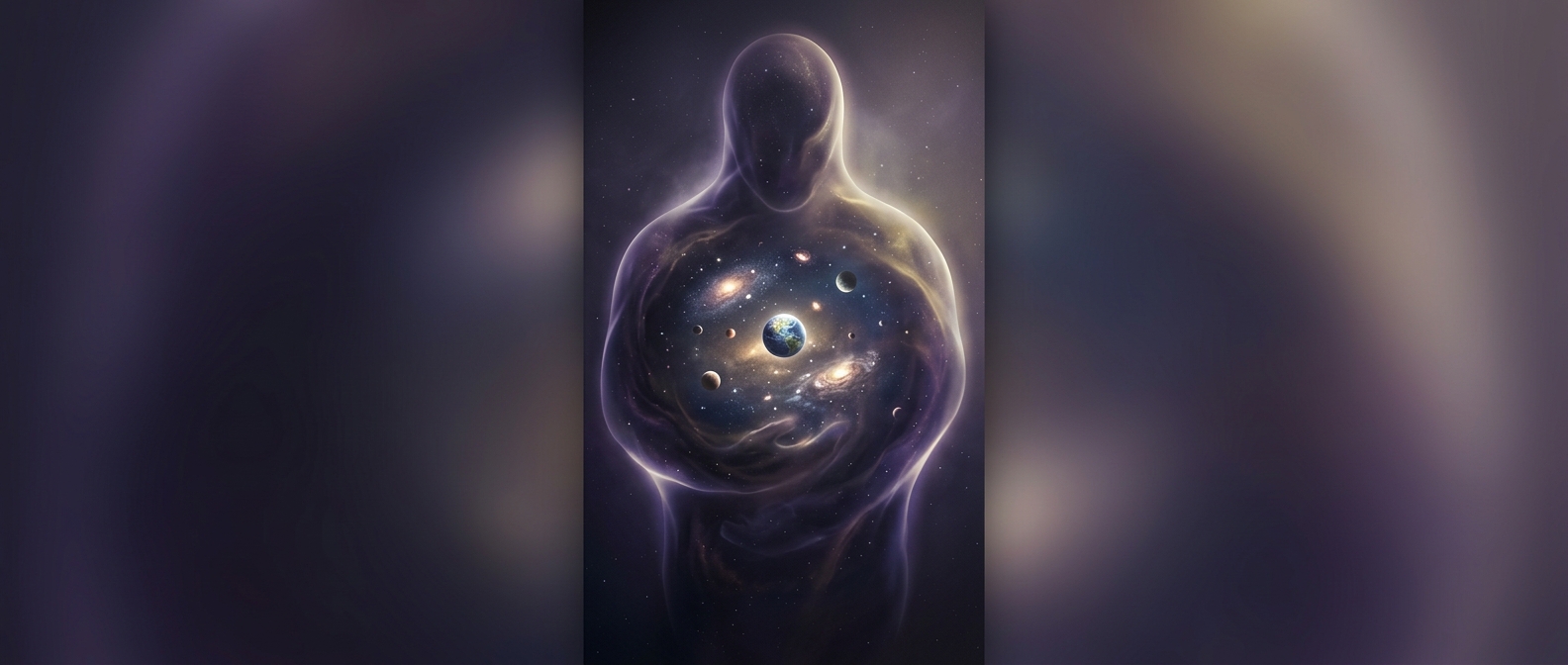
Panentheism combines two ideas: the world is genuinely within the divine, yet the divine is not limited to the world. The universe belongs to a greater reality, sometimes called the absolute, which also exceeds everything the universe contains. “Within” here is a claim about dependence and relationship, not a claim that the cosmos sits inside a giant physical space.
The distinction from pantheism
Pantheism identifies God with the universe: in its simplest form, everything that exists is divine because everything together is God. Panentheism draws a different boundary. It treats the universe as part of divine reality, but not the whole of it. The absolute can therefore be present throughout the world without being exhausted by the world.
That distinction changes how nature is understood. A forest, a star, or a human life may be seen as participating in the divine, rather than as separate from it. But no single object—and not even the universe taken as a whole—fully captures what the absolute is.
A way to hold two ideas together
The view offers a way to affirm both intimacy and transcendence: the sacred is not remote from ordinary existence, but it is also more than the sum of ordinary things. Different religious and philosophical traditions develop that relationship in different ways, so panentheism names a broad family of ideas rather than one universally agreed doctrine.
Its memorable claim is not simply that the universe is sacred. It is that the universe may be within the sacred without containing all of it.