Jujitsu turned size into a disadvantage
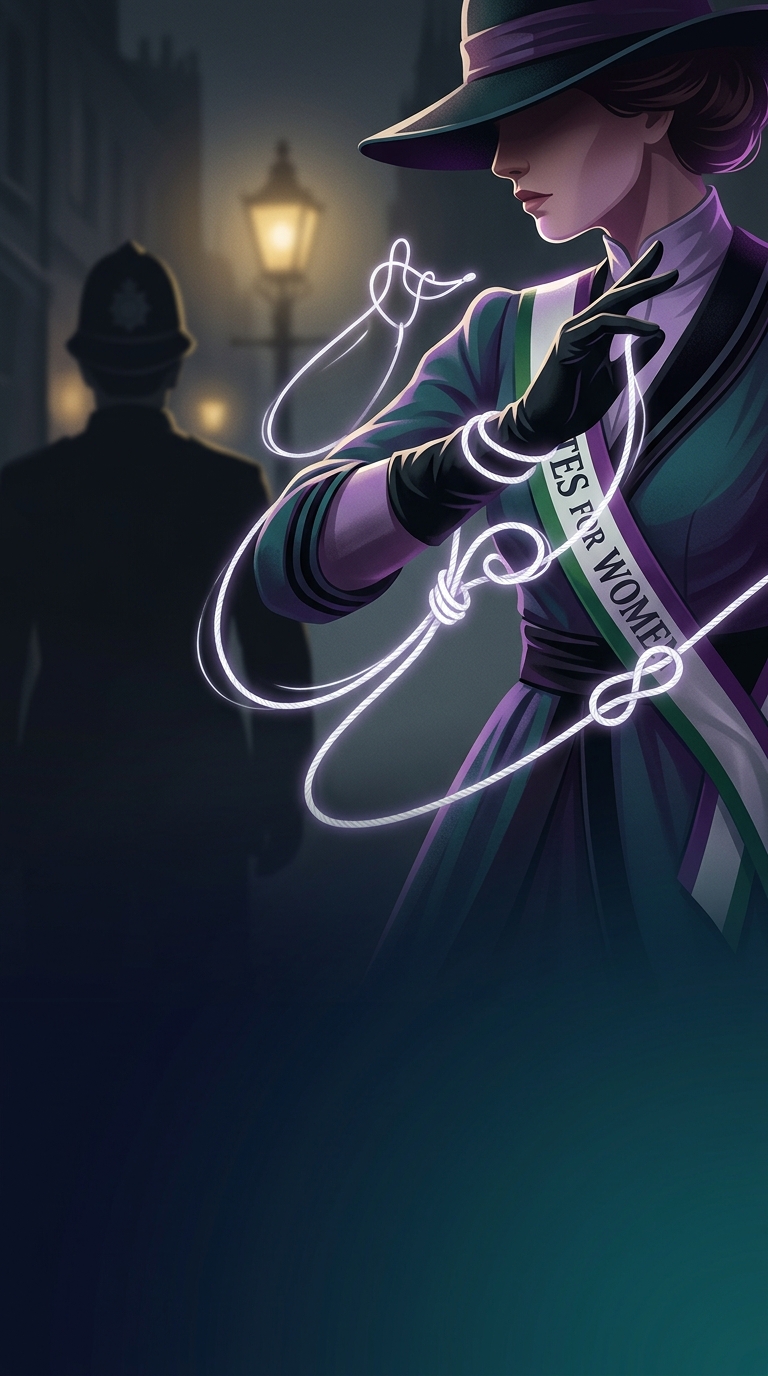
Some British suffragettes answered police force with jujitsu, a Japanese martial art that uses balance, timing, and leverage rather than relying on strength alone. A smaller woman could redirect an officer’s movement, break a grip, or unbalance him instead of trying to overpower him head-on.
That mattered during demonstrations and arrests, when officers could seize or carry women away. Training gave activists practical ways to resist being manhandled—and made the police’s physical control less predictable.
Training for the street, not the ring
Edith Garrud, a jujitsu instructor in London, taught suffragettes self-defence. The techniques were adapted to situations they might actually face: escaping a hold, staying on their feet, or using an attacker’s forward momentum to create room. The point was not to win a formal contest; it was to make an arrest harder and protect a fellow activist long enough to get away or regroup.
Around 1913, a group known as the Bodyguard was organized to protect the suffrage leader Emmeline Pankhurst from arrest. Its members used jujitsu as part of that protection, turning self-defence training into a form of organized political resistance.
A physical answer to unequal power
The tactic exposed an imbalance at the heart of public protest: police could use their authority and numbers to remove demonstrators, while women had limited means to resist. Jujitsu did not erase that disadvantage, but it offered a practical countermeasure—and challenged the assumption that a woman being physically smaller meant she could simply be carried off without resistance.