How an Excavator’s Arm Reaches Around Obstacles
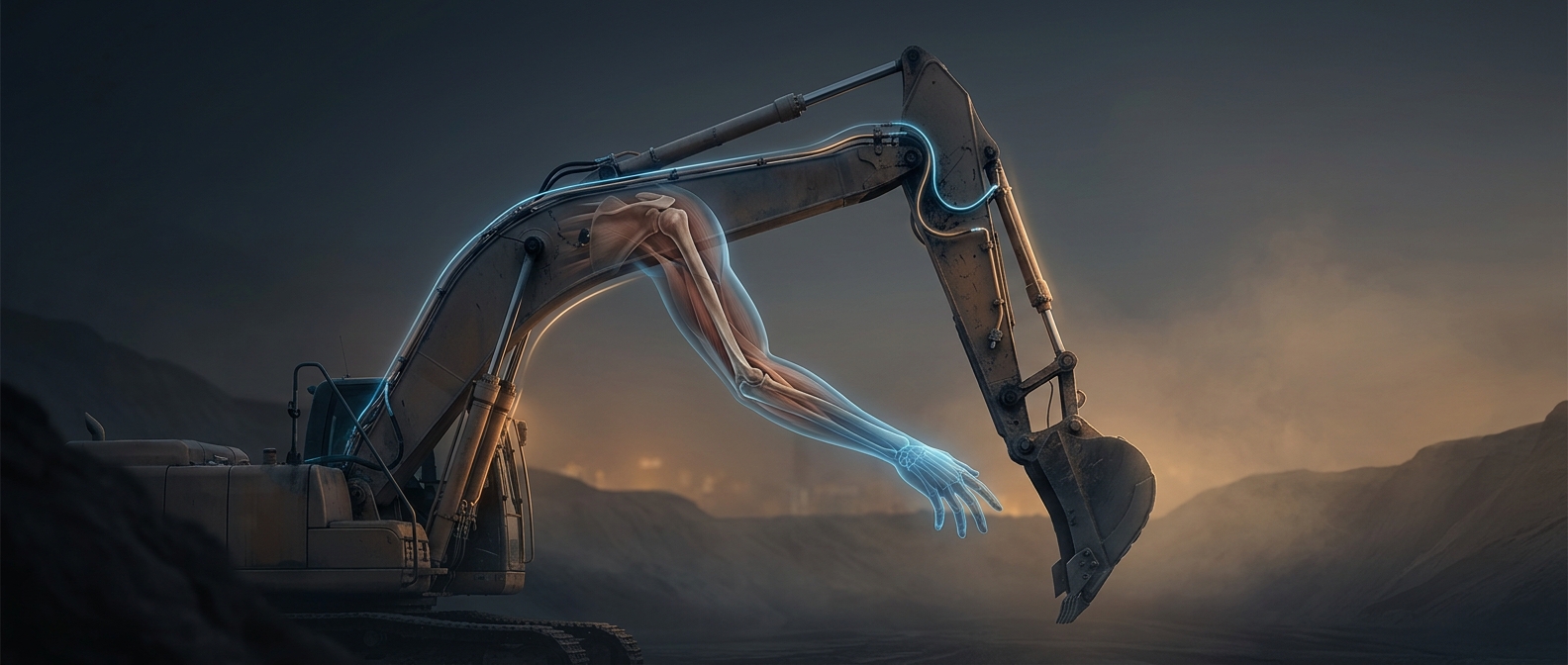
An excavator’s long reach comes from dividing its arm into sections rather than making one rigid boom. The boom is the section attached to the machine’s body; the stick, also called the dipper arm, extends from the boom and carries the bucket. Their separate pivots let the operator change the bucket’s position without moving the tracks or turning the entire machine.
Hydraulic Force at Each Joint
At each pivot, a hydraulic cylinder—a sealed tube in which pressurized oil moves a piston—pushes or pulls the connected section. The operator controls how much oil flows into the cylinders, adjusting the arm’s angle and speed. Working the boom and stick together lets the bucket follow a curved path: it can be drawn toward the machine to dig, extended outward to reach a trench, or raised to clear an obstacle.
The joints also give the operator control over the bucket’s leverage. Bringing a load closer to the machine generally makes it easier to lift than holding the same load far out at the end of the arm. But the machine has limits: the weight and reach of a load affect stability, so operators must work within the excavator’s rated capacity.
Why the Jointed Design Matters
A single long arm would be less adaptable: changing where its tip lands could require repositioning the whole machine. With two articulated sections, an excavator can work in confined spaces and place material over an edge while keeping its base steady. The practical payoff is that a machine can dig, lift, and place from one position—its reach comes not just from arm length, but from controlling each joint independently.