The circle begins underground
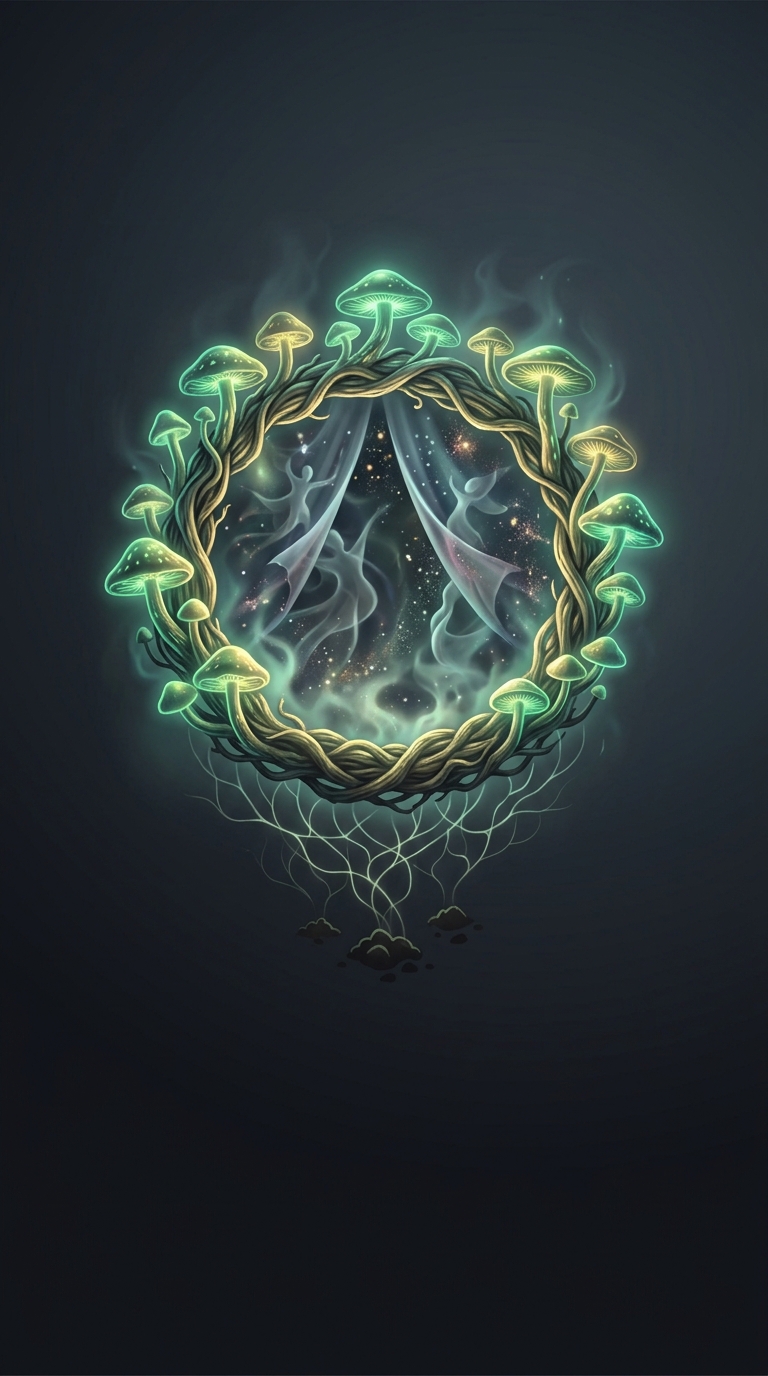
The mushrooms in a fairy ring are only the brief, visible part of a much larger organism. Beneath the grass or forest floor, a fungus spreads as a network of fine threads called mycelium. When conditions are right, it produces mushrooms at the network’s outer edge—the structures that release spores.
As the fungus grows outward through soil containing food, the active edge advances while older material in the center may run short of nutrients. That pattern can leave mushrooms arranged in a ring. The circle is not a doorway made by the fungus; it is a trace of where the organism has been growing. Rings can also be uneven or fade as soil, weather, and competing organisms affect the growth.
Why a natural pattern became a warning
To people encountering a near-perfect circle in a meadow or woodland, the shape could seem deliberate: an invisible gathering place marked by mushrooms. Across European folklore, such rings were associated with fairies, often imagined as the tracks or dancing grounds of supernatural beings. Stories warned that stepping inside could bring danger, enchantment, or a lost sense of time.
The exact meaning varied by place and story, so there was no single universal belief. But the ring’s vivid boundary made it easy to picture as a threshold between ordinary ground and another realm. Its mushrooms appeared suddenly, then vanished, while the circle itself could persist—an eerie combination that gave the folklore a durable image.
A real boundary, but not a magical one
A fairy ring does mark a biological boundary: the outward-growing edge of a fungus, where mushrooms may emerge. It does not show that the center has been completely emptied of nutrients, nor does every ring form in precisely the same way. The visible arc is the result of living growth beneath the surface, not evidence of a portal.
That contrast is what makes the phenomenon memorable: the circle is real, but the hidden activity that draws it is fungal, not supernatural.