From excavated objects to a “secret” collection
When archaeologists uncovered Pompeii and Herculaneum, they found more than buildings and household tools. Some objects and images featured explicit sexual scenes, including material that Romans had used in everyday settings. Once removed from those settings and displayed in a royal museum, however, the artifacts became a problem of public access as well as archaeology.
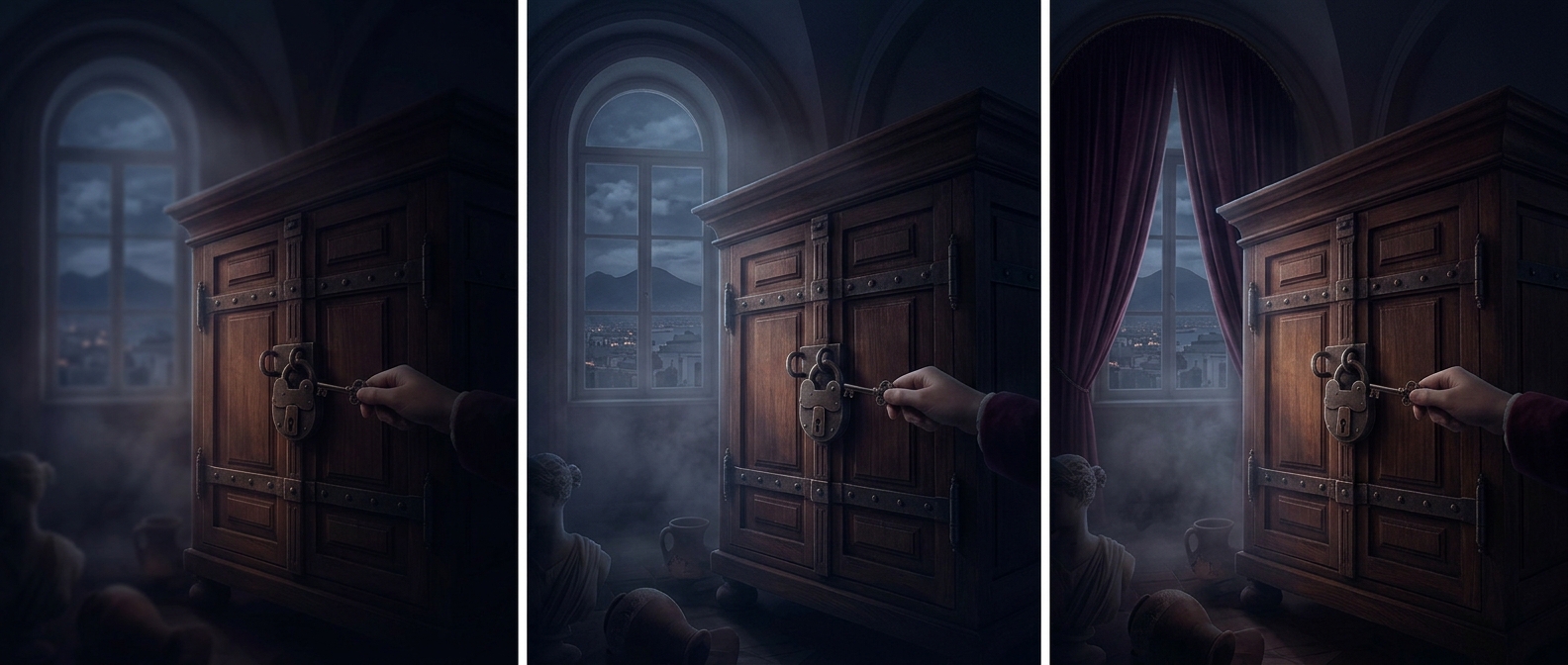
In Naples, such pieces were gathered in a separate room known as the Gabinetto Segreto—the Secret Cabinet. Its locked door did more than keep objects out of sight: it marked them as a category apart, distinct from the rest of the ancient collection.
Access became a judgment about the visitor
Francis I’s response turned entry into a matter of character. Rather than treat the display as something any museum visitor might see, the restriction presented access as suitable only for men considered mature and morally respectable. The rule made the museum’s unease appear to be a test of the audience, not merely a decision about what the institution would show.
That distinction mattered. The same objects could be described as evidence of Roman life when studied by approved visitors and as improper material when viewed by others. The locked room therefore shaped how people encountered the past: it separated explicit artifacts from the broader story of ancient domestic life and made curiosity itself seem suspect.
The lock changed the artifacts’ meaning
A museum display usually invites visitors to look closely and interpret what they see. A locked cabinet instead added a second message before anyone saw an object: this material was considered powerful enough to require supervision. The collection’s secrecy became part of its history, influencing how the artifacts were understood as much as their original Roman use did.