Why a squealing pig could unsettle an elephant
War elephants were powerful, but they were not machines. Their usefulness depended on keeping them calm enough to advance where handlers directed them. A sudden, unfamiliar noise could frighten an animal and make it difficult to control—especially amid the confusion of battle.
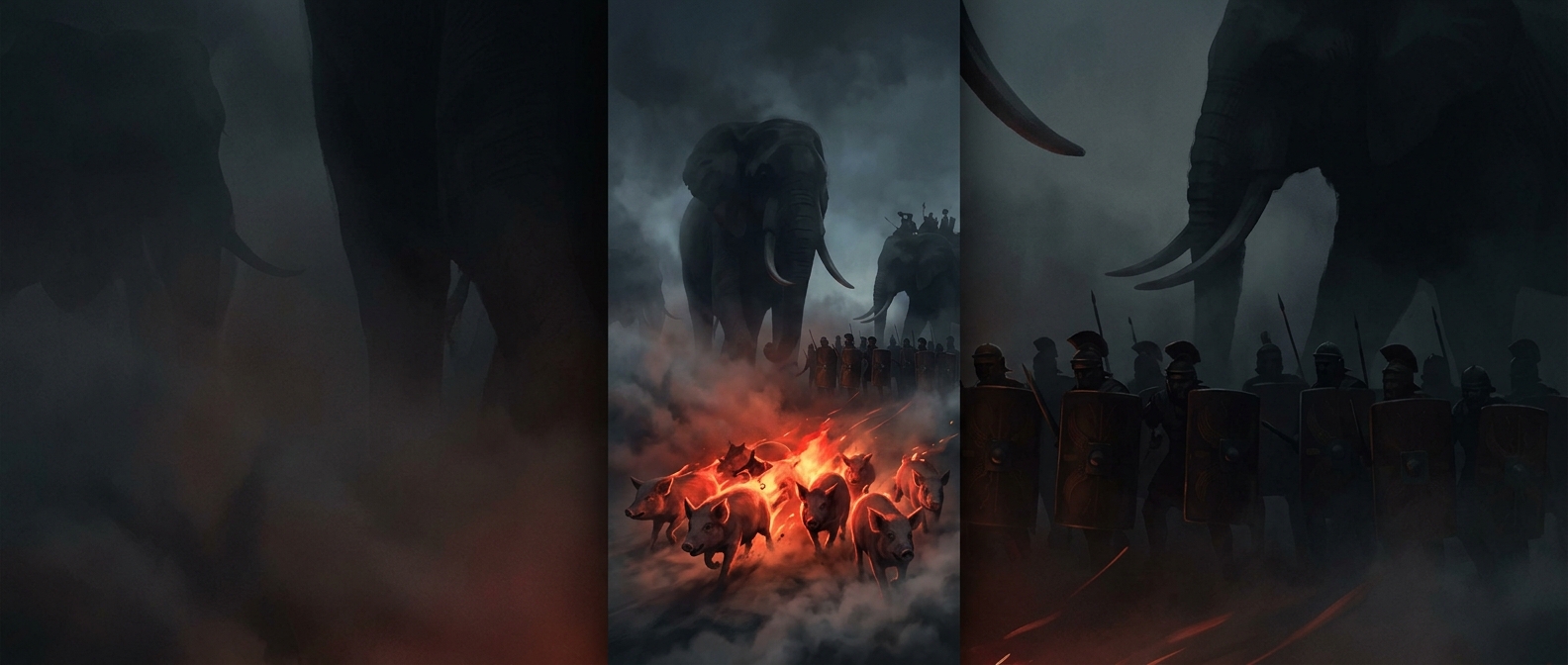
That is the logic behind the ancient story of pigs sent against elephants. Their shrill squeals supplied the disturbance; coating them with pitch and setting them alight added fire and movement to the spectacle. The aim was not to injure an elephant with a pig, but to provoke a panic that might send it bolting.
A weapon aimed at control, not strength
An elephant in flight could become a danger to its own side, trampling soldiers or disrupting a formation. In that sense, the pigs were less like weapons than a crude way to break the handler’s control of a much larger animal. Their effect depended on surprise and on the elephant’s reaction; it was never a dependable way to command what happened next.
Ancient accounts connect this tactic with warfare against elephants, though the details belong to a tradition of striking military anecdotes rather than a routine battlefield method. The image endures because it captures a real vulnerability in using animals for war: immense strength was useful only while the animal could be kept steady. Once fear took over, that strength could turn against the army that brought it there.