A roof designed to deny the enemy a foothold
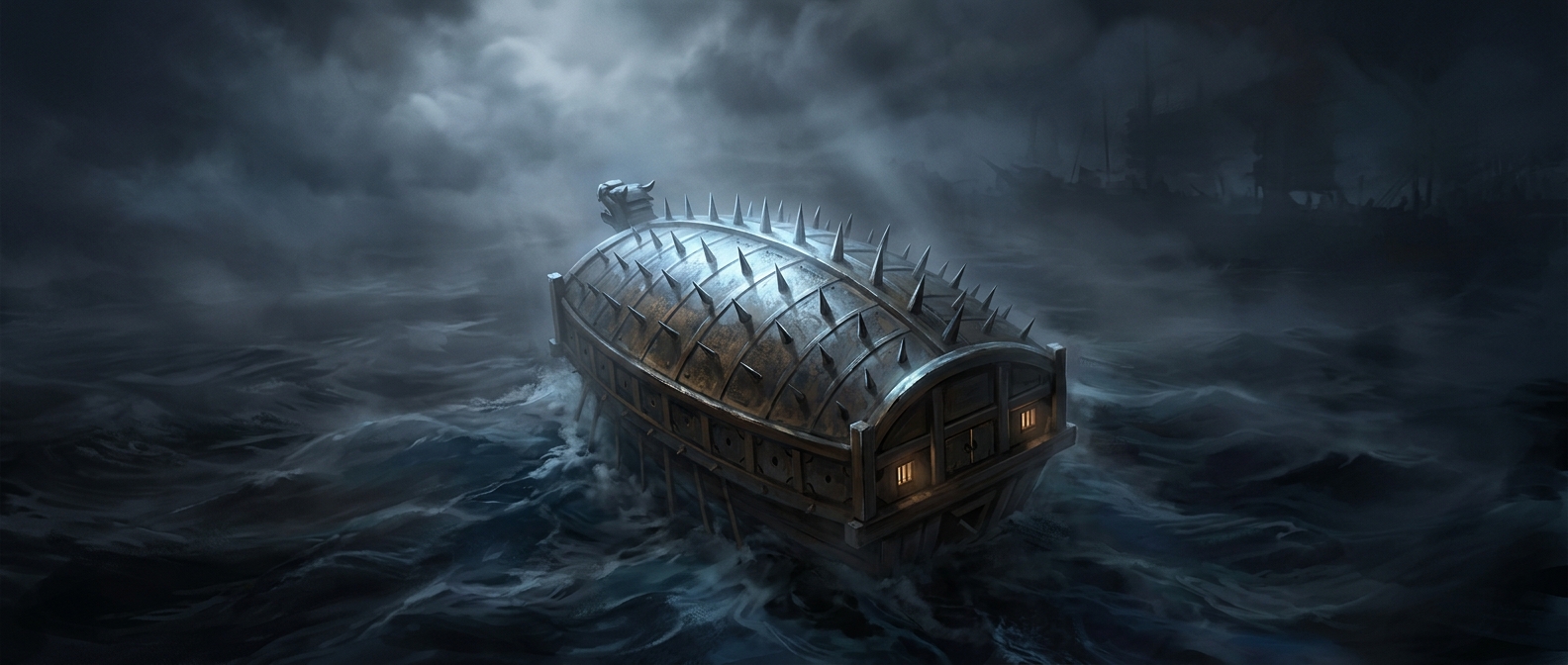
A turtle ship, or geobukseon, turned the ship’s upper deck into a defensive barrier. Its wooden covering concealed the crew and was studded with spikes, making a leap from an enemy vessel a perilous move. That mattered in an era when naval fighting often became hand-to-hand combat after ships drew alongside: a boarding party needed somewhere to land, gather, and fight.
The roof did not make the vessel a sealed, blind box. Openings allowed its crew to see and shoot outward, while cannon ports let them fire from within the protected hull. The design’s basic logic was to reverse the usual danger of close combat: the turtle ship could approach and attack, but opponents had difficulty turning contact into a boarding action.
Protection that supported an offensive role
The covered deck also helped shield sailors from arrows and other attacks from above. Together, the armor-like roof and the ship’s guns let its crew fight without exposing as many people on an open deck. The spikes were not the ship’s only defense; they made one particularly dangerous tactic—climbing aboard—harder to carry out.
Turtle ships are associated with Korea’s naval resistance during the Japanese invasions of the late sixteenth century. They were specialized warships, not magic or unstoppable vessels: their value came from combining protection with the ability to bring guns into close engagements. The striking result was a warship whose roof was not merely cover. It was a weapon against the enemy’s most direct route onto the ship.