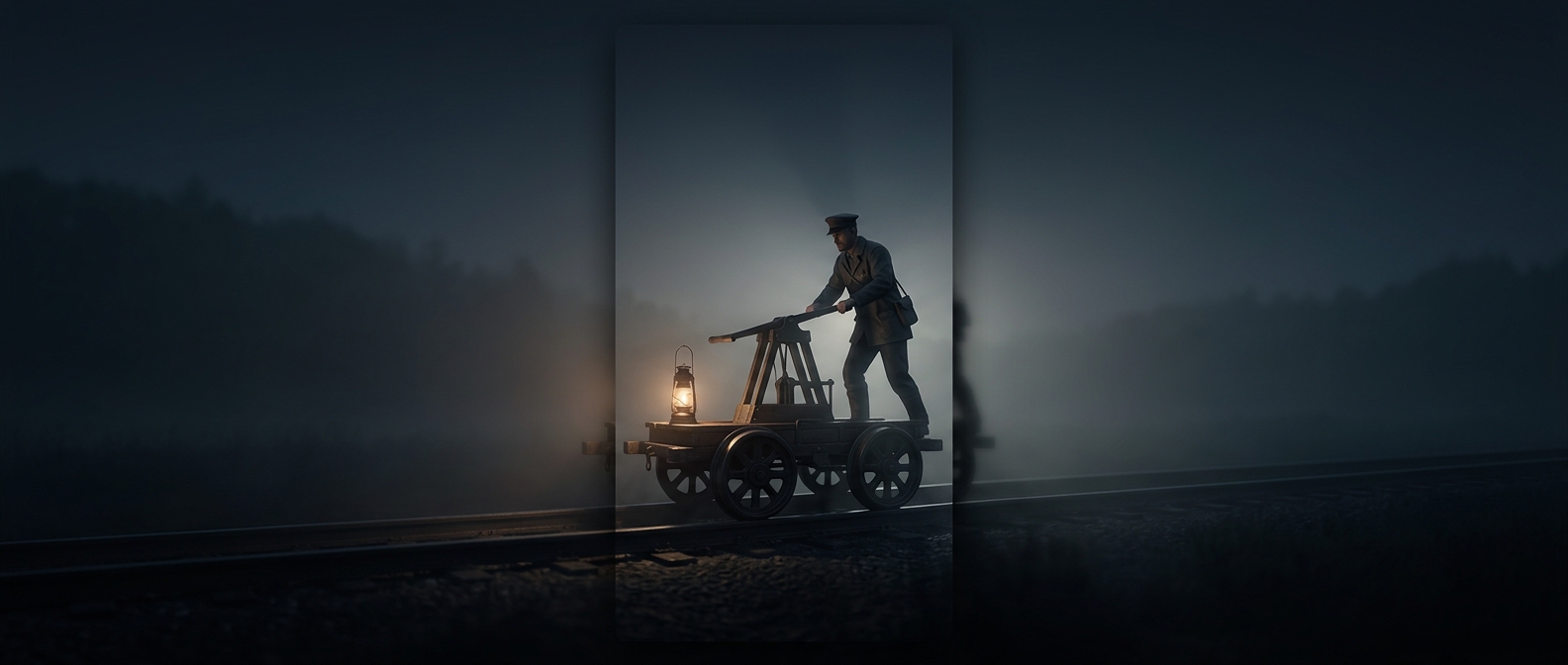
A Work Vehicle That Must Yield the Track
A draisine is built for railway work, not for competing with trains. Crews use one to travel along a line while checking rails and trackside equipment or carrying tools to a repair. Its small size and relatively low weight make it more practical than sending a full-size train for a short inspection or maintenance job.
That lightness matters because a railway track is shared, tightly controlled space. A draisine moving along the rails still occupies the route: a scheduled train cannot safely treat it like an obstacle it can simply pass. The work vehicle has to be taken clear before the line is needed for ordinary rail traffic.
The Escape Is Part of the Design
Unlike a train, a draisine is intended to be removed from the running track when necessary. Depending on its design and the site, crews may be able to move it onto a nearby siding or other clear area; some small vehicles can be lifted off the rails. A siding is a separate track where a vehicle can wait without blocking the main route.
This makes the draisine useful for brief, localized jobs: it can bring people and equipment close to the work, then get out of the way. Its defining advantage is not speed but flexibility—the crew can reach a stretch of railway without committing the line to a large vehicle for the whole task.