How a stone could change hands without moving
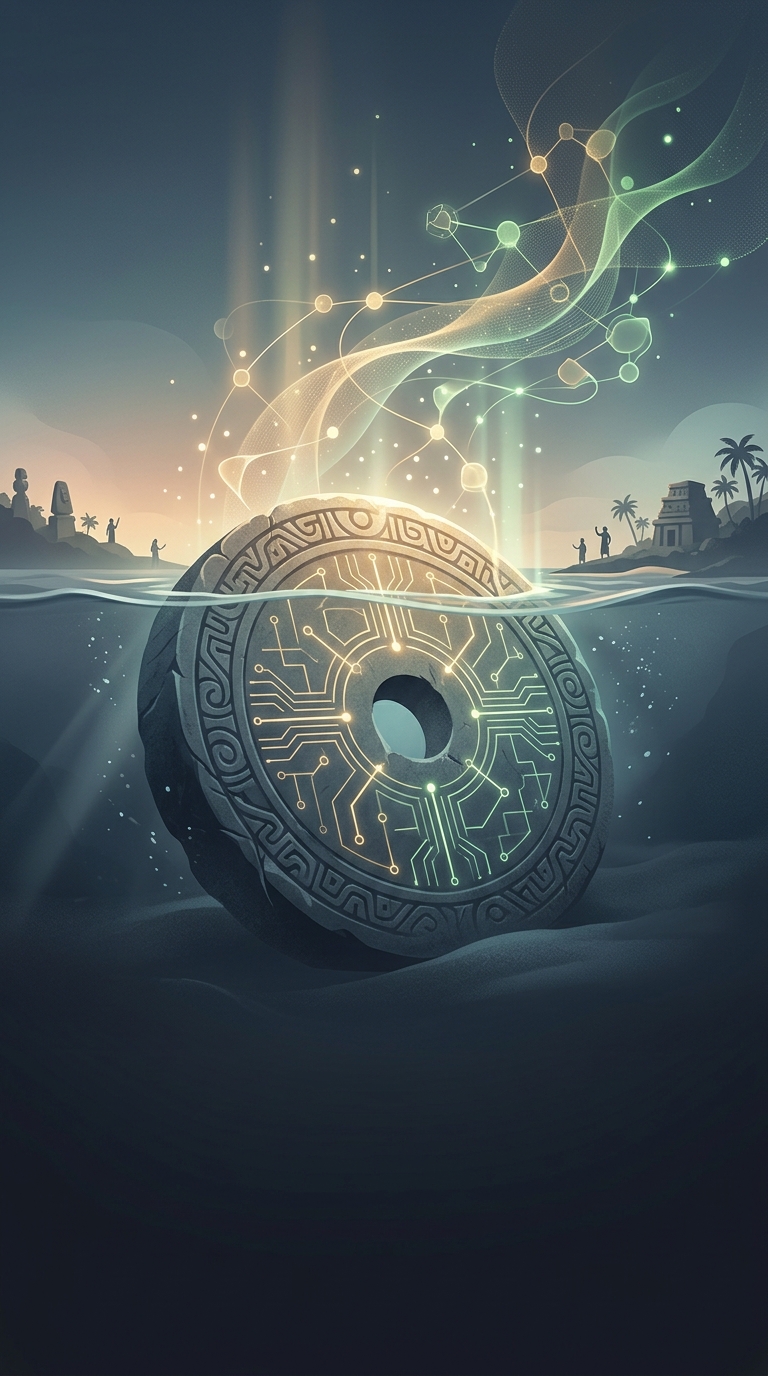
A rai stone’s economic value did not depend on carrying it to a new owner. What mattered was a recognized change in ownership: people who knew the stone and the parties involved understood that it now belonged to someone else. Because the transfer was public knowledge, the stone could remain in place while its claim changed.
That arrangement depended on shared memory and trust. A sale was not simply a private exchange between buyer and seller; other people had to accept who owned the stone afterward. The community’s knowledge effectively did the work that a portable coin or written receipt might do elsewhere.
The labor was part of the value
Rai stones were made from limestone quarried beyond Yap, notably in Palau, and getting them to Yap was a formidable undertaking. The effort and danger involved in making and transporting a stone helped shape its worth. Size mattered, but so did qualities such as its history and the difficulty of bringing it to the island. A huge disc was not automatically a more useful payment than every smaller one.
This made rai currency different from money whose value comes mainly from standardized units that can be counted and carried. A stone’s worth rested partly on its physical form, but also on what people knew about its making, journey, and ownership. The object could stay fixed while its economic meaning—and its owner—changed.
That system also shows a practical tradeoff: stone money was durable and publicly visible, but it was not convenient for everyday pocket-sized purchases. Its use depended on a community able to recognize claims and remember transfers. The remarkable part was not just that a massive stone could serve as money; it was that shared agreement could make moving it unnecessary.