A pen designed for a rough surface
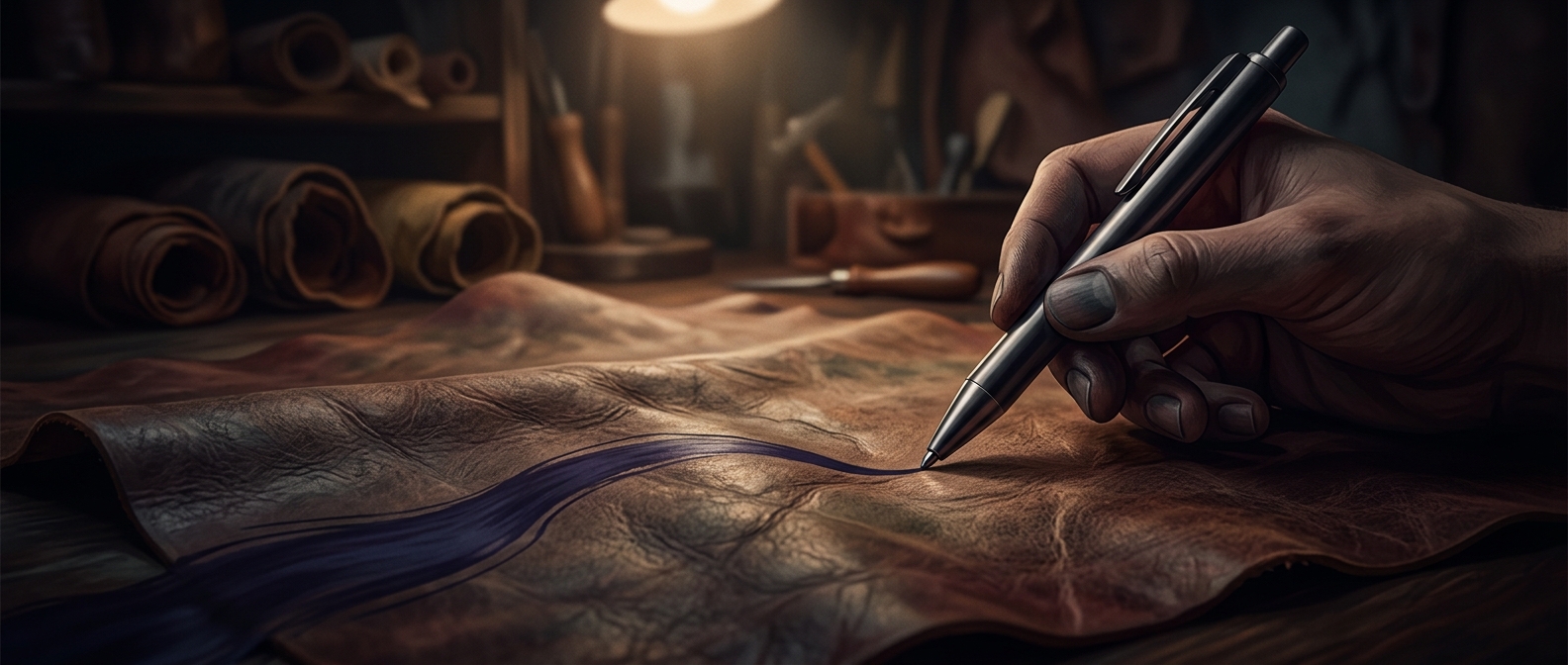
The ballpoint pen’s early purpose was not simply to make writing on paper neater. In 1888, American leather tanner John J. Loud patented a pen intended to mark leather—an uneven surface that could snag a pointed writing tool. A quill’s sharp edge could catch on the hide instead of gliding over it.
How the rolling ball helps
At the tip of a ballpoint, a small metal ball sits in a socket and turns as the pen moves. Ink from the reservoir coats the ball; as it rolls across the surface, it transfers ink without presenting a sharp point that digs into every rough spot. The ball also helps control the flow: its socket holds ink in place when the pen is not moving, while contact with the surface turns the ball and lays down a line.
That mechanism made the design promising for marking hide, where a smooth, delicate nib was not necessarily useful. But a pen that could leave marks on leather was not automatically a good everyday paper pen. Making a ballpoint write reliably on paper required ink and a tip that worked together: the ink had to flow when the ball turned, yet not leak or dry out when it stopped.
From specialized tool to everyday pen
Loud’s patent addressed a practical problem for leather work, but the broader ballpoint familiar today depended on later improvements to the design. The key idea endured: let a rolling ball carry ink onto the surface, rather than drag a pointed nib through it. A tool conceived for a stubborn material thus helped establish a writing method that could handle rough contact—and, once refined, ordinary paper too.