A steady beat without hiring a drummer
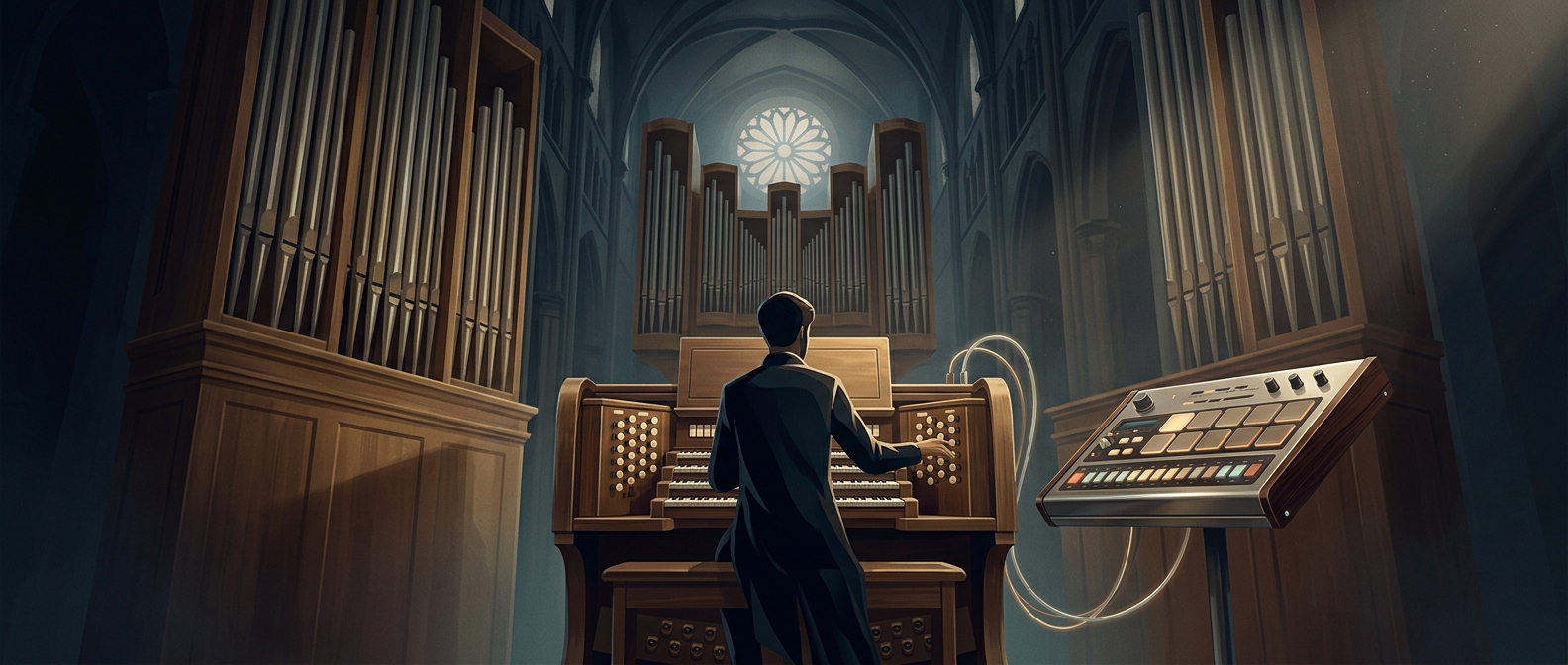
Church organists could fill a room with sound, but an organ recital did not automatically include percussion. Hiring a drummer added expense and required coordinating another performer. Early drum machines offered a simpler option: a compact device that supplied a preset beat while the organist played.
These machines were accompaniment tools, not miniature human drummers. Their rhythms were fixed patterns, selected by the player rather than shaped in response to the music. That made them useful when the goal was simply to give a tune a regular pulse—and especially appealing to churches seeking a less costly alternative to a live drummer.
Why the rhythms sounded so limited
The patterns reflected the kinds of music the machines were built to accompany. Waltzes and polkas had familiar, clearly marked beats that could be reduced to repeatable settings. The machine could keep those beats going reliably, but it could not add the subtle accents, changes in intensity, or spontaneous fills a drummer might bring.
That constraint points to the machines’ original purpose: they were practical substitutes for a musician, not instruments designed to invent new rhythms. Later drum machines would be used to build dance music around programmed beats. The early church-oriented devices, by contrast, offered something more modest—a dependable polka or waltz whenever an organist needed one.