A camp that traveled with the army
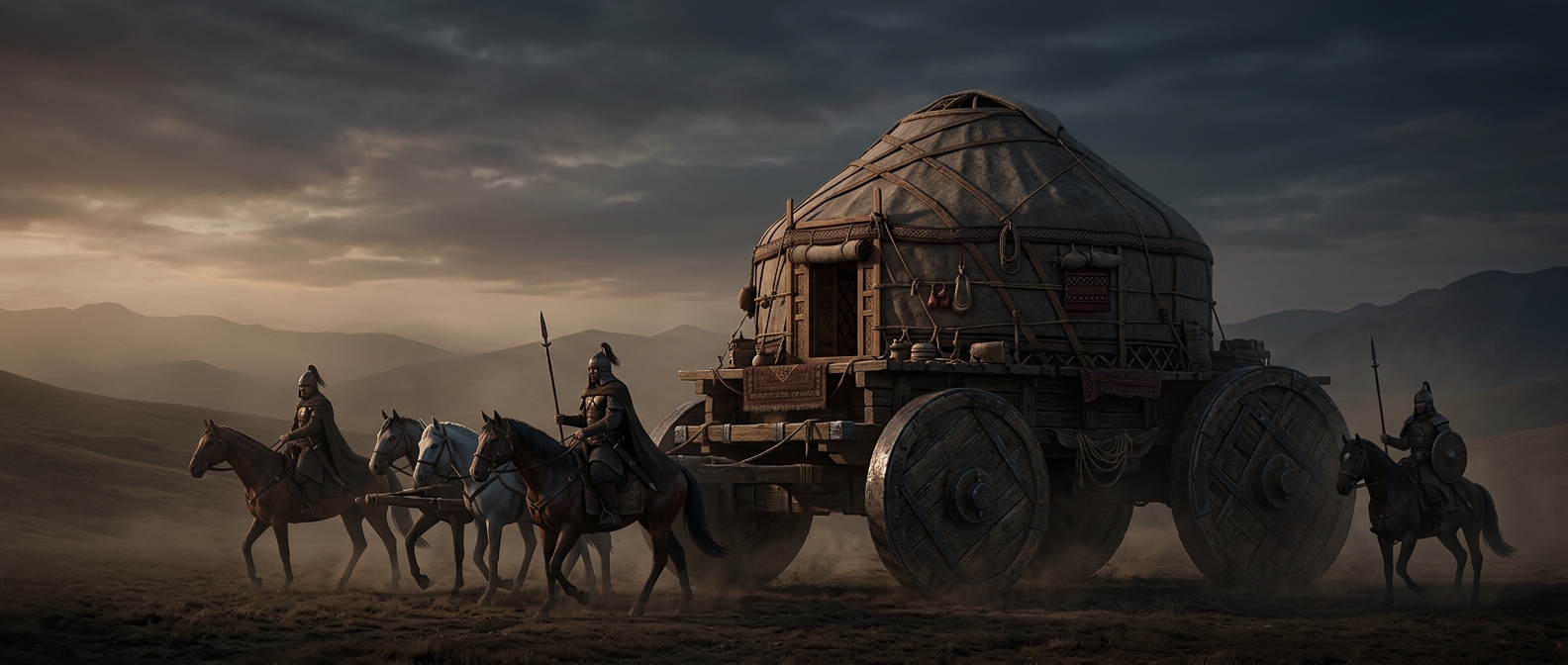
For a force built around movement, a large dwelling on wheels could solve a practical problem: soldiers and commanders did not have to abandon the structures that made camp livable each time the army moved. Instead, the settlement could be taken along, with draft animals supplying the pulling power.
That changed what a march could carry. A camp was not just shelter; it was where people rested, stored belongings, and resumed daily routines between movements. Bringing substantial dwellings along helped make repeated relocation possible without reducing every stop to a bare bivouac—an improvised camp with little more than temporary cover.
Mobility had a cost
A wheeled camp was not effortless mobility. Carts and the animals pulling them added weight, consumed provisions, and needed passable routes. The army therefore had to balance the benefits of carrying a settled home against the slower, heavier movement that came with it.
The result was a striking kind of military infrastructure: not a permanent base left behind, but a settlement that could move as the force did. The army’s footprint traveled with it, so the march itself could carry the makings of home.