The cage changed what the rats had to choose
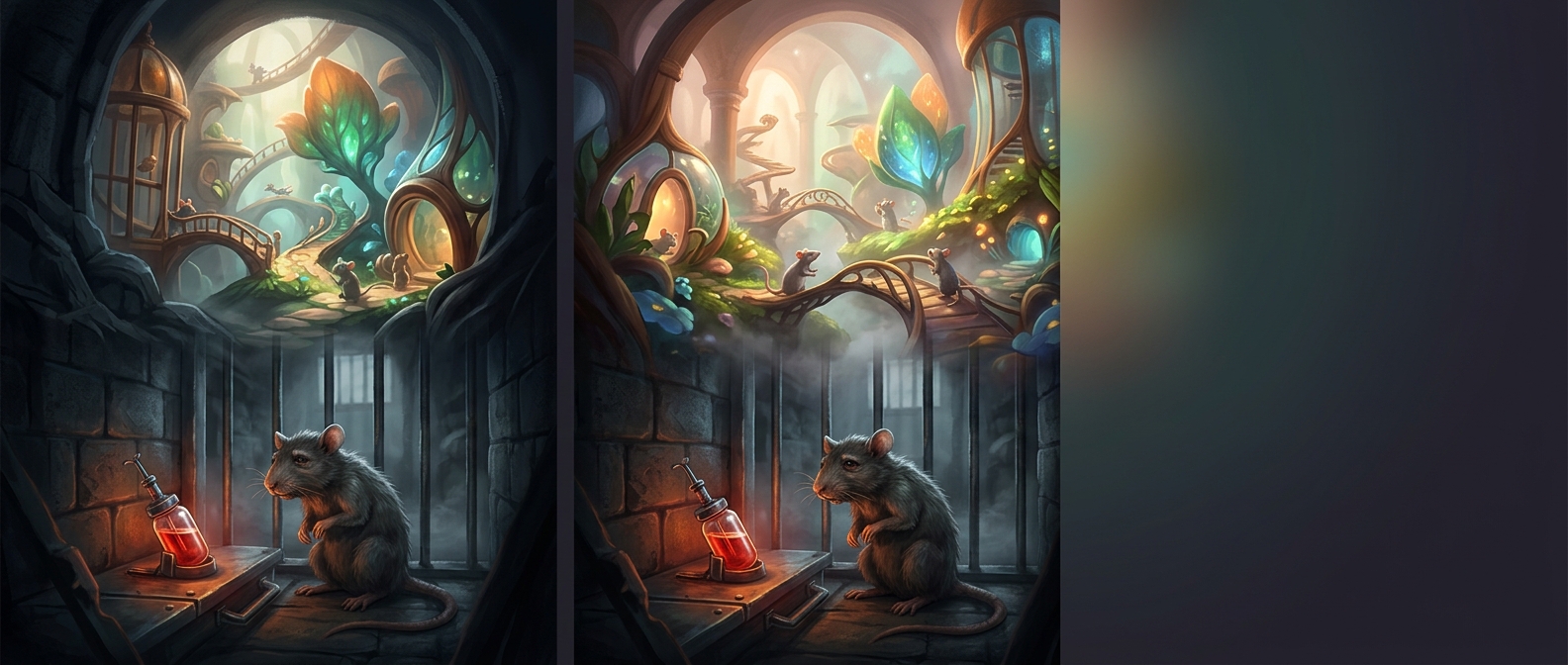
The key design idea in Rat Park was to treat housing as part of the experiment, rather than as neutral background. One group lived alone in standard cages; another lived in a larger shared enclosure with room to move and interact. Both groups could choose between ordinary water and a morphine solution. The comparison asked whether the same drug option would attract animals differently in different surroundings.
That matters because consumption is not just a property of a substance. It is also a behavior shaped by what else is available. Social contact, activity, and space can compete with drug-taking for an animal’s attention and time. In an isolated cage, those alternatives are scarce; in a stimulating shared enclosure, they are more plentiful.
What the experiment could—and could not—show
The rats’ drinking offered a measurable way to compare choices, but it was not a direct measure of human addiction. A rat drinking less morphine solution does not, by itself, reveal why it drank less or establish how people will respond to drugs. The experiment instead made a narrower point: drug use can change when the surrounding conditions change, even when the drug remains available.
That shift in focus helped make the study memorable. Rather than asking only what a drug does to an isolated individual, Rat Park asked what role a person’s—or an animal’s—social world might play in repeated use. The cage was not scenery: it was one of the conditions that shaped the choice.