A shared radio channel left no room for overlap
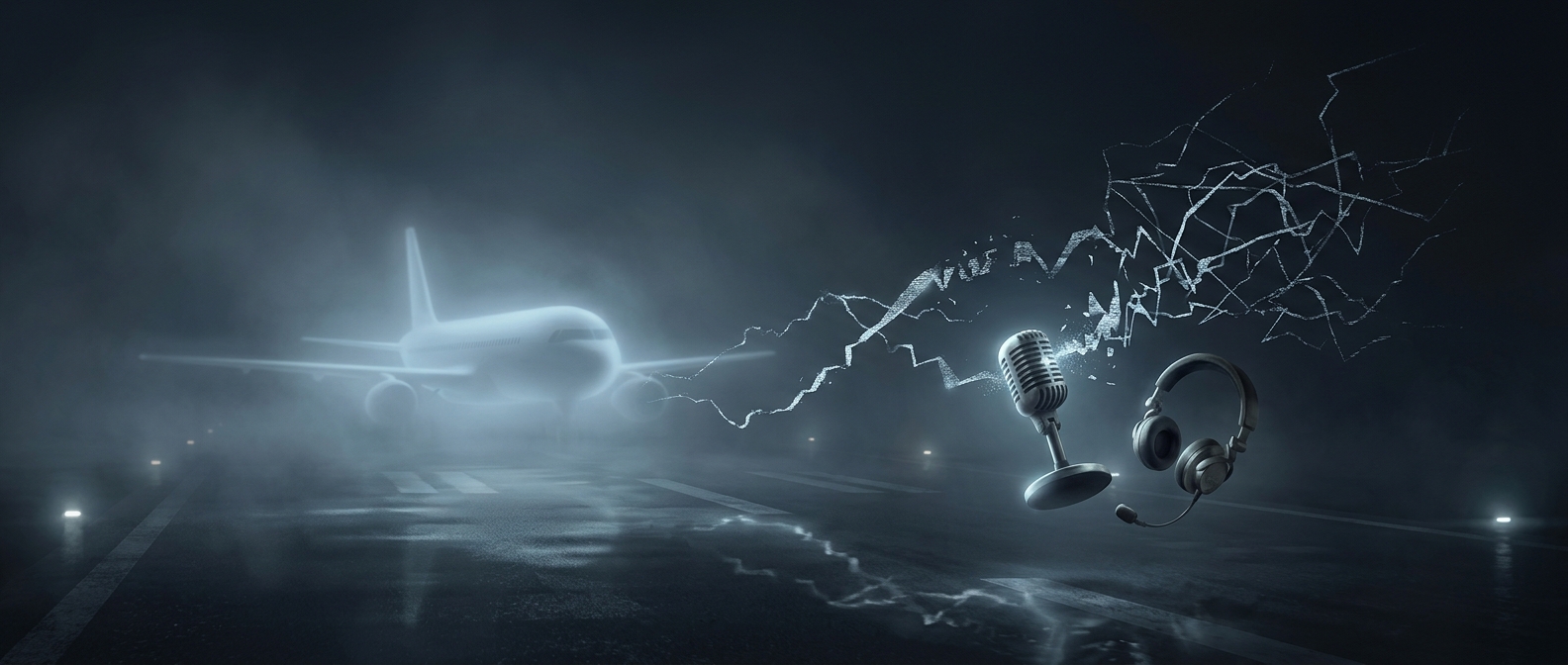
Aircraft and controllers at Tenerife used a radio channel on which people could not reliably talk over one another. When two stations transmitted at once, their signals interfered; listeners might hear noise or fragments rather than either complete message. The crew could not simply rewind the exchange or tell from the silence that a warning had been sent.
That mattered because the Pan Am jet was still on the runway, while the KLM jet was preparing to depart from it. Pan Am’s crew was trying to report its position. At the same time, the KLM crew transmitted, and the two messages collided. The warning that Pan Am had not cleared the runway was therefore not understood in the KLM cockpit.
Fog turned a radio failure into a visual one
The runway was hidden by dense fog. From the KLM cockpit, the Pan Am aircraft could not be seen in time to confirm that it was still ahead. The crew had received permission to follow its route, but not the separate clearance required to begin takeoff. Nevertheless, the KLM aircraft started its takeoff roll.
The fog and the radio overlap reinforced each other: the crew lacked both a clear verbal warning and the visual information that could have exposed the danger. Once the aircraft were close enough for the Pan Am jet to appear, there was too little runway left to avoid the collision.
Why the missing message mattered
The crash was not caused by one garbled transmission in isolation. It emerged from a chain in which the aircraft shared a runway, visibility was poor, and cockpit and control communications failed to establish that the runway was clear. The radio collision removed one chance to correct the KLM crew’s understanding; the fog removed another way to notice the error. It is a stark example of why aviation procedures require explicit takeoff clearance and reliable confirmation—not an assumption that a runway is empty because nobody has clearly said otherwise.