Games make effort legible
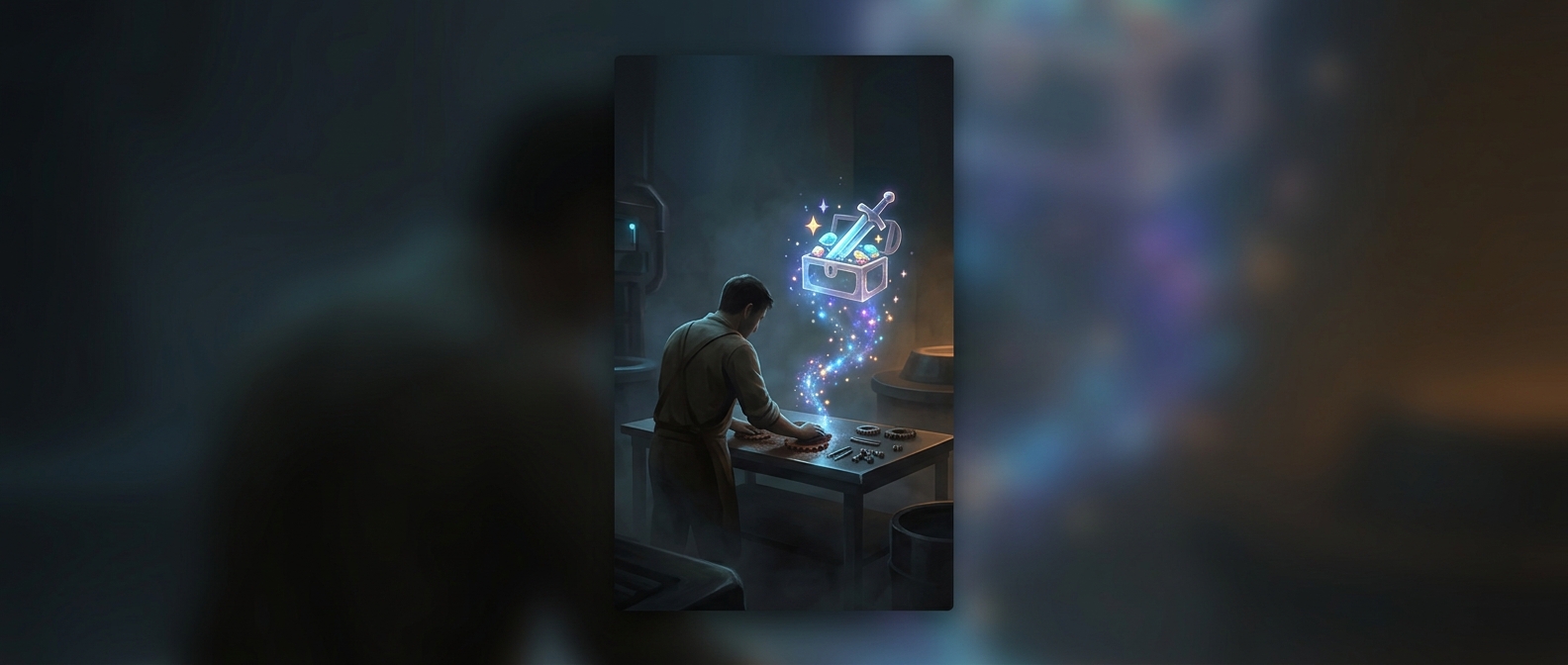
A task is easier to stick with when its progress is visible. In an RPG, gathering materials or clearing a room can produce an immediate signal: an experience bar advances, an item appears, or a skill improves. That feedback closes the gap between effort and outcome. In everyday life, the benefit of tidying or running an errand may be delayed, hard to measure, or quickly undone.
The game also gives the task a defined shape. A quest says what to do, where to do it, and when it is finished. That boundary makes repetitive actions feel less endless: each small step moves toward a stated endpoint, even if the action itself is simple.
A small task plugs into a larger goal
Designers often connect routine work to something players already care about. The materials collected may unlock better equipment; the experience earned may help a character survive a difficult fight. The chore matters not just because a number rises, but because that number opens a new possibility. Players can see how a modest action fits into a longer plan.
This structure can make repetition satisfying without making every task exciting. The action supplies a steady rhythm, while rewards and unlocks give it direction. Players also choose how to approach some goals—what to improve or which task to tackle first—so progress can feel partly self-directed rather than imposed.
Real chores rarely come with a progress bar, a guaranteed upgrade, or a neatly marked finish. Games compress those uncertainties into a clear loop: do something, receive feedback, and see what the effort makes possible. That is why even a mundane virtual errand can feel worthwhile: its payoff is built into the task’s design.