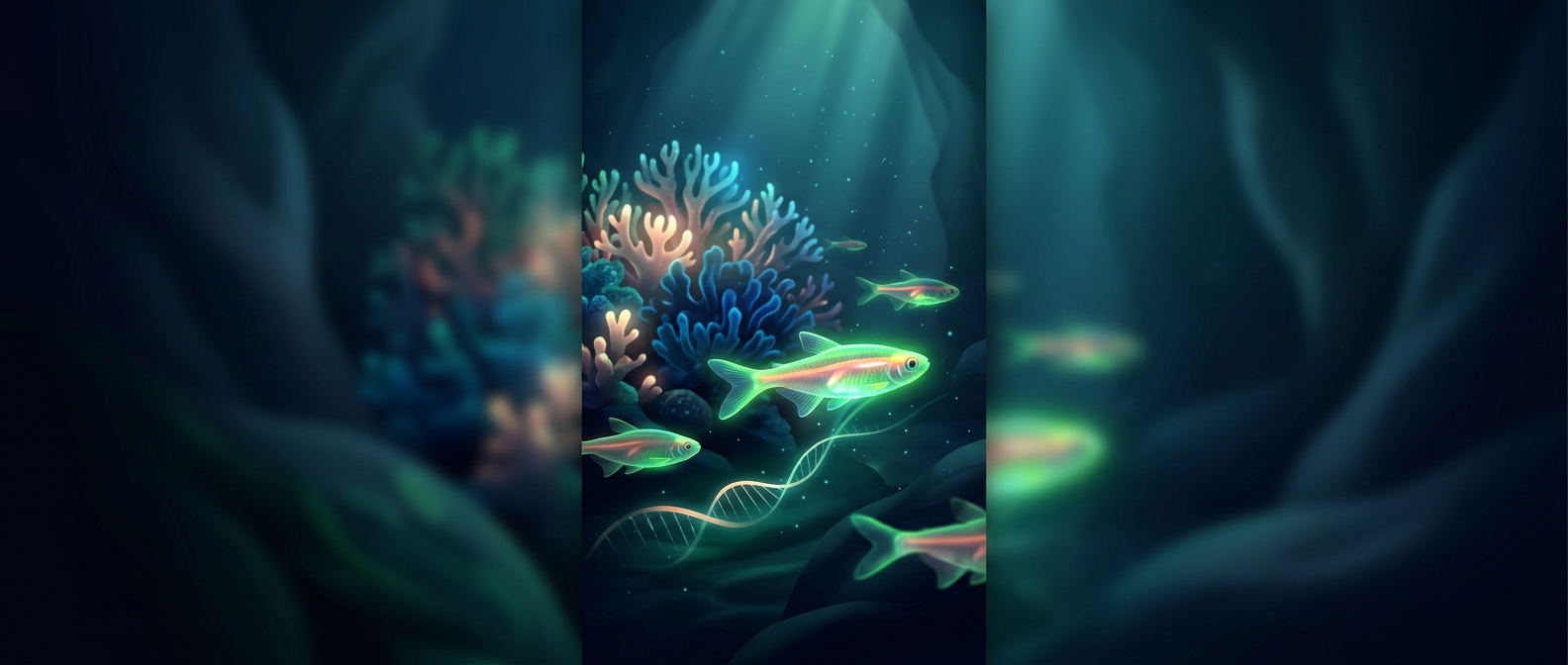
How a jellyfish protein makes fish glow
Some jellyfish produce green fluorescent protein, or GFP, which absorbs certain kinds of light and re-emits some of it as a visible glow. Related fluorescent proteins from sea anemones produce other colors. Scientists can place the genes that encode these proteins into a fish embryo; as the fish develops, its cells make the protein, so the fluorescence becomes part of the living animal rather than a coating applied to its scales.
The fish usually look brightest under blue or ultraviolet light, which excites the proteins. Under ordinary room lighting, the colors may appear less vivid. The trait is inherited when the inserted gene is passed to offspring, allowing fluorescent lines to be bred.
From pollution signal to pet
The technology was developed with environmental monitoring in mind. Researchers sought fish that would fluoresce in response to pollutants, making contamination easier to spot. In that approach, the fish’s glow would function as a biological signal: a change in exposure could trigger a visible response. That goal differs from the ornamental fish sold for their color, where fluorescence is present as a lasting trait rather than a warning that water has become polluted.
Turning a research idea into a pet also changes what the color means. A vivid fish can make genetic engineering visible in an everyday setting, but its appearance alone does not indicate that the fish is detecting pollution. The glow comes from proteins working inside its cells—a tiny light-converting mechanism borrowed from marine animals and repurposed in a new one.