How a Triangle Turns Tension Into a Whole
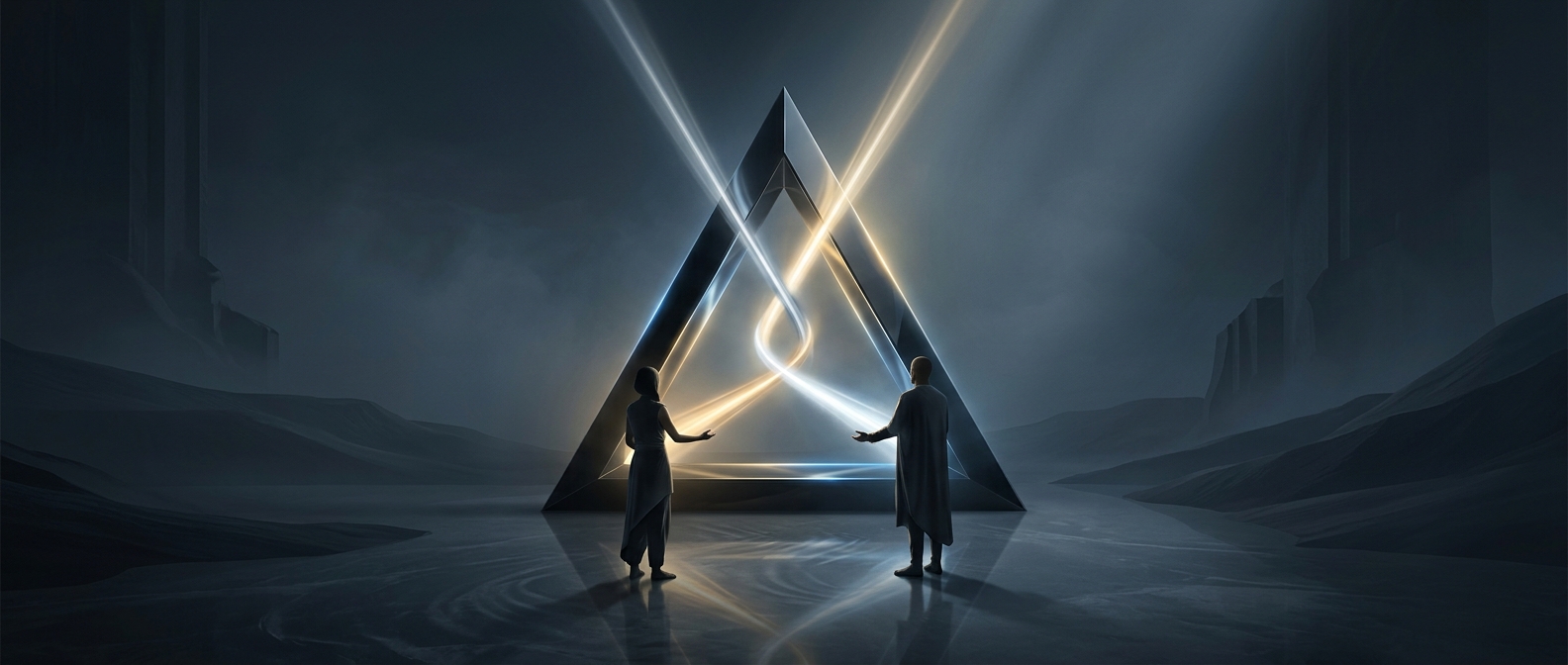
A triangle gives an abstract idea a simple visual structure: three points can stand for two forces and what emerges when they meet. The third point is not merely a compromise between the first two. It represents a new, integrated condition—something that depends on both forces but is more than either one alone.
That makes the shape useful in mystical symbolism, where change is often described as movement from opposition toward unity. The corners keep the forces distinct; the connected sides show that they belong to one figure. The symbol holds difference and wholeness together at the same time.
A Symbol, Not a Universal Code
The meaning depends on the tradition and the context in which the triangle appears. It is a way to express a relationship among ideas, not proof that opposing forces literally combine through a hidden process. Its appeal is its economy: with three points and three lines, a complex story of conflict, connection, and transformation becomes easy to recognize and remember.