From a biological puzzle to a hidden world
Lemuria began as a proposed explanation for a real puzzle: why lemurs and related animals seemed to occur across widely separated lands. In the 19th century, zoologist Philip Sclater suggested that a now-submerged landmass had once connected parts of the Indian Ocean region. The idea belonged to an era before continental drift and modern plate tectonics offered a better account of how continents and species became distributed.
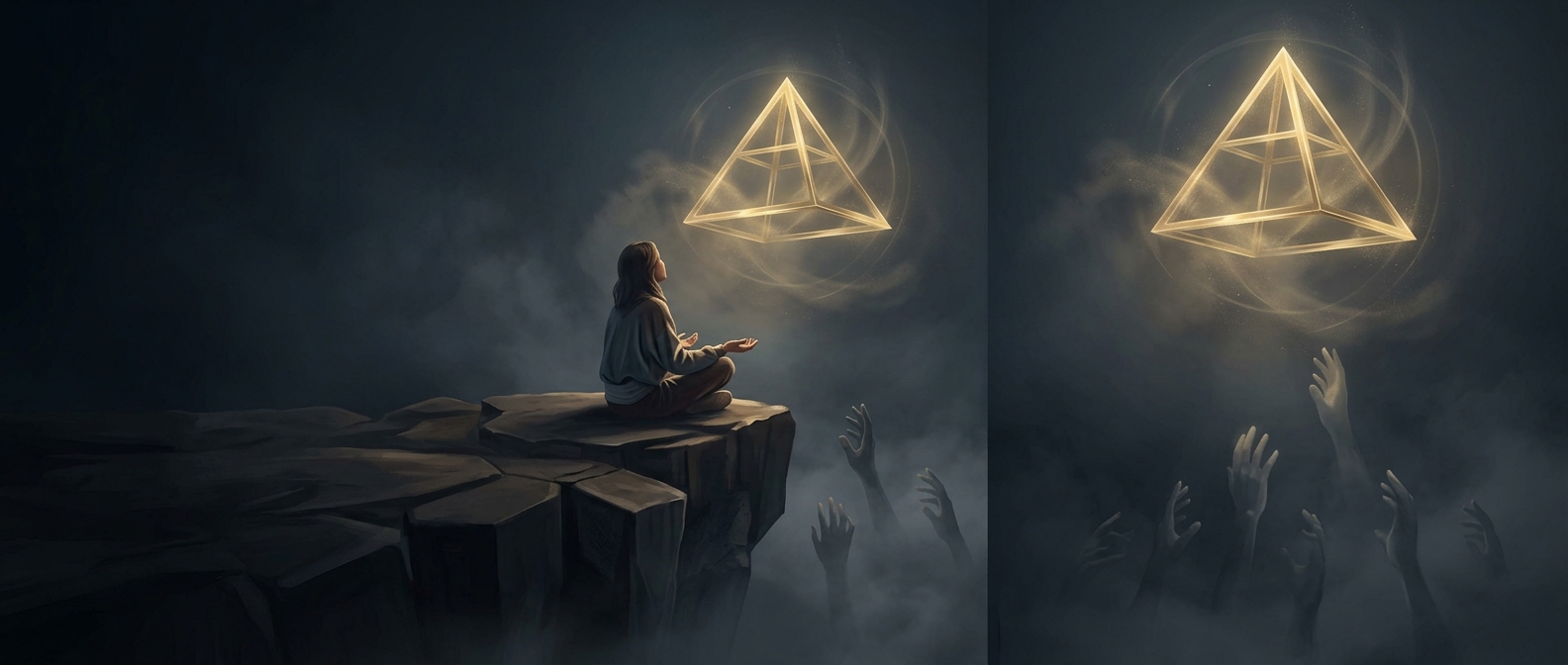
Later writers carried the name into occult cosmologies, where Lemuria became not just lost land but the setting for an imagined earlier humanity. In those stories, its inhabitants were described as unusually emotional and unlike people today. That portrayal is part of a spiritual myth, not evidence about a prehistoric civilization.
Why the lost continent became a lost age
A vanished land is easy to turn into a vanished world: if an entire continent could disappear, its people, customs, and history could be imagined as beyond ordinary records. Occult accounts used Lemuria to place human origins in a remote, inaccessible past and to describe humanity as having passed through different stages of development.
That makes the story less a map of a place than a way of thinking about human nature. Its “highly emotional” inhabitants embody a contrast with later humanity, while the sinking continent supplies a dramatic ending. Modern geology does not support a sunken Lemurian civilization, but the myth’s blend of ancient-world speculation and spiritual history helps explain why the name survived after its original scientific rationale faded.