How a Grandmaster Keeps Many Boards in Mind
In a blindfold exhibition, the player does not memorize a finished board like a photograph. Instead, each game is tracked as a changing position: which pieces remain, where they are, whose turn it is, and what the recent moves have changed. The player announces moves aloud, often using chess notation—the standard language for naming squares and moves—while opponents report their replies.
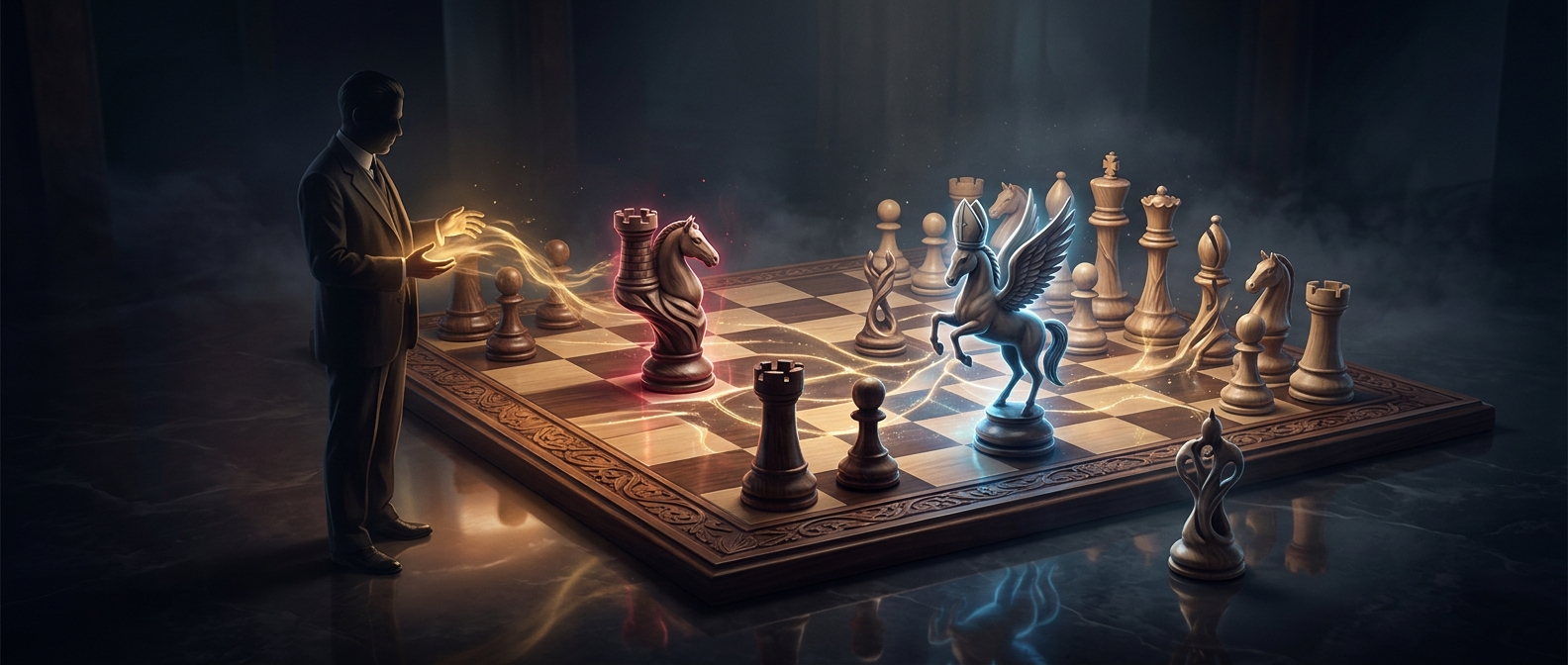
That means every move is both a decision and an update. If an opponent moves a knight, the grandmaster must remove it from its old square, place it on its new one, and reconsider the threats it creates. The same bookkeeping is happening across every other game.
Why Experience Makes It Possible
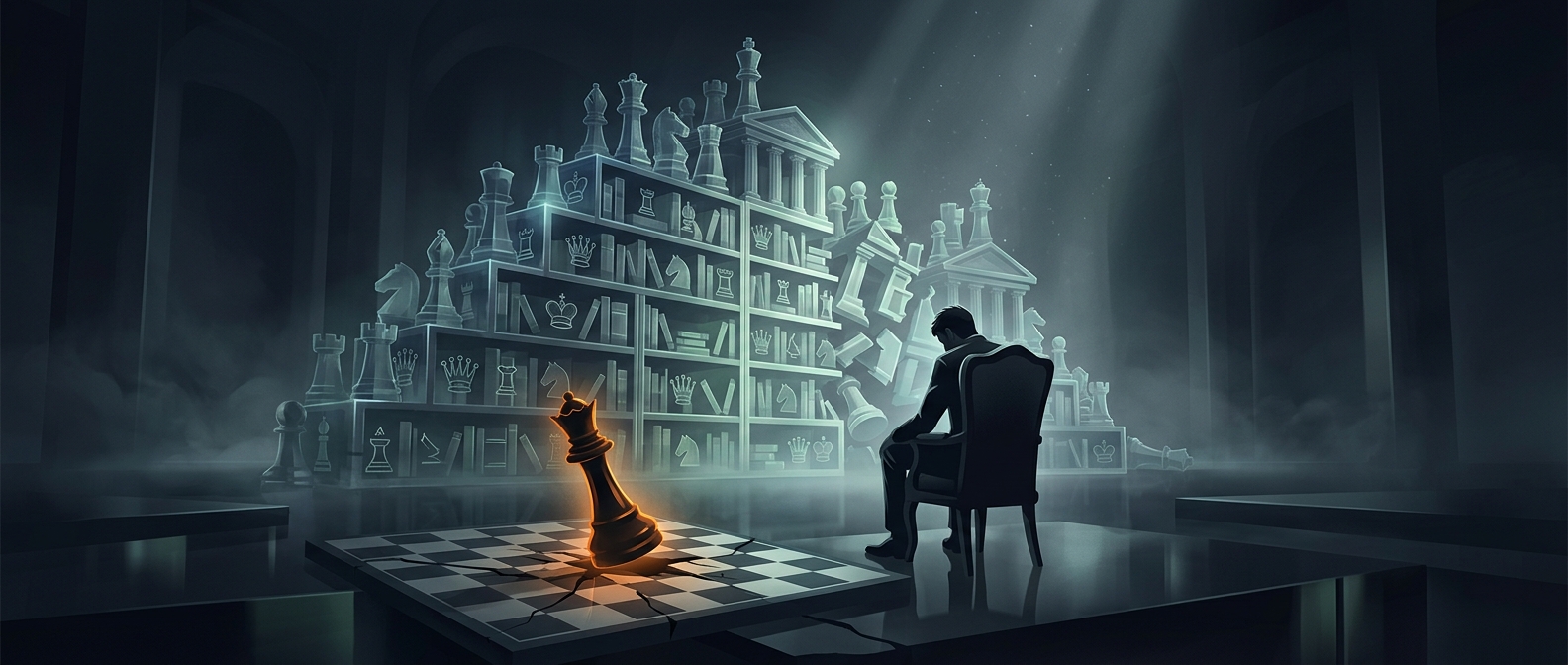
Strong players recognize familiar arrangements as meaningful patterns rather than unrelated pieces. A few pieces may form a recognizable attacking setup or defensive structure, which is easier to hold in mind than a list of separate locations. They also use the rules and logic of chess to check their mental picture: a move that leaves a king in check, for example, signals that something in the imagined position may have gone wrong.
This is not effortless recall. The player has to keep the games distinct, remember whose move is pending, and calculate possible continuations without a board to inspect. As the exhibition goes on, fatigue and a mistaken update can make the mental positions harder to maintain.
The Exhibition Is a Test of Bookkeeping, Too
A simultaneous exhibition adds another demand: the grandmaster must switch attention from one opponent to the next, then return to each game with its position intact. The opponents provide the moves, but the grandmaster must preserve the internal map and continue the calculation.
The striking part is not simply that one person can play many games without seeing the boards. It is that each game remains a separate, usable position in the player’s mind—ready for the next move even while attention is elsewhere.