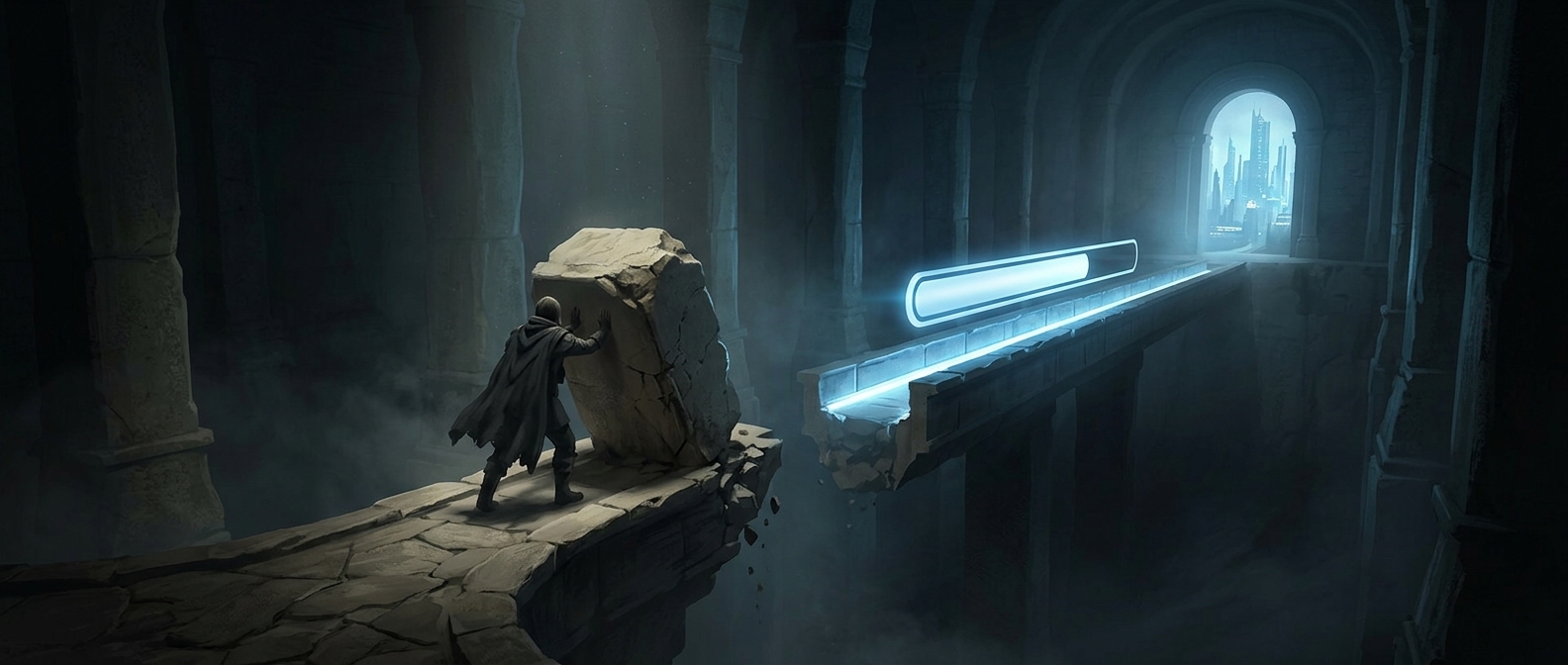
A bar turns waiting into a visible task
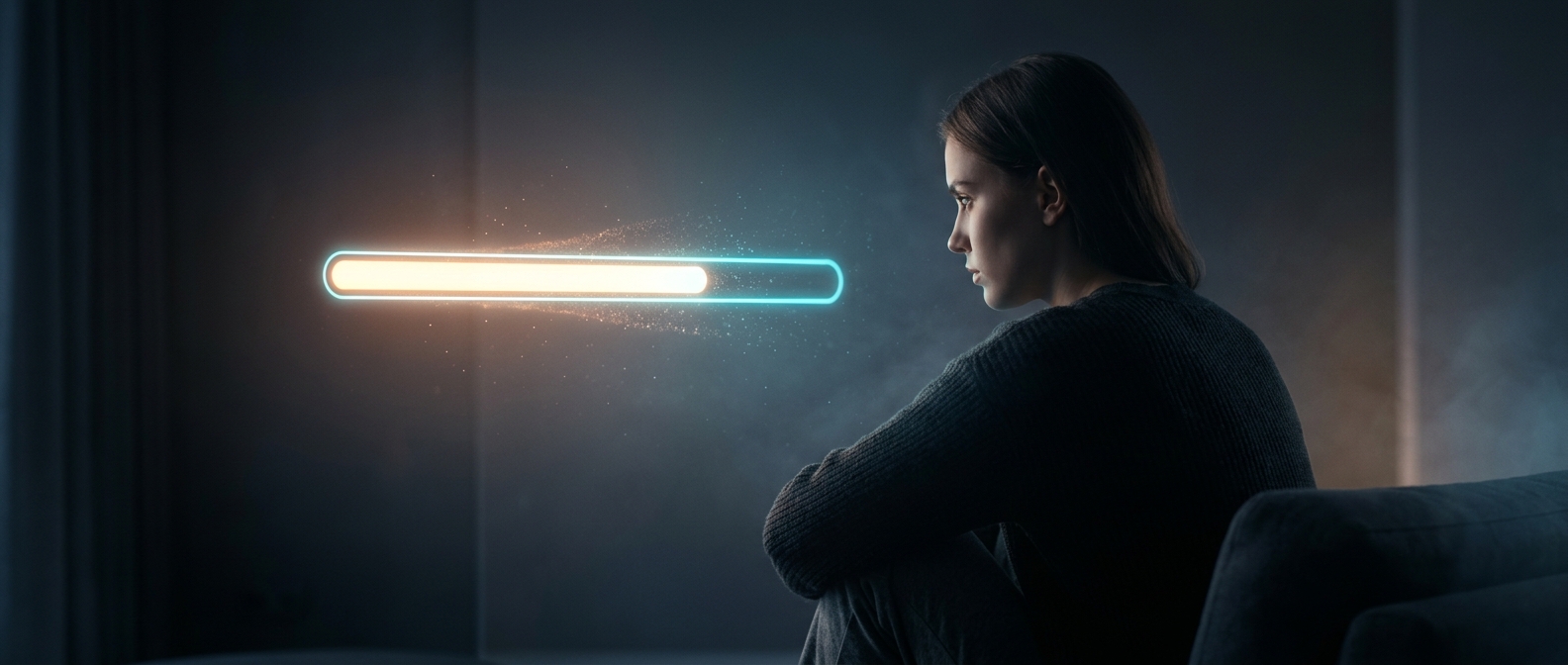
When a computer is busy, the work is usually hidden: files are being copied, data is being downloaded, or instructions are being processed out of sight. A progress bar gives that invisible activity a shape. Instead of facing an unexplained pause, you can glance at a marker and see that the task appears to be underway.
That small amount of feedback matters because uncertainty makes waiting feel harder. The bar offers a simple question to answer—has it moved?—and gives your attention something concrete to track. Watching it does not speed up the computer; it makes the delay easier to follow.
Why the last stretch can feel slow
A bar is often an estimate, not a direct measurement of how much time remains. Some steps take longer than others, and a system may not know in advance how long each will take. It can therefore move quickly, pause, or linger near the end even while the computer continues working.
That mismatch creates a familiar trap: the bar looks precise, so we treat it like a promise. But its most dependable job is usually to signal activity, not to tell us exactly when we can stop waiting. The next time it stalls at 99 percent, the visible pause may be a real final step—not a reason to stare harder.