A boundary drawn around a national livelihood
For Iceland, fishing was not simply one industry among many. The country’s economy and food supply depended heavily on fish, while foreign trawlers could catch large quantities in waters close to its coast. Iceland argued that it needed a wider protected zone to conserve the fishery and secure control over its most important resource.
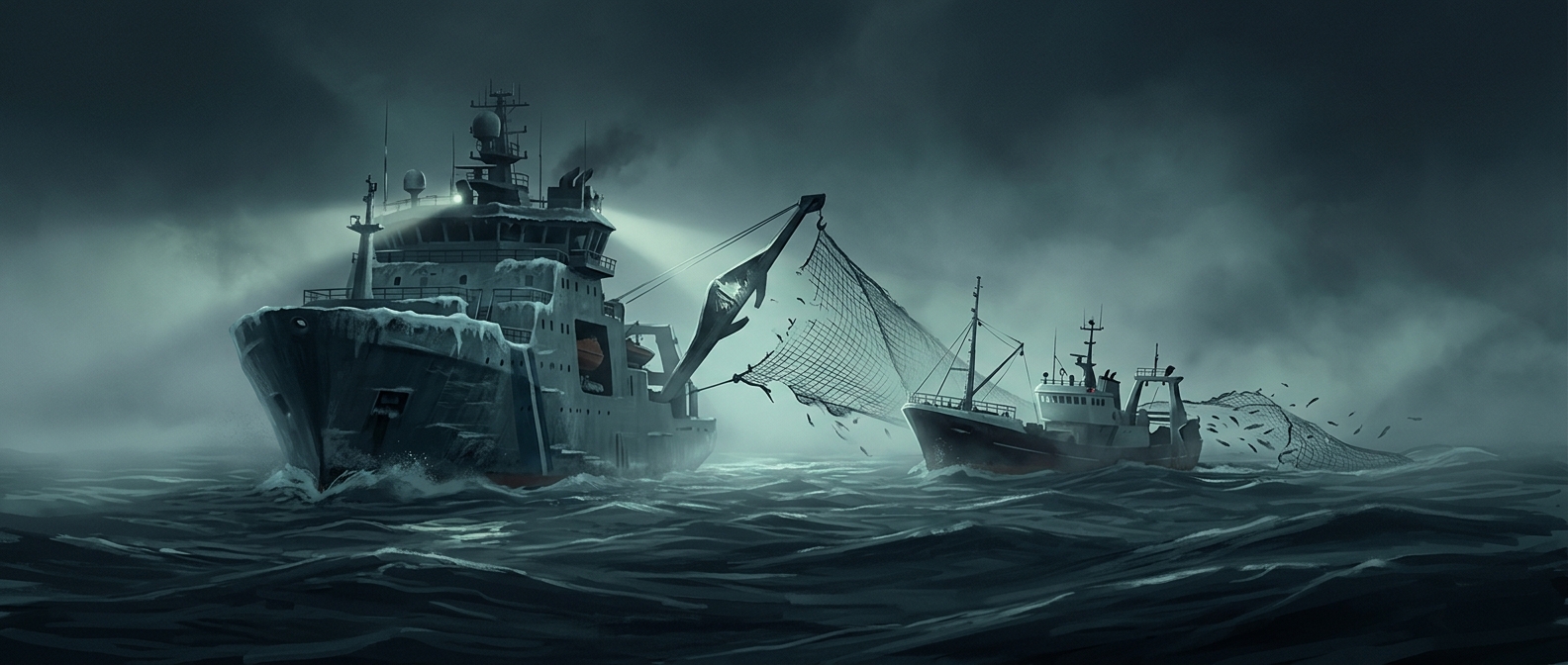
The conflict became known as the Cod Wars, though no formal war was declared. From the 1950s through the 1970s, Iceland successively extended the waters in which it claimed exclusive fishing rights. Britain rejected those claims and continued to send trawlers into the disputed areas. To protect them, the British government deployed naval ships; Iceland’s small coast guard tried to drive the trawlers away. The confrontations included dangerous close encounters at sea and damage to fishing gear.
Why a fishing dispute reached NATO
The stakes extended beyond the catch. Iceland was a member of NATO, the Cold War alliance, and hosted a strategically important U.S. military base. Icelandic leaders could use the possibility of leaving NATO and removing the base as leverage: Britain’s fishing access was at issue, but the dispute could also unsettle the alliance’s northern defenses.
That pressure helped make the conflict more than a contest between fishing fleets. Britain and Iceland eventually reached agreements recognizing Iceland’s expanding control, and British trawlers withdrew from the contested grounds. The confrontations ended without a military victory; the decisive shift was political acceptance of a new boundary.
A precedent for wider control
Iceland’s claims moved from a narrow coastal strip to a much larger fishing zone. In 1975, it asserted a 200-nautical-mile limit; Britain accepted the arrangement the following year. The 200-mile zone later became a widely recognized standard for coastal states’ control over offshore resources.
The Cod Wars therefore helped establish a lasting principle: control of nearby seas could determine who benefited from fish far beyond the shoreline. For Iceland, that meant keeping foreign trawlers out of waters its economy depended on—and making even a small country’s place in a powerful alliance part of the bargaining.