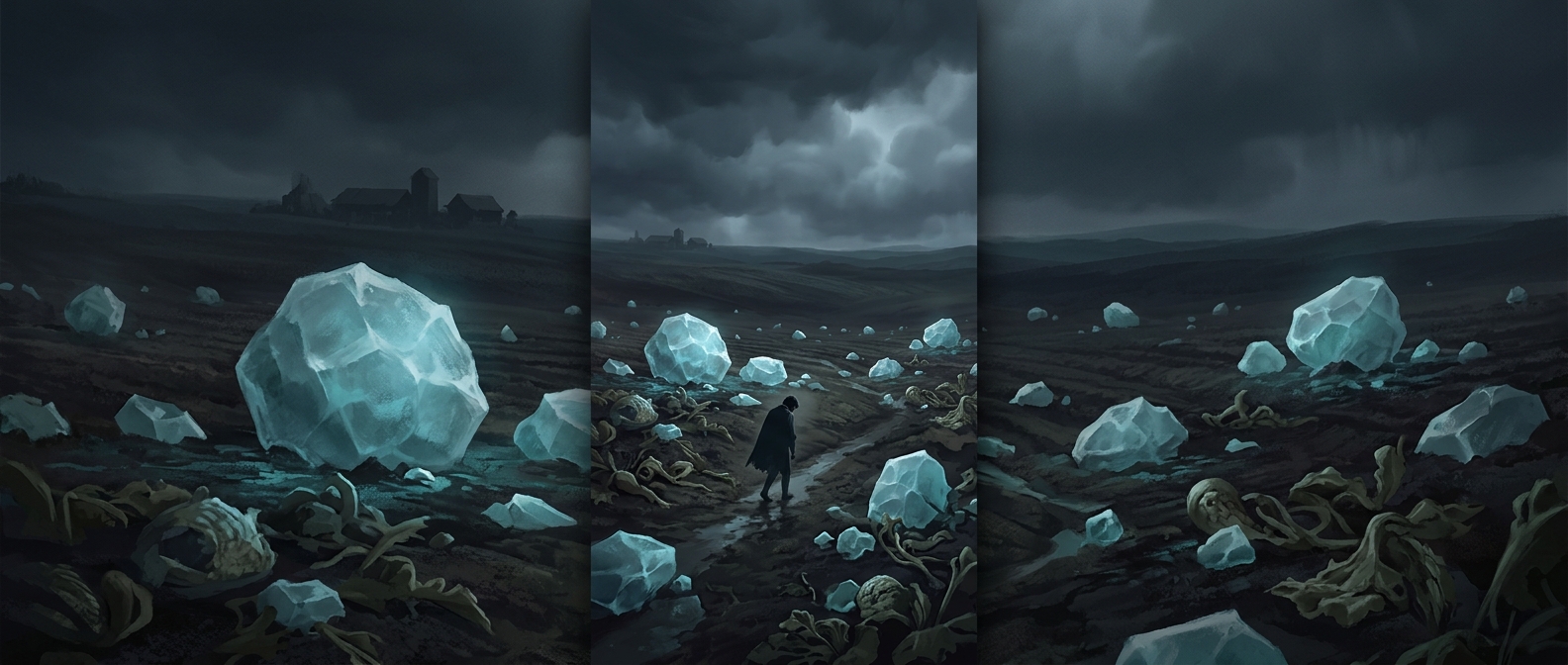
How a hailstone can grow in a storm
A hailstone begins as a small piece of ice inside a thunderstorm. Strong rising air currents—updrafts—can keep it aloft, carrying it through regions of supercooled water: liquid droplets cold enough to freeze when they touch ice. Each pass adds another layer. When the stone becomes too heavy for the updraft to support, it falls.
A stone’s path through the cloud helps determine its size and shape. Repeated trips through wet and icy parts of the storm can build irregular layers, producing the jagged forms described in accounts of exceptionally severe hail. The process depends on a storm sustaining powerful updrafts long enough for ice to accumulate.
Why the damage could spread so quickly
For a rural community, a hailstorm could strike two kinds of property at once. Large stones hitting roofs could break coverings and expose buildings to further damage; falling onto fields, they could bruise or destroy crops before anyone had time to protect them. Unlike a slow-moving hazard, hail can turn a productive field into a loss in minutes.
That combination made enormous hail more than a spectacle. Roofs were shelter and stored harvests were a livelihood, while crops in the open had little defense against falling ice. A brief storm could therefore leave damage across homes and farmland at the same time.