Why a changing cabin pressure can hurt a baby’s ears
The eardrum separates the ear canal from the air-filled middle ear. For it to move comfortably, the pressure on both sides needs to stay roughly balanced. A narrow passage called the Eustachian tube connects the middle ear to the back of the throat, letting air move in or out when the tube briefly opens.
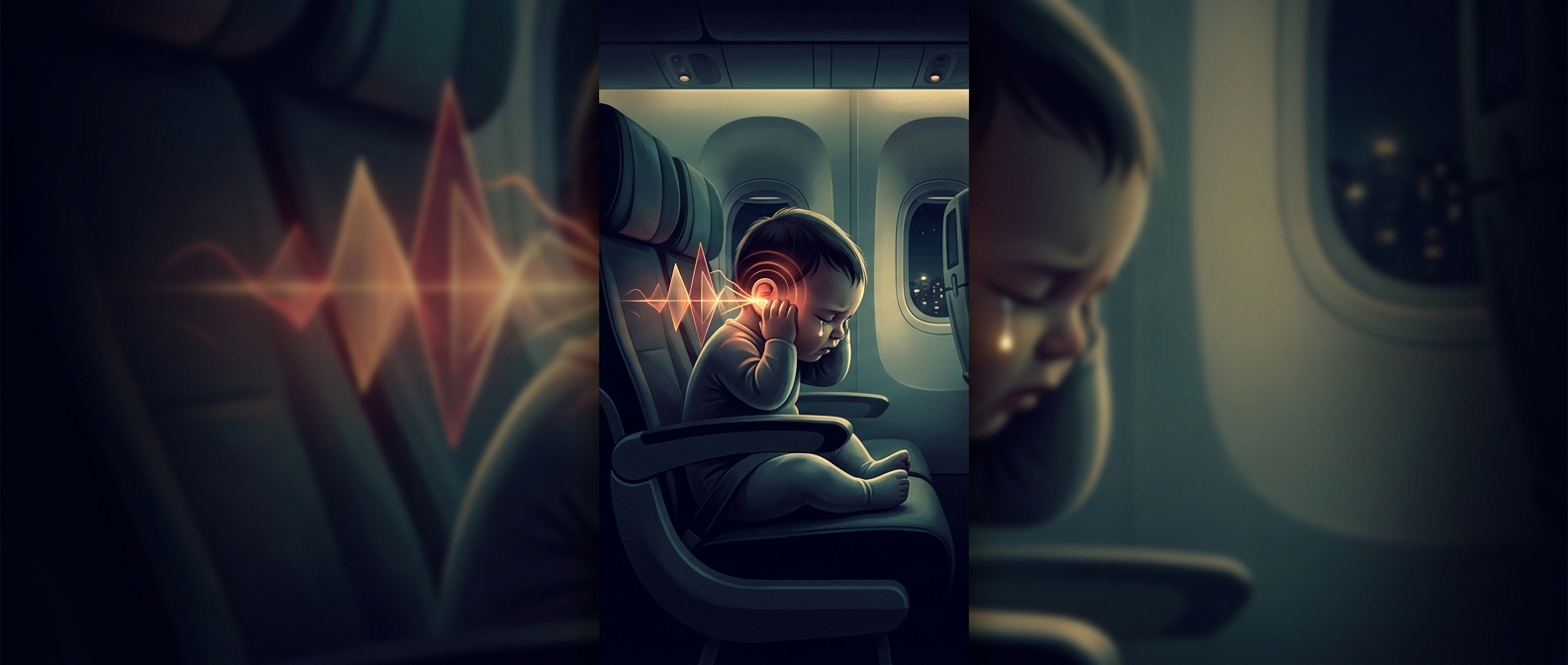
As an aircraft changes altitude, cabin pressure shifts. The middle ear may not adjust at exactly the same pace, leaving a temporary pressure difference that pushes or pulls on the eardrum. That mismatch can feel like fullness or pain.
Why swallowing matters
Swallowing can open the Eustachian tube and help restore the pressure balance. Adults may swallow, yawn, or chew deliberately; babies have fewer ways to respond on purpose. Their smaller tubes can also be harder to open, so a pressure change that an adult barely notices may bother an infant.
Offering a feed or pacifier during climb or descent can encourage swallowing. Descent can be especially uncomfortable: as the plane comes down, cabin pressure rises, and the middle ear needs to catch up by letting air in. The crying is not a reaction to flying itself so much as a baby’s immediate, unmistakable response to an ear that has not equalized yet.