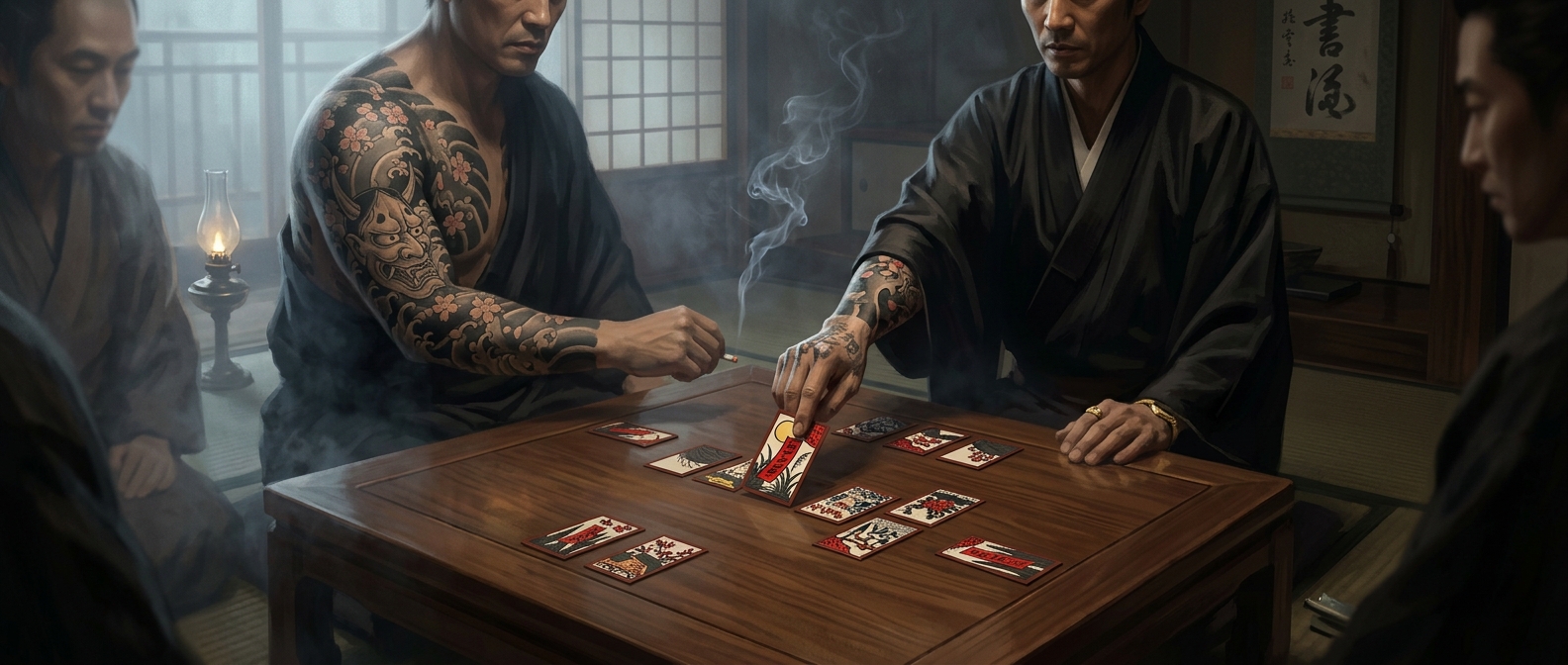
Why Nintendo’s cards suited gambling rooms
Nintendo began in 1889 as a maker of hanafuda, Japanese playing cards whose small, illustrated month-and-flower suits are used in games that rely on matching patterns rather than numbered ranks. The cards were made from thick paper, a practical choice for pieces handled repeatedly during play. Their compact size and sturdy feel also made them convenient for gambling games played in private rooms.
A game built for repeated rounds
Hanafuda could be used for koi-koi, a game in which players collect matching cards to form scoring combinations. A round can end when someone chooses to stop and claim a score—or continue in pursuit of a larger one, risking a changed outcome. That push and pull made the game well suited to wagering: each hand offered a fresh decision, and the cards could be reused across many rounds.
In Japan, gambling dens were associated with yakuza groups, and hanafuda became a familiar tool of that underground scene. Nintendo’s cards reached players through the ordinary playing-card market; their use by gamblers does not, by itself, show that the company made them specifically for criminal customers.
From cardmaker to game company
The connection is a striking part of Nintendo’s history because the company’s first business was not electronic entertainment but physical cards. The same durable, portable product that could serve family game nights could also circulate in gambling rooms. The cards’ role came from how people used them, not from a special design for the underworld.