How a Drone Changes a Police Report
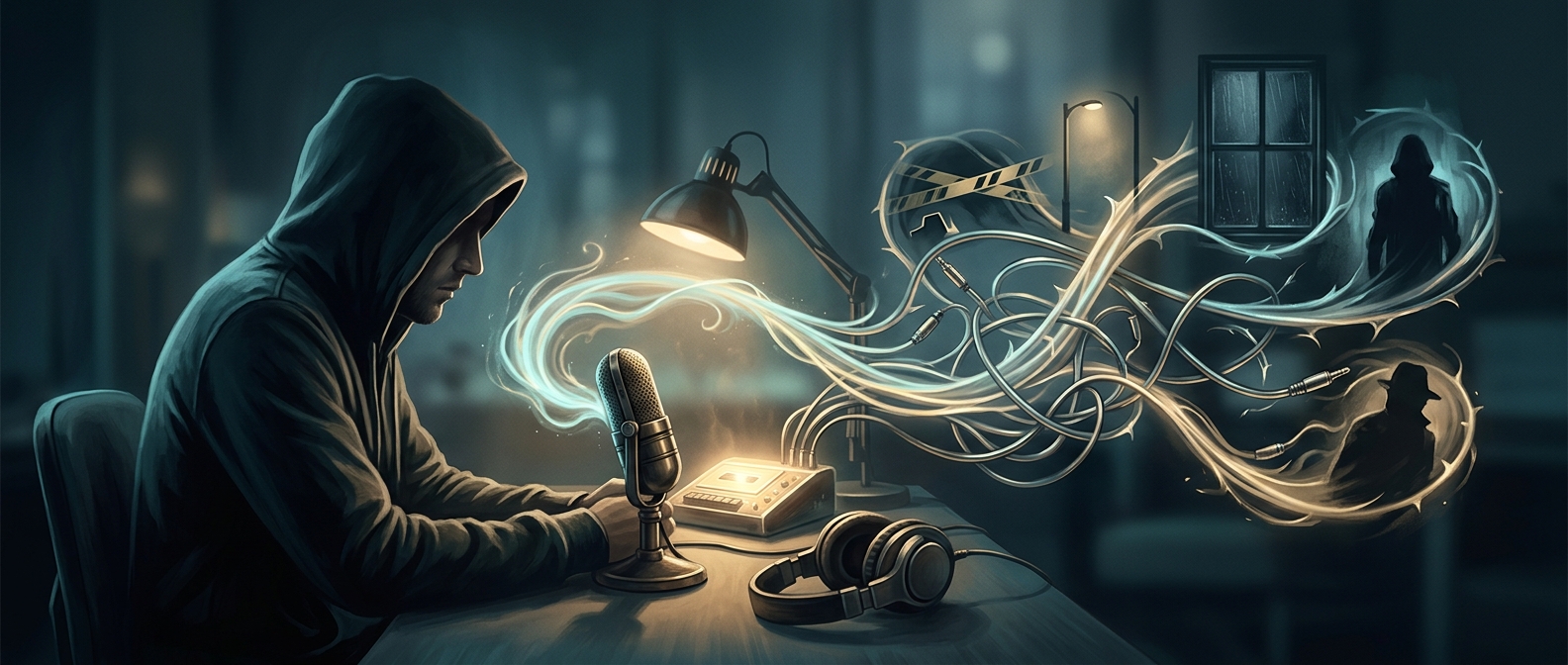
A police report is usually written to record events in plain, procedural language. Put that same kind of narration over a low, sustained synthesizer tone, however, and the information can feel less settled. The sound gives the listener an emotional cue before the next fact arrives: something is wrong, danger may be near, and the story deserves suspicion.
A drone is a long, steady sound rather than a melody or a sequence of beats. Because it does not resolve into a clear musical phrase, it can keep tension hanging in the background. The narration may remain calm, but the soundtrack tells the audience how to feel about what it is hearing.
The Gap Between Voice and Sound
That contrast is part of the effect. A measured voice suggests an official account; the ominous music makes the same account seem like a clue in a larger, threatening story. Viewers may begin to anticipate a reveal even when the narration is simply describing routine investigative steps. A pause, an unanswered question, or a detail that would otherwise seem ordinary can take on extra weight when the sound bed keeps suspense alive.
This is not necessarily a false account of the events. It is a framing choice: production can shape the mood and perceived significance of facts without changing the words. The soundtrack does not prove that a case is more frightening or sinister; it makes the audience experience it that way.
Suspense Before the Next Fact
The technique is useful in true crime because reports often contain procedural detail that is necessary but not inherently dramatic. A persistent musical cue can connect those details into a suspenseful sequence, encouraging the audience to listen for what comes next. The sound can make a factual account feel like a warning. That is why a routine line delivered evenly may still land as a threat when a low drone is already waiting beneath it.