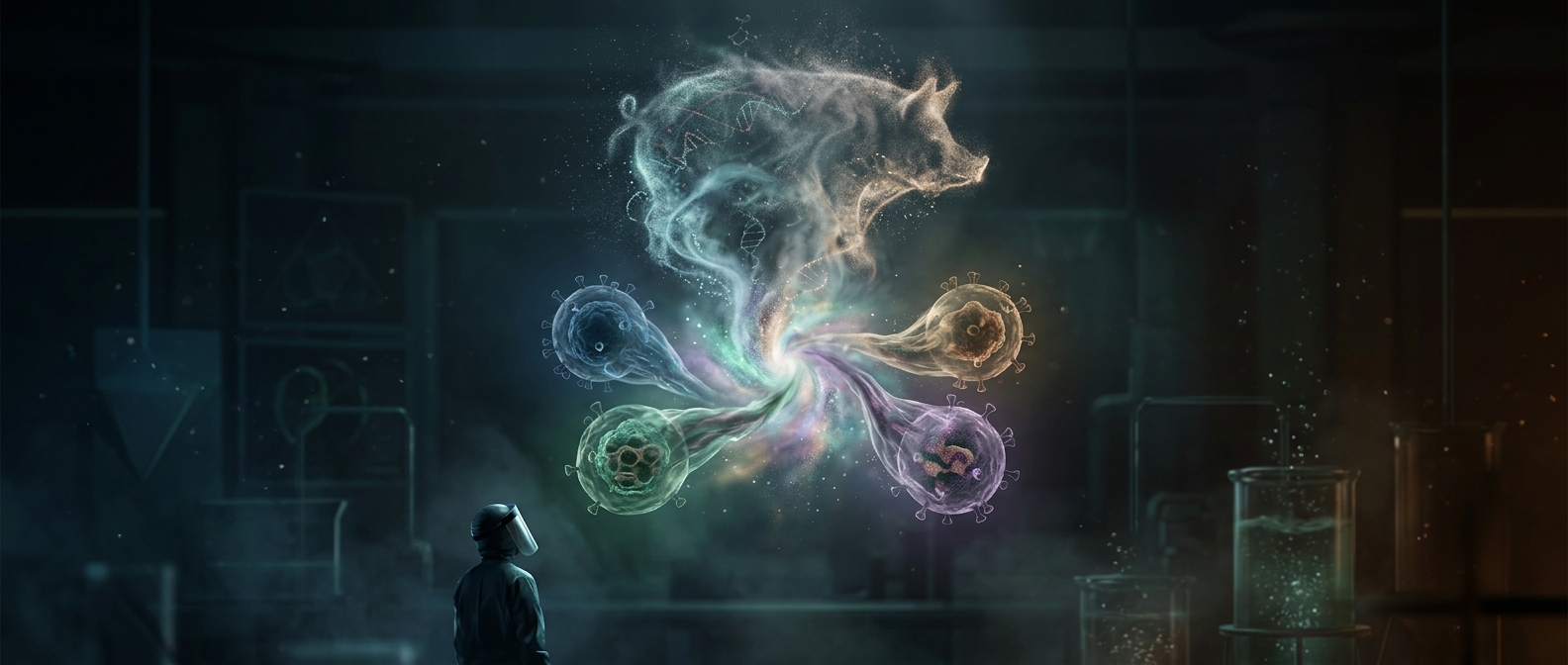
How influenza viruses reshuffle their genes
Influenza A carries its genetic instructions in eight separate pieces, or gene segments. If two influenza viruses infect the same cell, the cell can assemble new virus particles using a mixture of segments from both. This process, called reassortment, is more like shuffling separate cards than blending two genomes into one.
The four lineages behind the 2009 virus
The virus that caused the 2009 swine flu pandemic had a layered history. One set of genes came from a Eurasian pig-virus lineage. The other came from a North American swine-virus lineage that already carried genes traceable to avian, human, and pig influenza viruses. That lineage had itself formed through earlier mixing.
So the “four” refers to the virus’s connections to bird, human, and two distinct pig lineages—not to four complete viruses combining all at once. The final virus carried a particular assortment of gene segments assembled across successive rounds of reassortment.
Why the mix mattered
A reassortant can acquire a combination of traits that differs from those of its predecessors. In this case, the newly assembled virus was able to spread among people and cause a pandemic. The important consequence was not that its genes came from several species by itself, but that this particular shuffled package could circulate widely in humans.
Influenza’s segmented genome makes such reshuffling possible: when different viruses meet inside one cell, their separate genetic pieces create new combinations for evolution to test.