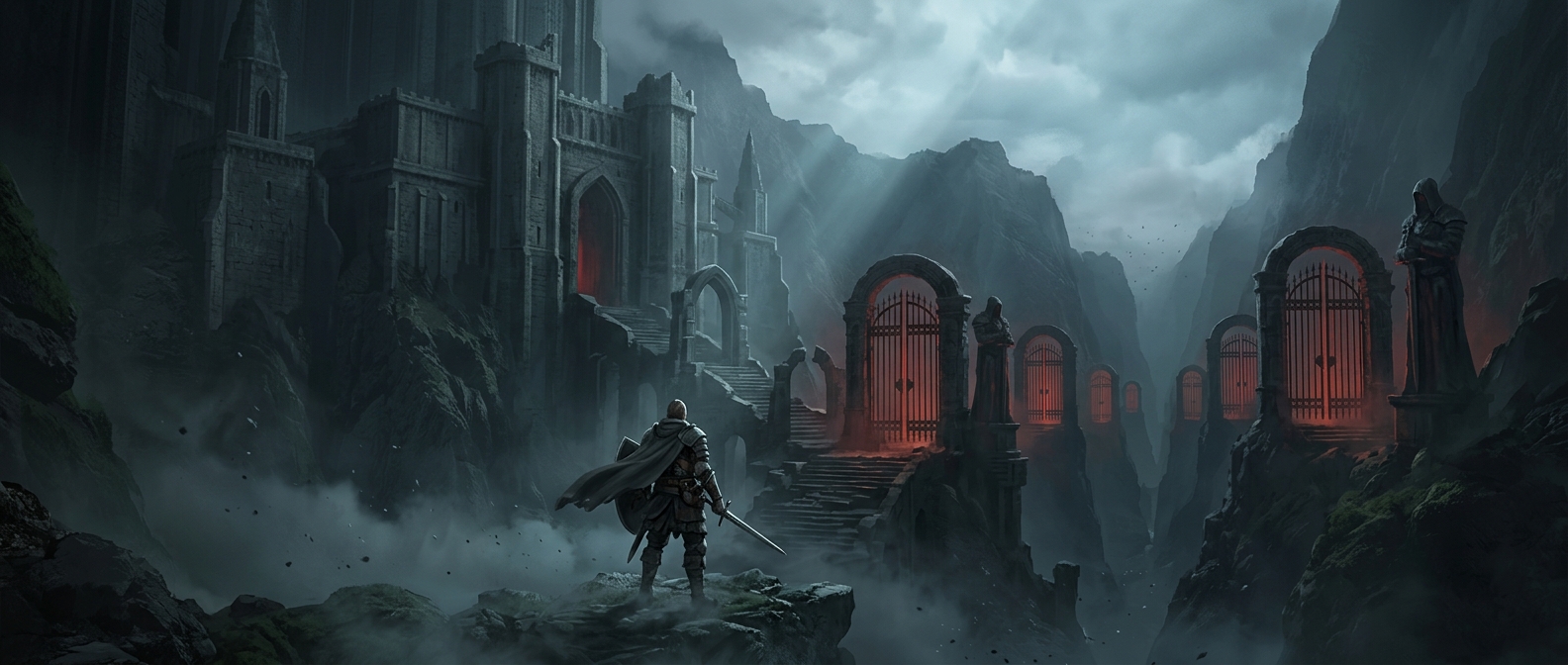
How a game can make enemies follow your level
In a fixed-level world, a creature has set statistics: health, damage, and perhaps a level of its own. A growing character eventually outpaces it. With level scaling, the game instead uses the character’s level—or a nearby range of levels—to calculate the creature’s statistics. The same enemy type can therefore be tougher when encountered later than it was early in the game.
Scaling can happen when an area loads, when an enemy appears, or through a rule that keeps nearby opponents close to the player’s level. Designers can also limit how far enemies rise, or let them scale only in certain regions. These choices determine whether the world feels consistently demanding or whether it still offers pockets of obvious progress.
The tradeoff between challenge and power
A scaled enemy may gain more health or deal more damage without learning new moves. That keeps a fight from becoming trivial, but it does not necessarily make the enemy more interesting. If the player’s equipment and abilities improve at roughly the same pace as enemy statistics, encounters can feel much the same even as the character’s level climbs.
That creates a subtle design tradeoff. Scaling helps players explore in a flexible order and reduces the chance that one area becomes irrelevant. But it can blur the sense of becoming stronger: a creature that once fell quickly may still demand a similar effort later. Games often preserve some contrast through scaling limits, stronger rewards, new abilities, or enemies whose behavior—not just their numbers—changes. The key question is whether progress makes the player feel more capable, even when the next fight remains a challenge.