A fantasy capital draws visitors into a real, narrow city
When Game of Thrones used Dubrovnik as the setting for King’s Landing, familiar stone streets became recognizable as places from the show. Fans could walk through scenes they had watched on screen, turning ordinary corners, stairways, and squares into destinations in their own right. The appeal was unusually concentrated: visitors were not just coming to Dubrovnik, but seeking particular spots within its historic center.
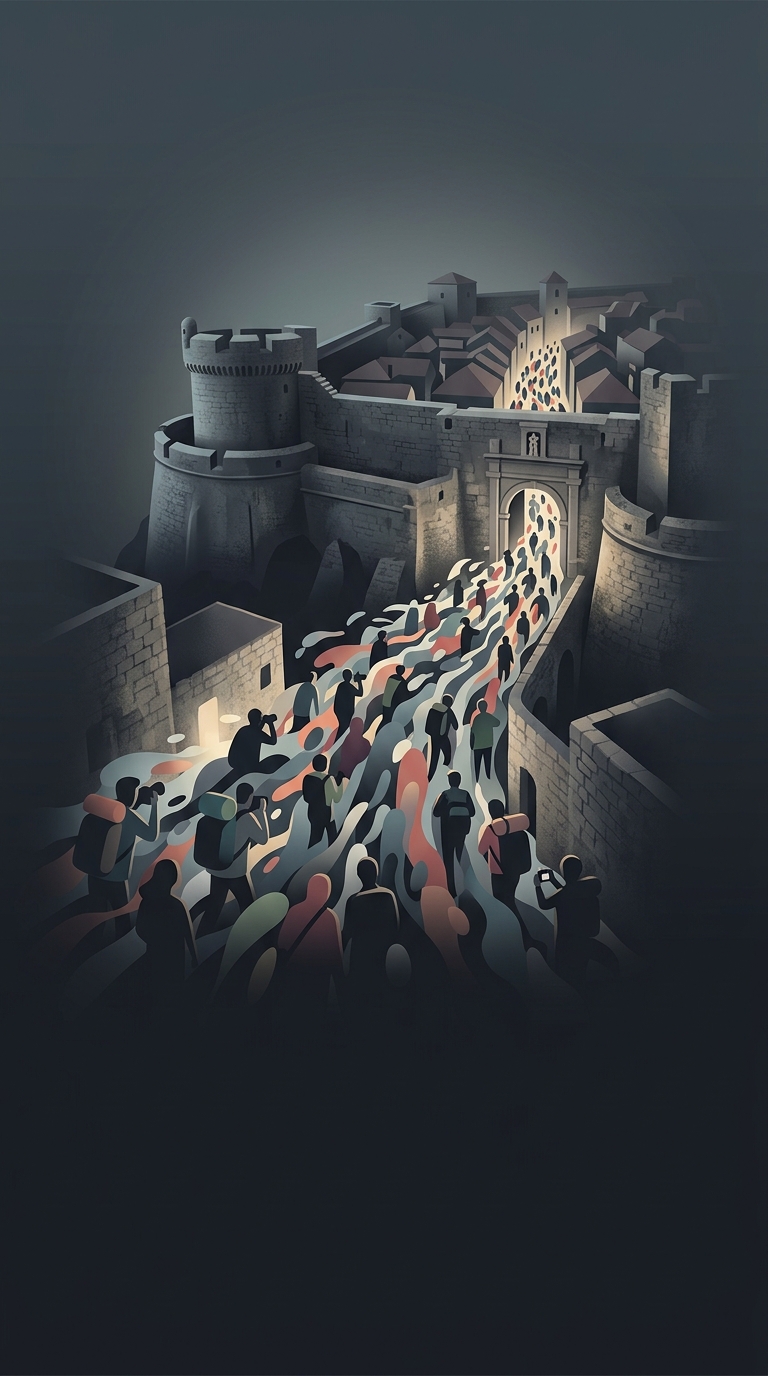
That attention adds to the city’s broader tourism draw. Cruise passengers and other day-trippers can arrive in large numbers within a short span, creating sudden surges rather than a steady flow. Guided groups stop to hear explanations or take photographs, while other visitors try to pass. A small delay at one busy point can ripple through streets that offer few easy ways around it.
Why a medieval street plan magnifies the pressure
Dubrovnik’s Old Town was shaped for movement on foot, but not for today’s volume of sightseeing traffic. Its main thoroughfare, the Stradun, connects major parts of the center; narrower lanes branch off it, many with steps or tight turns. These routes make the city intimate and legible, yet they also limit how quickly people can move through it when several groups converge.
The city’s defensive walls served a different purpose. They helped protect Dubrovnik from attack, including threats from the sea; they were not designed as crowd-control infrastructure. Within the walls, historic buildings and streets cannot simply be widened to absorb a surge of visitors without changing the place people came to see.
The cost of becoming a screen destination
Tourism supports local businesses, and the show brought Dubrovnik worldwide visibility. But the benefits and the strain arrive together: visitors cluster around famous locations, while residents and workers still need to use the same compact public spaces. In a city whose most appealing feature is its preserved medieval layout, the very streets that attract visitors also make crowding hard to relieve.