Why a crash interrupts conversation
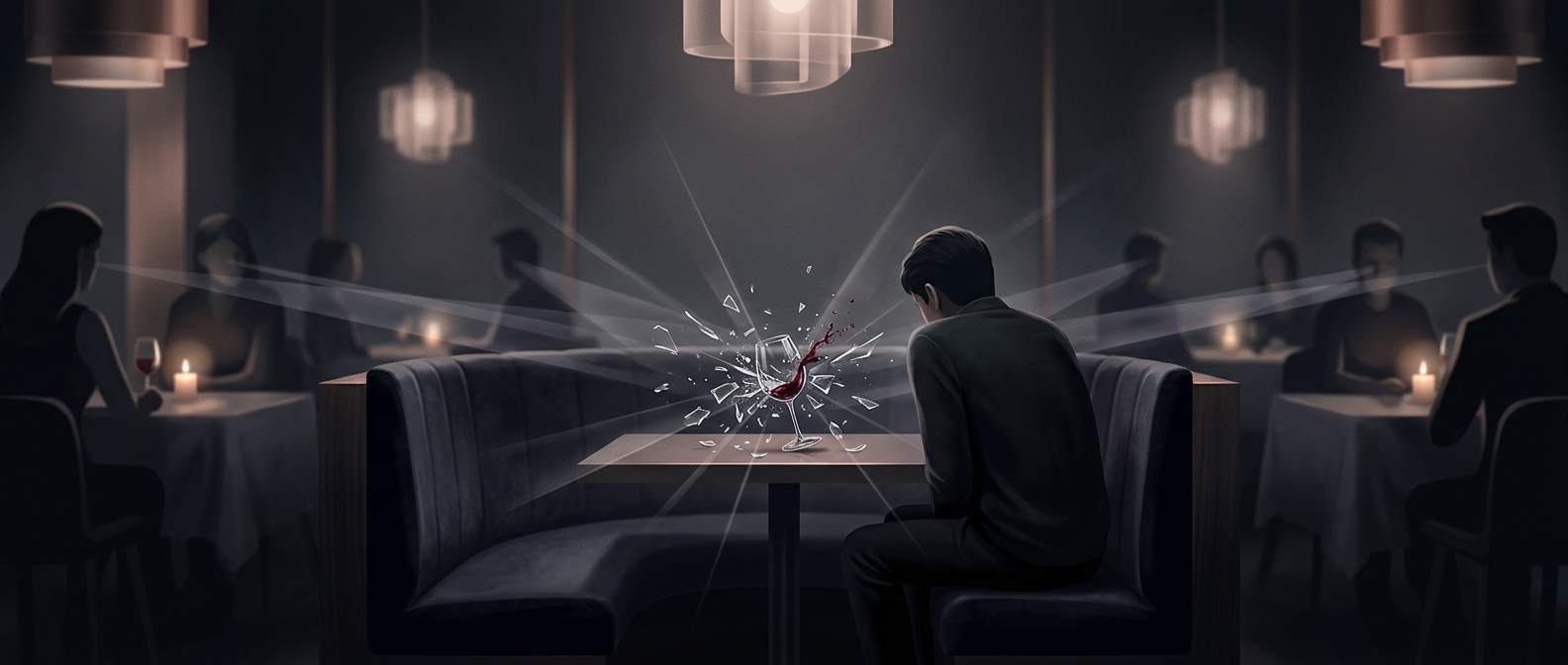
Conversation depends on attention that is selective but never sealed off from the room. Your brain is tracking a speaker’s words while also monitoring sounds that might signal something important. A glass hitting the floor produces a sudden, sharp burst of sound—an abrupt change that stands out from the steady murmur of voices. The auditory system flags that change quickly, before you have worked out what caused it.
The pause is a quick safety check
For a moment, the sound is ambiguous. It could mean a dropped dish, but a sudden crash might also signal an injury or another problem. Looking toward it is a low-cost way to find out. Attention shifts first; conscious judgment follows as you spot the broken glass, a startled server, or someone who may need help.
That brief interruption is not a deliberate choice to stop listening. It is the mind giving a potentially meaningful event priority until it has enough information to move on.
Other people help settle the question
In a crowded room, you are not interpreting the sound alone. A glance from nearby diners can direct your own attention, and seeing several people turn toward the same spot confirms that something unusual happened. Their reactions help locate the event and show that it was noticeable to others, too.
Once the cause is clear and no one appears to be in danger, conversation can resume. The broken glass has briefly synchronized the room—not because everyone consciously agreed to stop, but because the same sudden sound gave many people the same question to resolve.