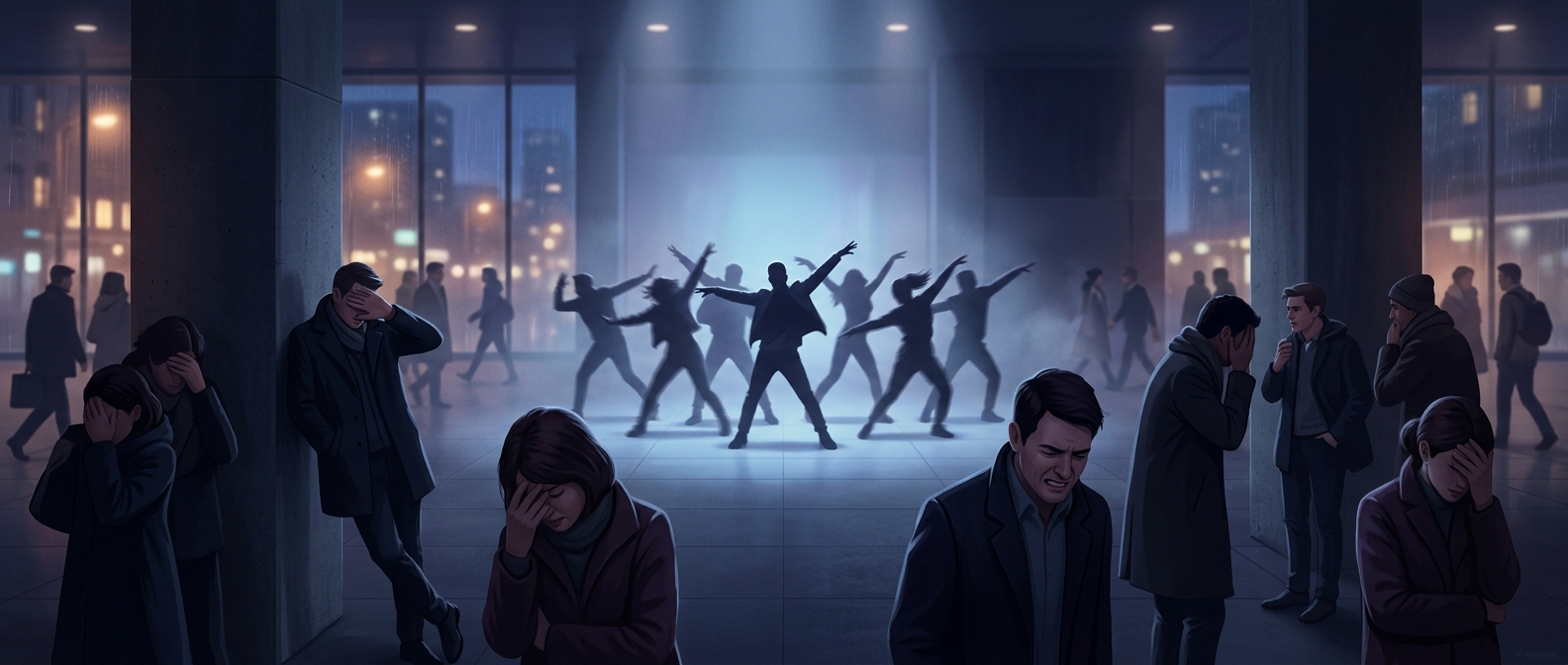
The crowd turns every glance into a cue
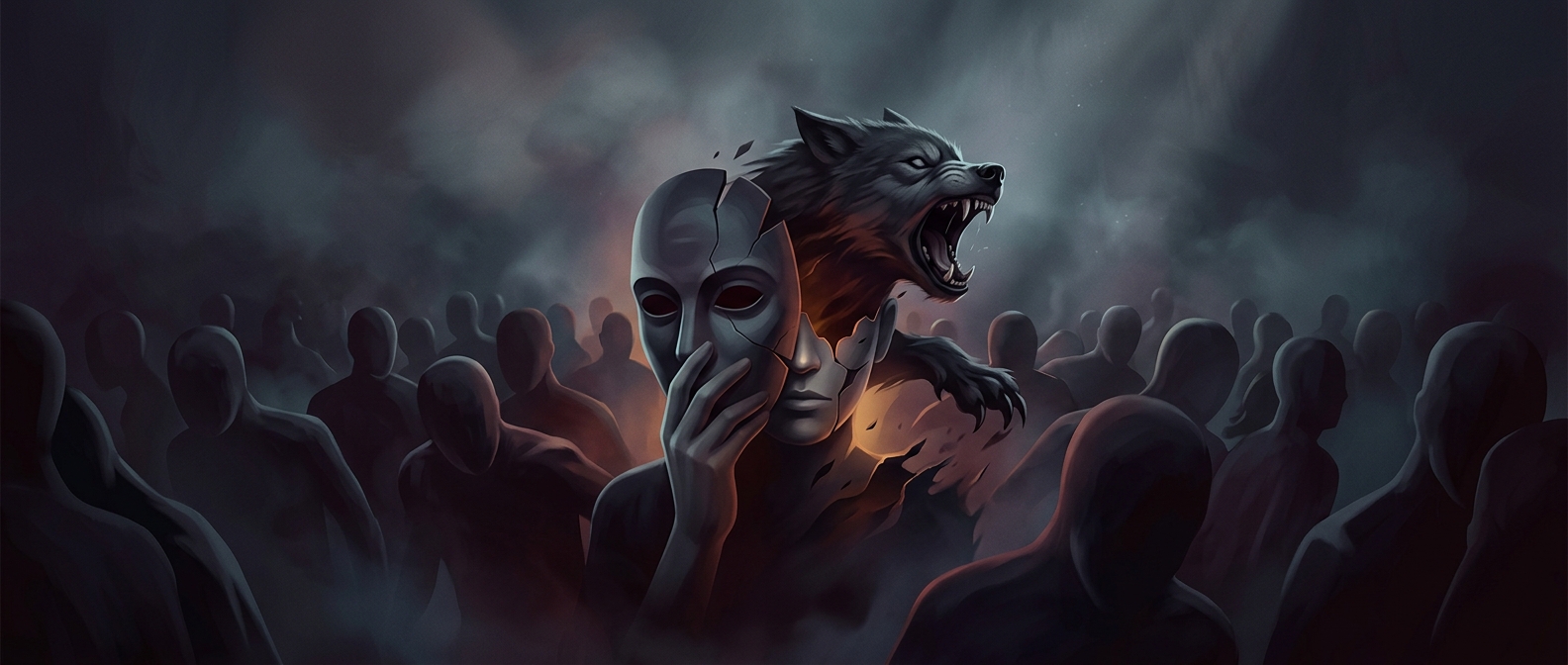
Embarrassment is a self-conscious emotion: it arises when we imagine how we look to other people. At a flash mob, that concern gets harder to manage because the usual social script disappears. Should you keep walking, watch, clap, or join in? Each choice might seem reasonable—and conspicuous.
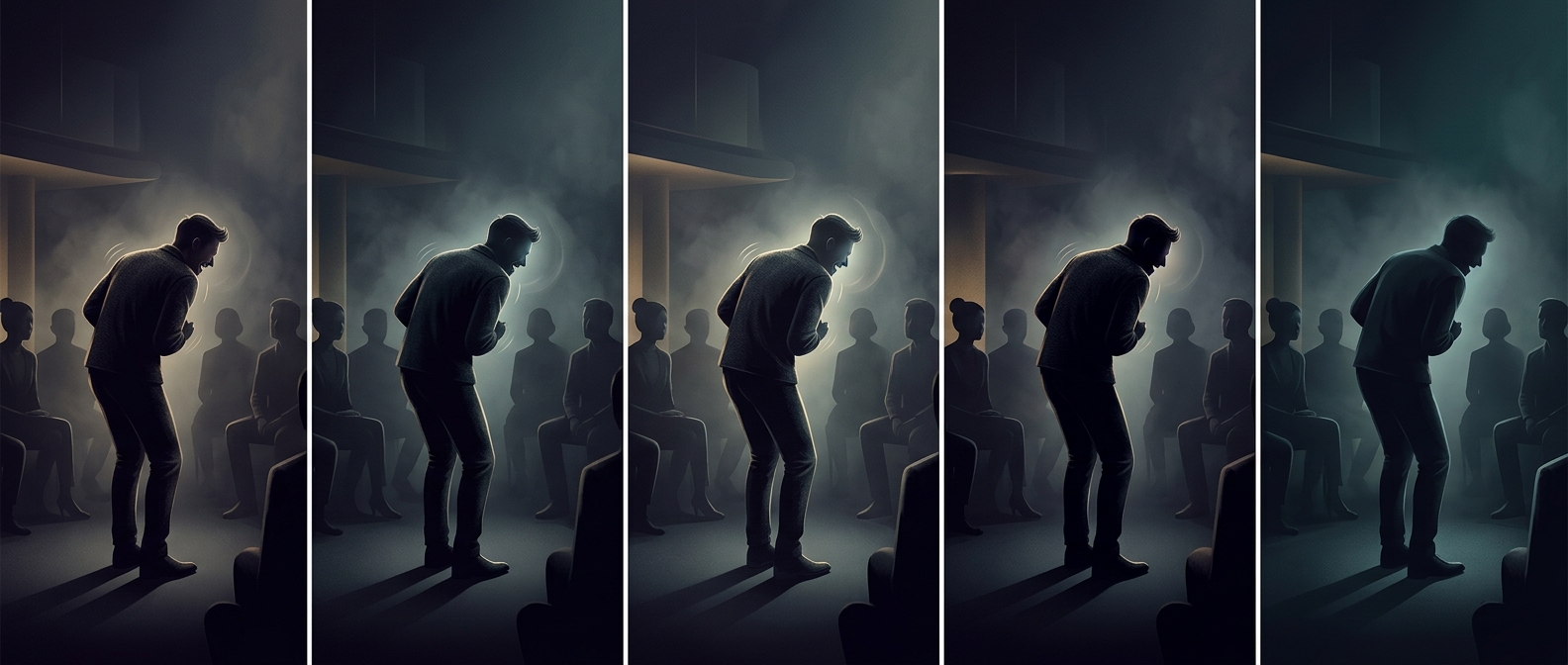
People often answer that uncertainty by checking what others do. But when a crowd is also unsure, its members may all be watching one another for guidance. A glance toward a nearby stranger can then feel like scrutiny, even if that person is simply trying to work out the same thing.
There is no obvious “right” audience role
In an ordinary performance, the setting helps explain what to do: a stage separates performers from spectators, and applause has a familiar place. A flash mob puts an unexpected performance into a space where people had other reasons to be—crossing a plaza, shopping, or waiting for a train. The scene offers no clear boundary between show and everyday life.
That makes even small reactions feel loaded. Clapping could look enthusiastic; refusing to react could look rude or self-conscious. Joining in might be fun, but it also means stepping into view. The discomfort comes less from the dancing itself than from having to choose a role while sensing that others may notice your choice.
Uncertainty can spread through the audience
One person’s hesitation gives others little reassurance, so they keep scanning faces and movements. That mutual checking can make the moment feel more exposed than it is: most bystanders are probably occupied with their own decisions, not carefully judging everyone else. Still, the possibility of being seen is enough to make a sudden change in the social scene awkward—and that awkwardness is part of what makes a flash mob memorable.