Why a frozen path could move stone
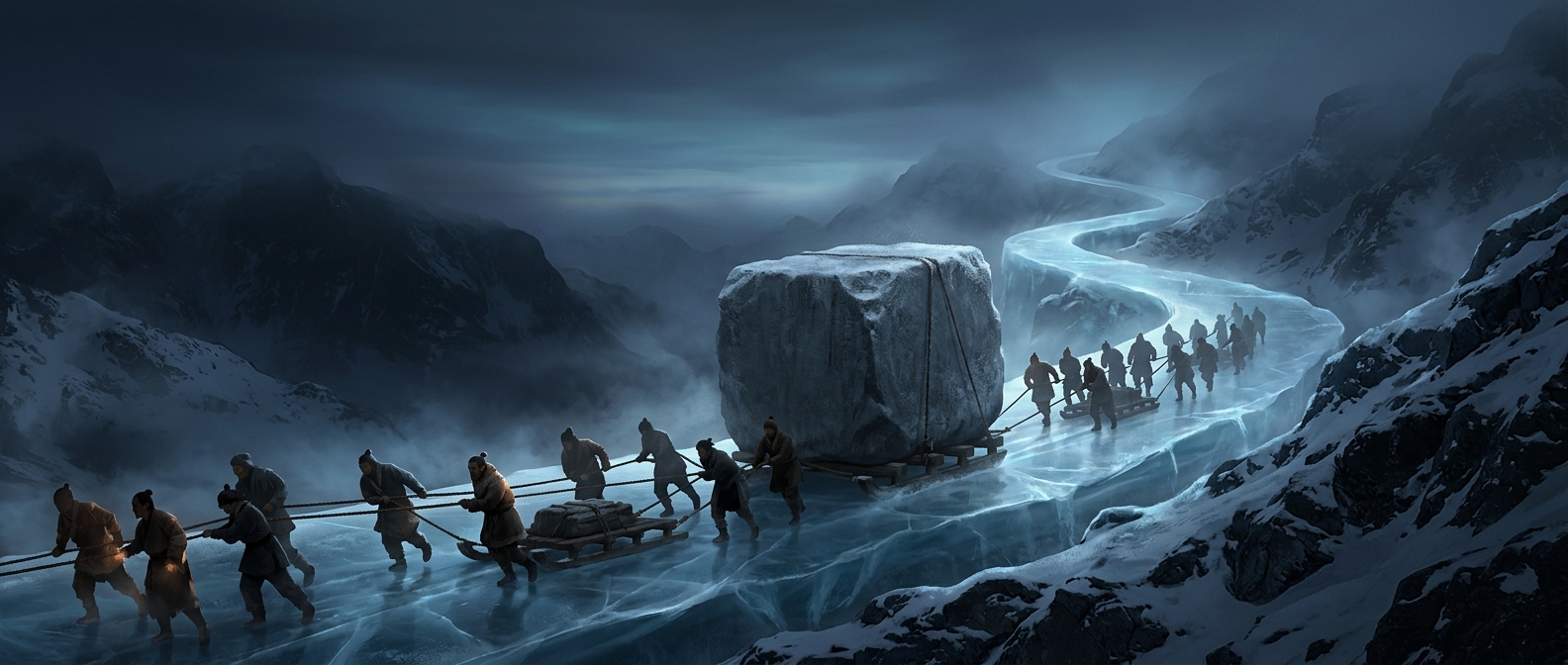
The key was not making a stone weightless; it was reducing the resistance beneath it. A heavy block dragged over soil pushes into the ground, where mud and ruts can catch and slow it. On a smooth ice surface, a sled or other broad support can move with less resistance, so a pulling team can shift a load that would be nearly impossible to haul directly across soft ground.
The ice also spread the load across the route. Keeping a path level and continuous mattered: a break or rough patch could stop a sled abruptly, while a slope could turn a slow pull into a dangerous slide.
Winter became part of the engineering
Flooding shallow trenches gave the builders a way to shape the route before it froze. Rather than waiting for a naturally smooth, reliable stretch of ice, they could make a firm track where they needed one. This depended on cold weather lasting long enough for the water to freeze and on maintaining the track as conditions changed.
The method traded one difficulty for another. Teams still had to pull and guide the stone, and the route had to be prepared and managed; ice did not eliminate the work. But it changed the problem from dragging enormous weight over yielding ground to controlling it along a prepared surface. That made winter itself part of the construction equipment.