How Damascus steel got its rippling pattern
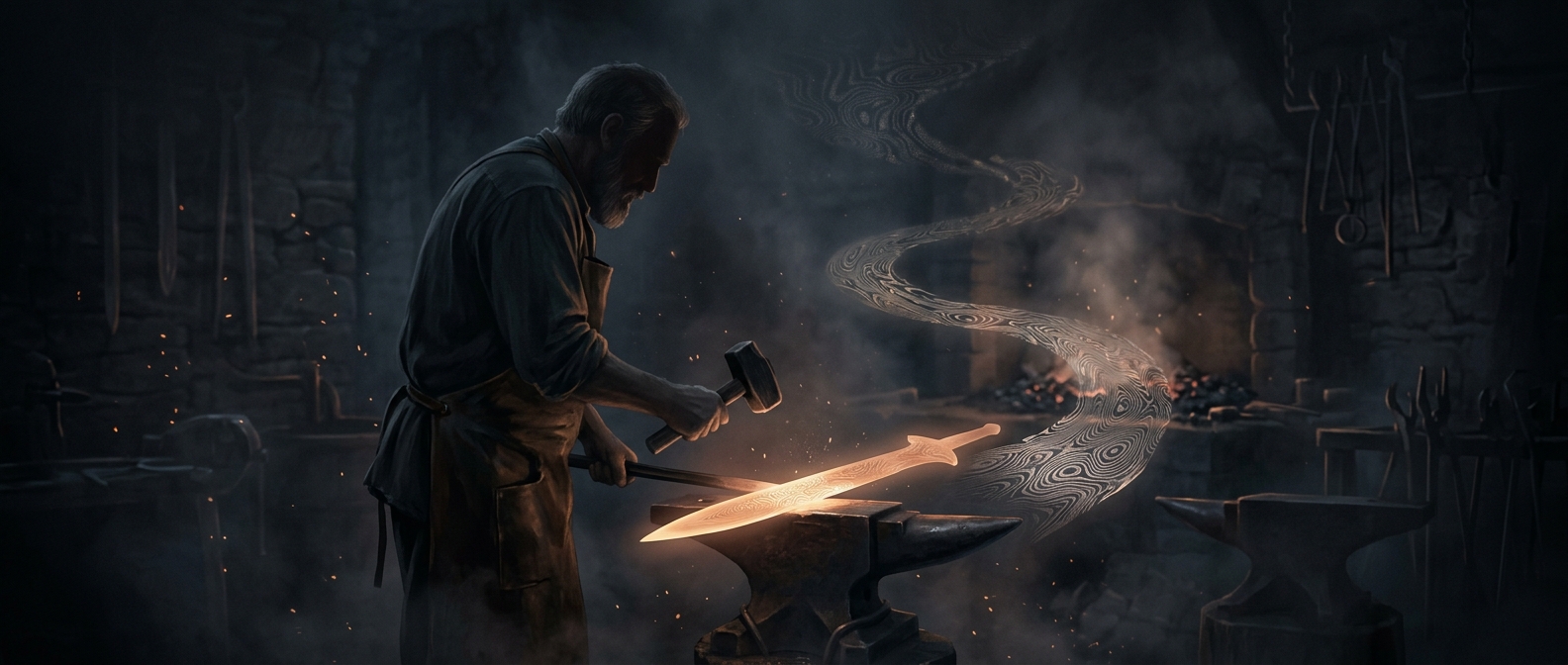
The striking bands on a Damascus blade were not simply painted or etched onto ordinary steel. Many historic blades were made from wootz, a high-carbon steel first produced as small, dense ingots in South Asia and traded to smiths elsewhere. As a smith heated and worked an ingot, differences in its carbon content and internal structure could form streaks that became visible at the surface after shaping and polishing.
The pattern was therefore tied to the material as well as the work at the forge. A smith had to shape the steel without destroying the structure that gave the blade its distinctive appearance—a demanding balance of heat, hammering, and repeated working.
A lost craft, not a single vanished trick
By the 18th century, the precise methods that had produced celebrated Damascus blades were no longer being passed on in their original form. That does not mean there was one secret recipe that disappeared overnight. The process depended on controlling both the steel’s composition and the way it was worked, and the knowledge could have been embedded in practical habits that were difficult to describe or reproduce outside a particular workshop tradition.
Modern researchers have reported carbon nanotubes—tiny, tube-shaped structures made of carbon—in some samples of Damascus steel. Such reports offer a possible clue to the material’s unusual properties, but they do not establish a complete recipe for making the historic blades. The exact origins and production methods remain unresolved.
That uncertainty is part of the story: the blade’s pattern preserves evidence of a sophisticated material craft, while the missing workshop knowledge prevents modern observers from confidently retracing every step that created it.