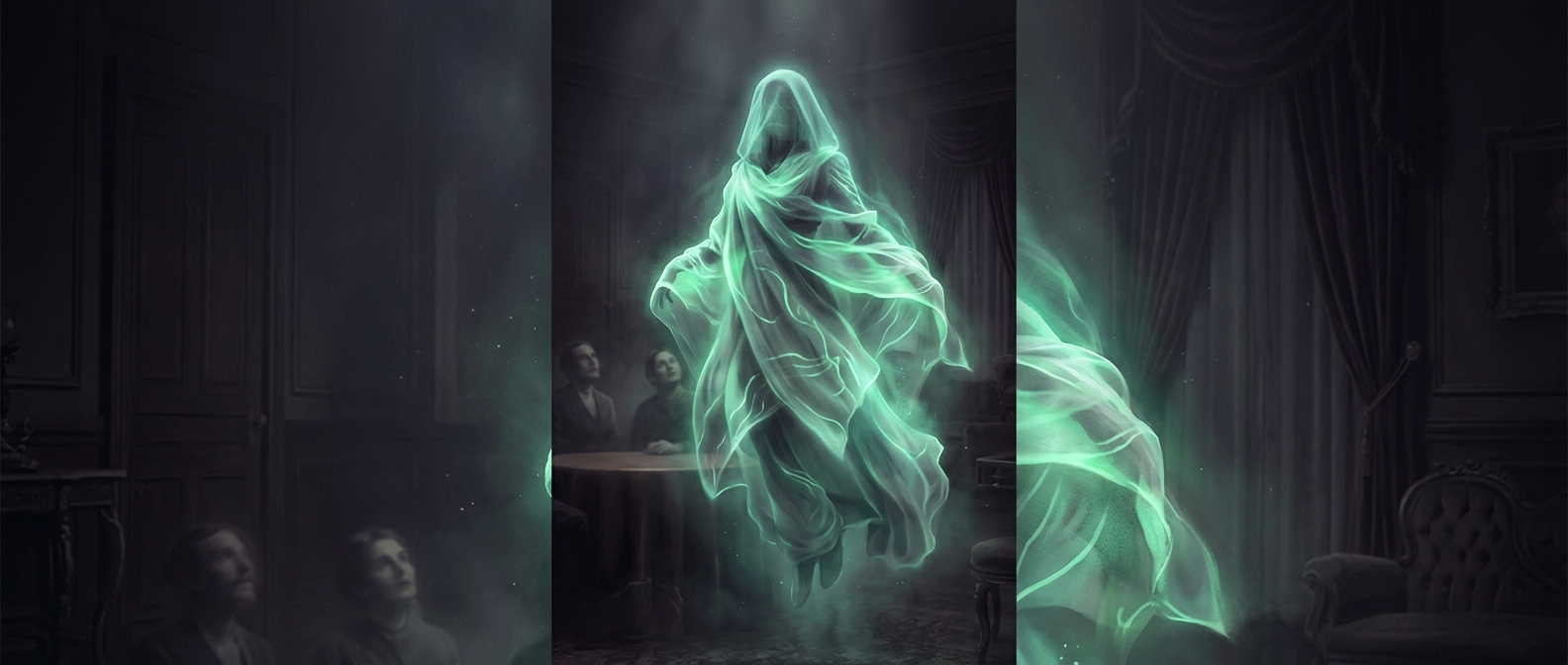
How the robes produced their ghostly glow
The light came from luminous paint, not from fabric that was naturally glowing with radium. In paints of this kind, radium gave off radiation that energized a phosphorescent material—a substance that converts absorbed energy into visible light. In a dark séance room, painted designs could shine while the wearer and the paint itself were difficult to see clearly.
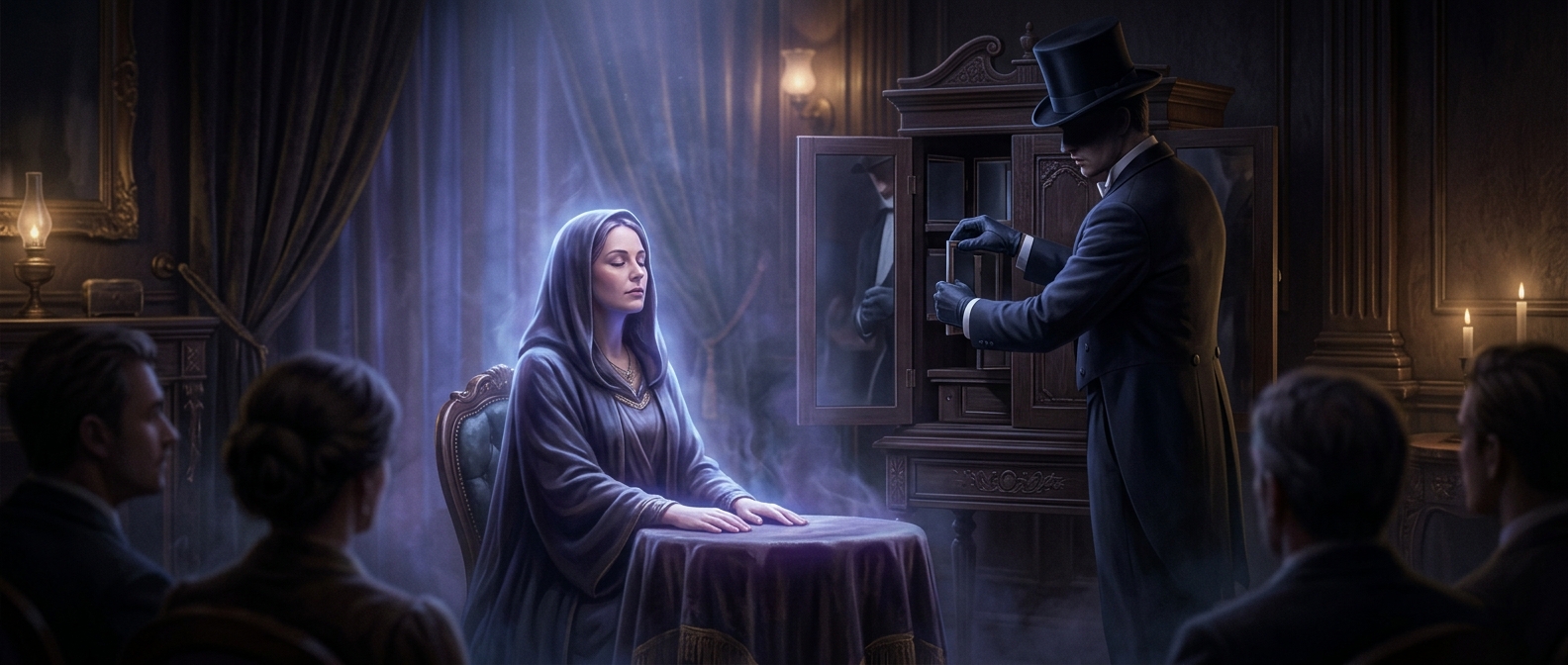
That made the effect useful as stagecraft. A medium could appear to produce a glowing apparition simply by moving a painted robe or hand through the darkness. Painting skin as well as clothing could make the glow seem to come from a body rather than from a costume.
The trick carried a hidden cost
Radium’s radiation was not just a source of light. It could also damage living tissue. Paint on clothing or skin created an exposure hazard, and loose or flaking paint could be especially dangerous if radioactive material was swallowed or breathed in. The performance relied on an effect that audiences could see, while the danger to the person wearing it was invisible.
The séance setting helped conceal the mechanics: darkness blurred the boundary between a painted surface and a supposedly supernatural presence. The same material that made the ghost convincing also exposed the medium to radiation.