A conquest told as a chain of causes
The Bayeux Tapestry does more than show who won in 1066. Its scenes arrange events into a moral sequence: Harold swears an oath to William, takes the English throne after Edward the Confessor’s death, and then faces defeat at Hastings. In that ordering, William’s invasion can appear not as a grab for power but as a response to Harold’s betrayal.
That is the embroidery’s argument, not a neutral verdict on what happened. The oath’s meaning and the competing claims to the throne were disputed, and a stitched narrative cannot settle them. But by placing the oath before the invasion, the work gives viewers a clear explanation for why William should rule.
How images make the case
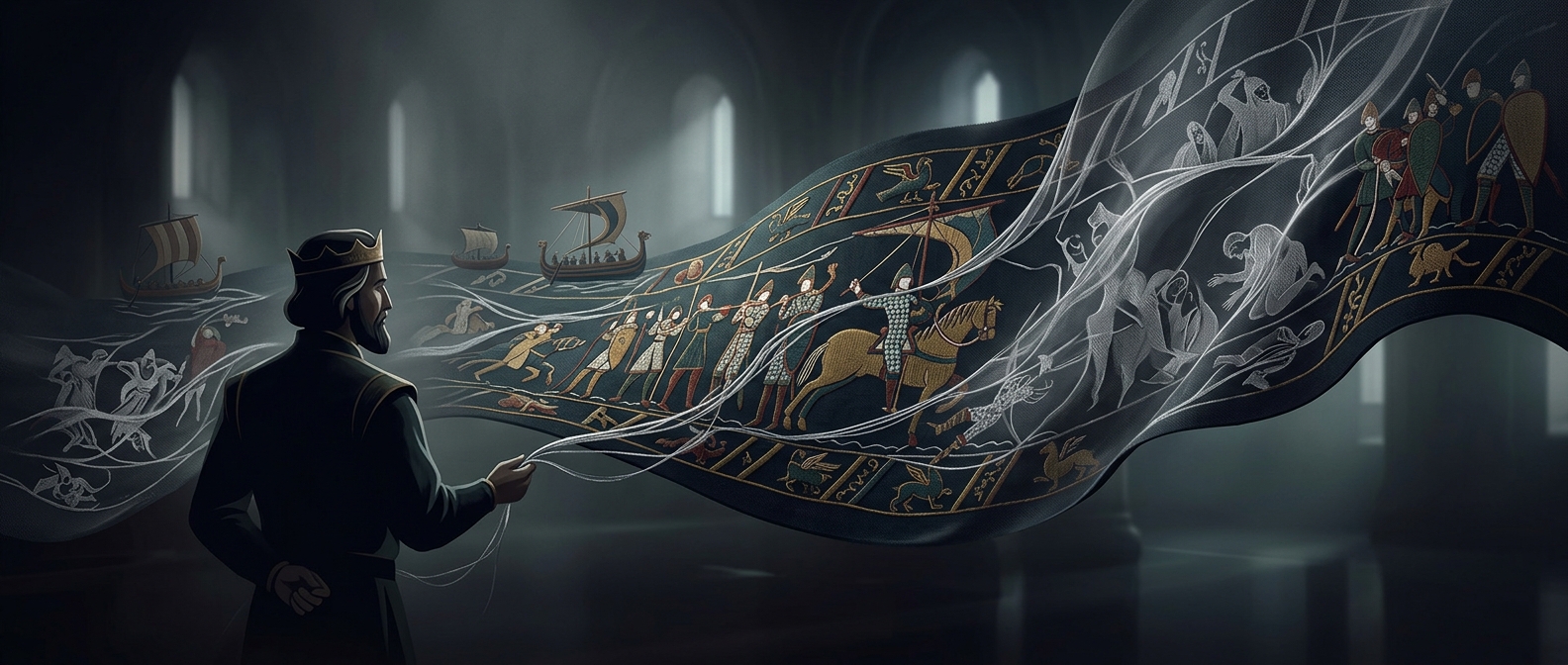
The story unfolds across a long strip of linen, with short Latin labels identifying people and events. Viewers encounter the claim through a succession of pictures: ships crossing the Channel, armies meeting, and Harold falling in battle. The famous arrow-at-the-eye scene is part of that final image; the surrounding sequence ties his death to the oath story that came before it.
Embroidery could make a complicated political claim legible without asking an audience to read a long written account. Repeated figures, recognizable actions, and brief labels guide the eye from alleged promise to punishment. The persuasive force lies in the sequence: each scene makes the next seem like the consequence of the one before it.
A victory that needed explaining
The work preserves a Norman view of the conquest, shaped by the side that prevailed. Its images are evidence of how that side wanted the story understood—not a camera-like record of every event. The result is both a vivid account of 1066 and a lasting example of political persuasion made thread by thread.