The dancer became part of the lighting design
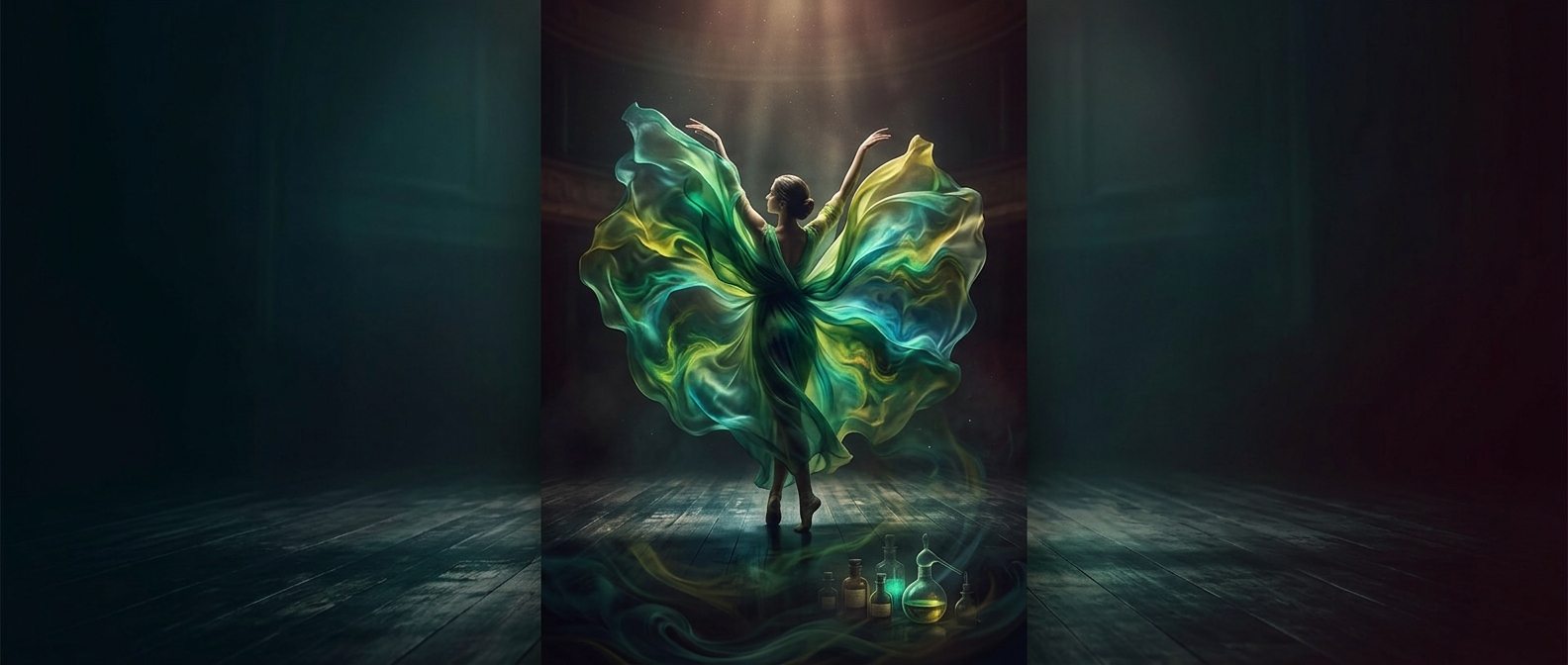
Loie Fuller’s stage effect depended on more than a flowing costume. Long rods attached to the fabric let her extend and redirect its sweeping shapes, while carefully timed movements kept the silk in motion. With her body largely concealed beneath the material, audiences saw less a dancer tracing steps than a changing field of color and shape.
That made the fabric function like a moving screen. Light striking it at different angles could reveal one fold while leaving another in shadow; colored filters, often called gels, changed the hue of the beam. A turn or raised arm therefore altered not only the shape onstage but also how the light appeared across it.
Choreography, costume, and technology had to work together
The effect was difficult to separate into ordinary stage departments. The lighting had to follow the dance, the fabric had to catch the beams, and Fuller’s gestures had to keep both readable from the audience. A mistimed movement could flatten the silk or let its folds tangle; a well-timed one made the cloth seem to grow, curl, and dissolve.
Fuller developed this approach in the era when electric stage lighting was opening new possibilities for theatrical color and spectacle. Rather than use light simply to make a performer visible, she made it an active part of the performance. The result blurred the line between dancer, costume, and scenery—and gave later artists a model for treating stage lighting as something that could move and transform along with the action.