How a Battle Fit on a Child’s Game Board
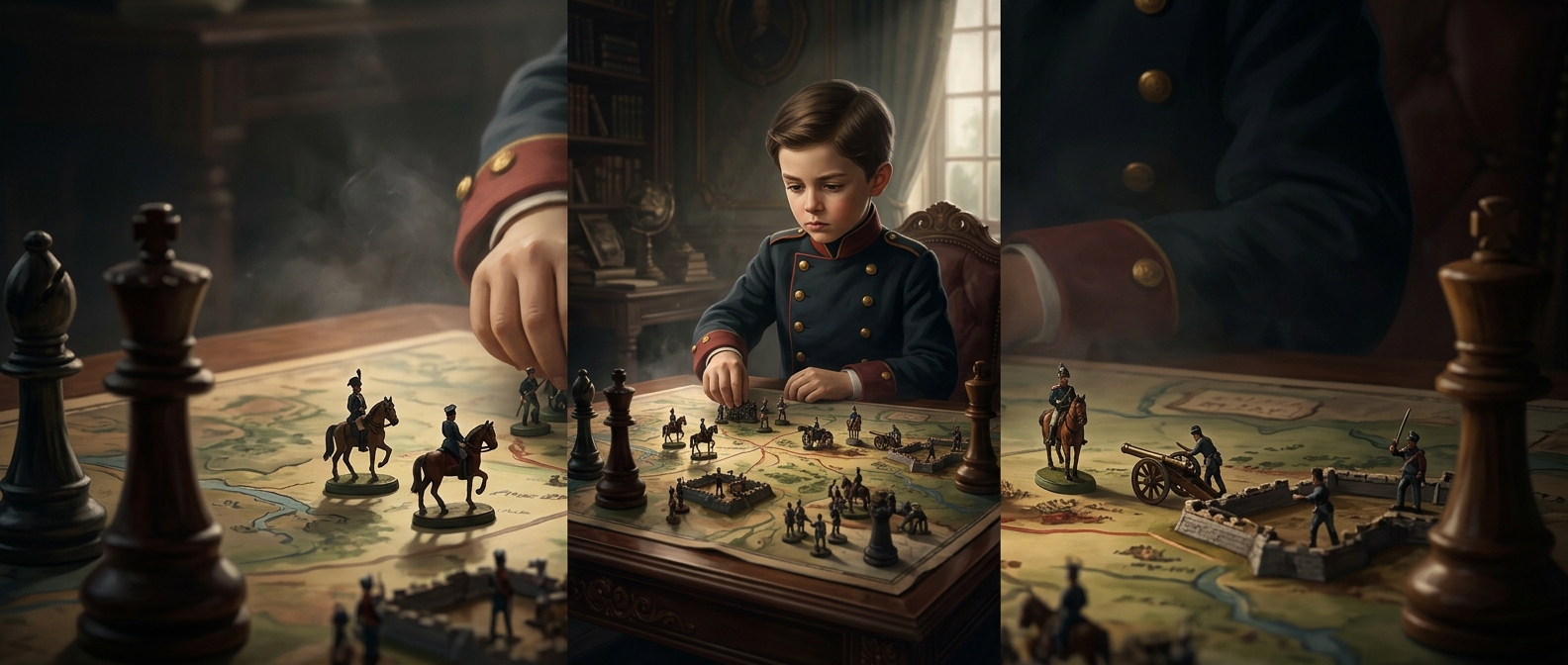
A tabletop war game turns a sprawling battlefield into a small set of choices: where to move, when to attack, and what to leave exposed. A player who sends every piece straight ahead may lose to an opponent who moves around the side. That makes flanking—attacking an enemy’s vulnerable side—something a child can learn by seeing the result on the board.
Retreats and ambushes work the same way. A retreat can preserve pieces for another turn; a concealed or unexpected move can catch an opponent off guard. The game makes military ideas legible by giving each move an immediate consequence: a piece is trapped, a line breaks, or a route to victory opens.
Play as Preparation
In Prussia, where military service and the army held a prominent place in public life, games with battle themes could make military thinking familiar beyond the barracks. Children did not need to study formal strategy to absorb its basic habits: watch the opposing side, protect vulnerable positions, and think several moves ahead. The board offered a simplified rehearsal, not a realistic battlefield.
That distinction matters. Professional military exercises such as Kriegsspiel were designed to train officers using more detailed rules and battlefield information. Children’s games were a different, more accessible form of play. Their lessons came through competition and repetition, not a lecture in tactics.
The board’s influence was therefore subtle but memorable: a child could experience a flanking move as a clever way to win before encountering the same idea as a military term. By making war a game of decisions and outcomes, these toys helped make military logic feel like ordinary common sense.