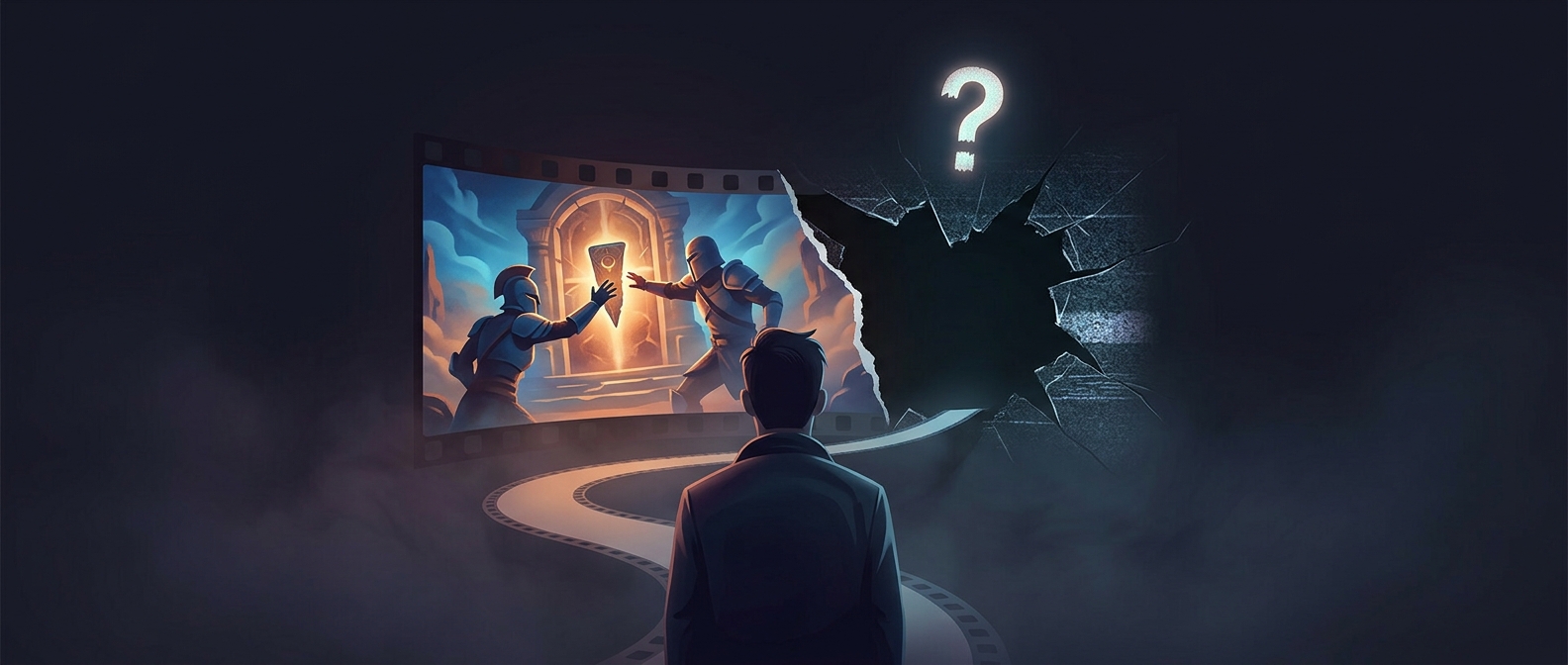
Why a season finale stops before the answer
A season-ending cliffhanger turns a plot question into a reason to return. Instead of finishing a major conflict, the story pauses at a point when the audience knows enough to understand the stakes but not enough to know what happens next. A character’s fate, a newly revealed secret, or an imminent choice can all create that gap.
The pause works because viewers have already invested in the people and events involved. They can imagine possible outcomes, compare clues, and argue over what a reveal means. The unresolved plot is not just missing information; it gives the audience something to carry between seasons.
The payoff has to survive the wait
Writers are balancing two kinds of satisfaction: the season should feel like it built toward a meaningful endpoint, while the larger story still has room to continue. A finale can resolve one conflict and leave another open, or stop at a turning point that changes what the characters must do next. The open question creates anticipation; the completed pieces make the ending feel earned rather than merely interrupted.
That balance is delicate. If too much is withheld, viewers may feel the story has postponed its promise instead of advancing it. And because a future season is not guaranteed, an ending that depends entirely on a later explanation can leave the current season feeling incomplete. The most effective cliffhanger therefore changes the story’s situation, not just its information: when the series returns, the characters—and the audience—have a consequential new problem to face.