Color That Arrived in Alternating Flashes
Kinemacolor did not record color in the way later color film would. Its camera photographed a scene in black and white through a rotating filter that switched between red and green. In the theater, a matching filter wheel put the corresponding colors back over the projected images. The eye blended the rapidly changing views into an impression of color.
That blend depended on speed—and on the two views lining up. Because red and green were shown at different moments rather than together, the system could produce colored fringes around moving objects. A person crossing the screen might seem to trail a red or green edge, especially when motion was quick.
The Cost of Making Color Move
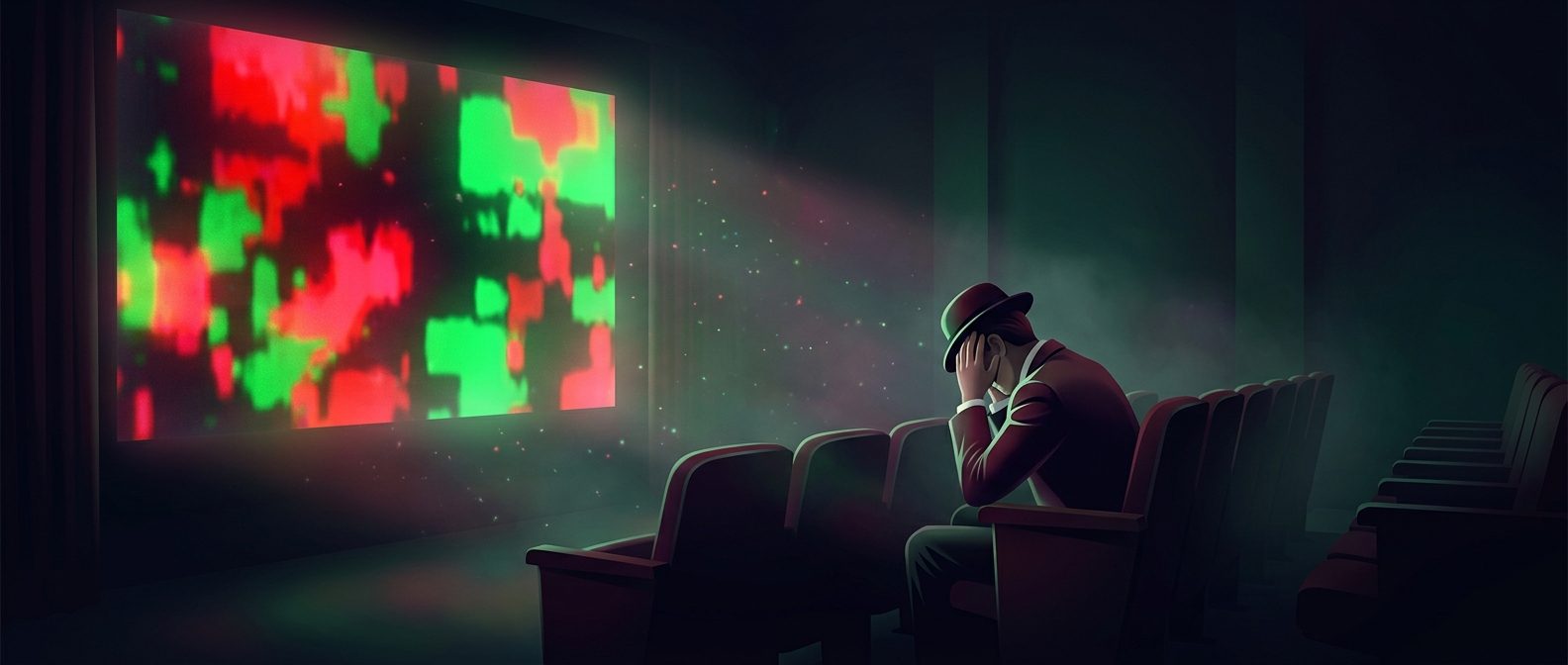
The filter wheel had to stay synchronized with the film. Even when it did, the alternating colored light could remain perceptible as flicker. For some viewers, repeated flicker and unstable color were uncomfortable, contributing to headaches or nausea. The experience could vary with the projector, the film’s motion, and the viewer; it was not simply that every Kinemacolor screening made audiences ill.
The technique offered a striking alternative to black-and-white images, but its vividness came with practical limits: projection required special equipment, and fast movement could expose the fact that the colors were being delivered in turns. Kinemacolor’s defining trick was also its weakness—color appeared only because the audience’s eyes did the final work of combining two separate flashes.