Why a quiet room turns your body into the background noise
In an ordinary room, a sound reaches you both directly and after bouncing off walls, floors, and ceilings. Those reflections mingle with sounds from ventilation, traffic, and other people. The result is a steady acoustic backdrop that can mask faint noises—including those made by your own body.
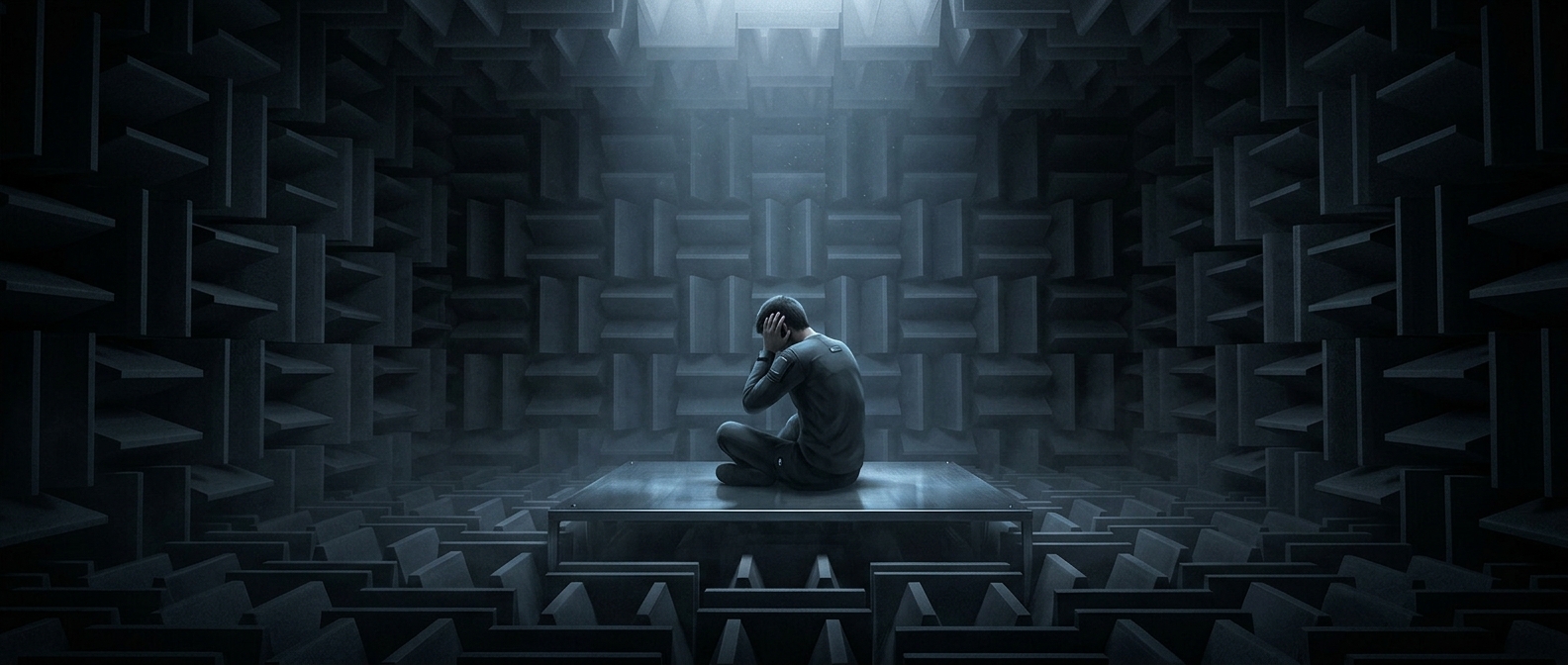
An anechoic chamber is built to remove much of that backdrop. Sound-absorbing wedges on its walls, ceiling, and sometimes floor reduce reflections instead of sending them back across the room. Isolation from the building and outside environment helps keep other noise from getting in. With fewer echoes and less ambient sound, small noises that would normally blend into the background are easier to pick out.
The room changes what you notice, not what your body produces
Your breathing, clothing shifts, footsteps, and swallowing do not suddenly become louder just because you entered the chamber. Rather, there is less competing sound to cover them, and your attention can settle on noises you usually disregard. The room can also make the sound of movement feel unfamiliar: without ordinary reflections, a footstep does not have the same echo that helps a room seem acoustically familiar.
This is why “quiet” does not mean that every sound disappears. The chamber reduces particular sounds and reflections; it does not switch off hearing or erase the sounds a person makes. The experience is a revealing change in contrast: ordinary bodily noises stand out when the usual acoustic scenery is gone.
What a negative decibel reading means
Decibels describe a level relative to a chosen reference, rather than measuring sound on a scale that begins at absolute silence. For sound-pressure level, the reference is a small standard pressure. A reading below that reference can therefore be negative in decibels while still describing a real, measurable sound.
The number does not mean the room contains “less than no sound.” It means the measured sound level is below the comparison point. In an exceptionally quiet chamber, even the absence of familiar room noise becomes noticeable—and the sounds left to hear are often the ones coming from you.