A glass jar that could hold a shock
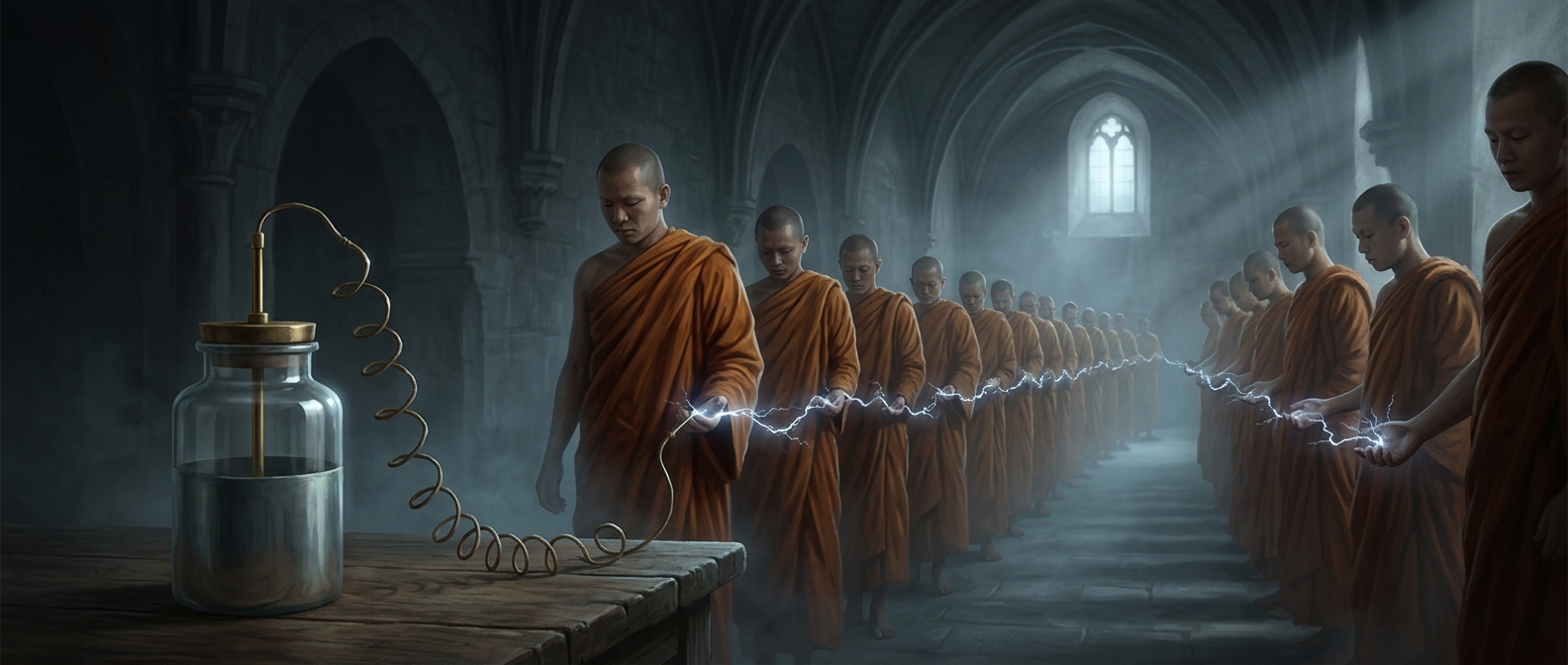
The Leiden jar was an early way to store electric charge. A metal conductor inside the glass collected charge, while another conductor on the outside provided the opposite charge. The glass between them acted as an insulator, keeping the charges separated until a path connected the two sides.
That made the jar more than a curiosity: it could build up a charge and release it suddenly. The discharge was brief, but strong enough to be felt by anyone included in its route.
Why the monks felt it together
When the monks joined hands, they made a continuous conducting path. At the ends of that path, the jar’s charged conductors could be connected through the group, allowing charge to flow through the circuit—including the monks’ bodies—as the jar discharged.
The sensation reached the group almost simultaneously because the electrical change travels through a circuit extremely quickly compared with the time it takes a person to react. The monks did not each receive a separate shock from the jar; they were parts of one shared path.
From spectacle to experiment
The demonstration turned an invisible electrical effect into something impossible to miss. A single discharge could produce one coordinated reaction across a crowd, making electricity seem less like a faint spark and more like a force that could act at a distance through a connected system.
The startling lesson was also a practical one: electricity could pass through many people in succession. A chain of linked hands was not merely an audience arrangement—it completed the circuit.