The Empty Plaza Is a Moving Target
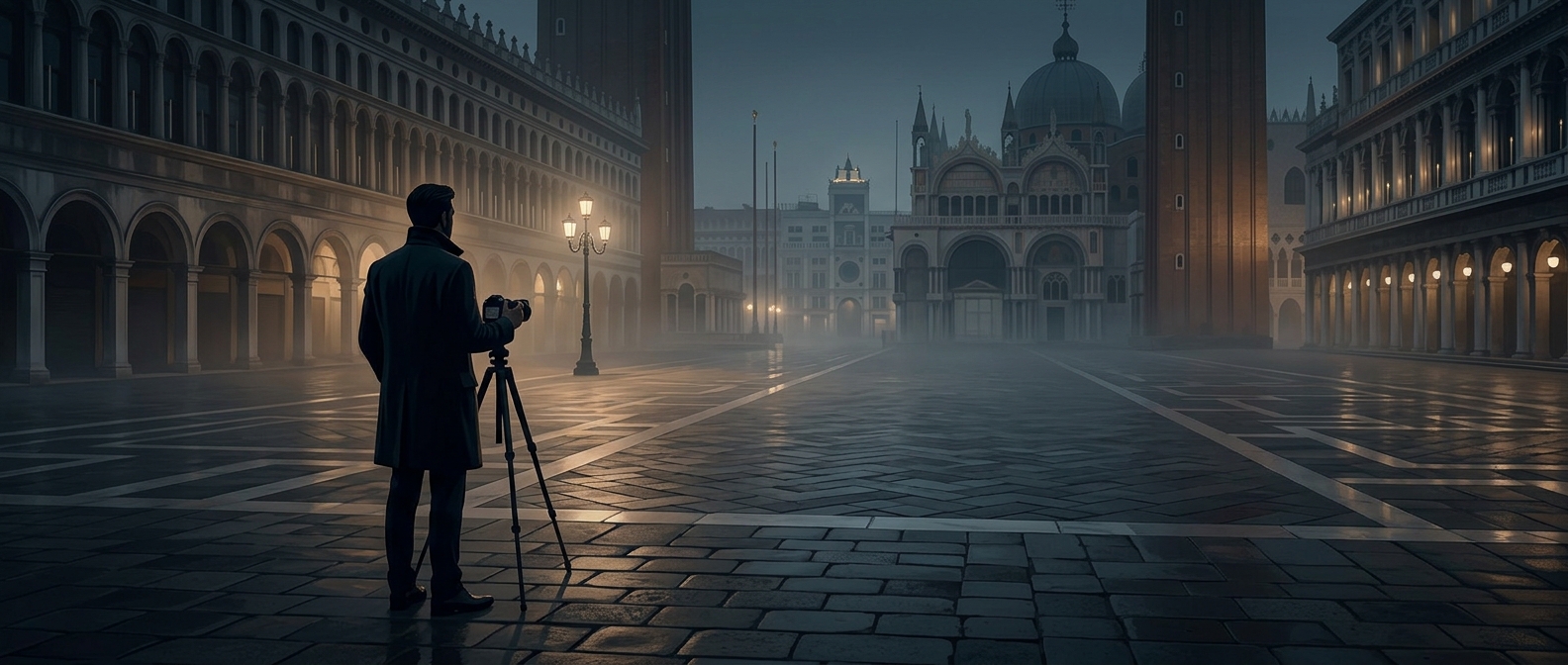
A plaza may look spacious in person but crowded in a photograph. The camera compresses depth, so a handful of pedestrians can overlap a fountain, statue, or doorway and obscure the shapes that give the place its identity. Waiting for a clear frame lets the architecture read as a whole rather than as a background behind unrelated passersby.
The challenge is that a public square never stays empty for long. People cross at different speeds, pause to talk, or enter the frame from several directions. A photographer watches the scene and waits for a brief gap—often only a few seconds—when the important lines and landmarks are unobstructed.
Timing Shapes the Image
Before sunrise, fewer people are usually moving through a plaza, and the changing natural light can bring out details in stone, paving, and façades. But an empty scene is not automatically a better one: a person can show the scale of a building or give a composition a focal point. The decision is whether that presence helps tell the story of the place or distracts from it.
That judgment can make the wait uncomfortable, especially on a cold morning. Yet the resulting image may preserve something hard to notice amid the bustle: the full geometry of the square, its open sightlines, and the way its buildings meet the surrounding streets.